


What Is a Claymore? History of the Legendary Scottish Claymore Sword
- von COOLKATANA
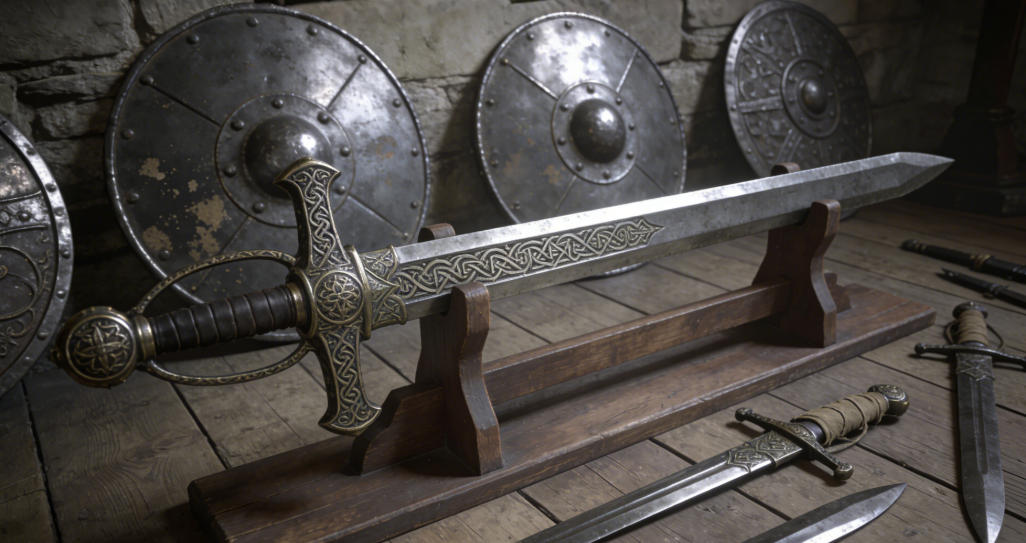
What Is a Claymore Sword? History, Design, and Legacy of the Scottish Claymore
In the history of European medieval weapons, the claymore is one of the most iconic two-handed greatswords ever created. This massive battle sword was not only a powerful weapon of the pre-gunpowder era but also became an enduring symbol of Scottish culture, warrior spirit, and Highland heritage. Whether in historical studies, weapon collecting, or in films, video games, and fantasy literature, the claymore sword is often associated with strength, heroism, and legendary warriors.
So, what is a claymore? Why has it become one of the most famous two-handed swords in European history? This article explores the history, design, battlefield role, and cultural legacy of the scottish claymore, revealing the fascinating story behind this legendary weapon.
What Is a Claymore
Many people often ask: what is a claymore?
Simply put, a claymore is a large two-handed sword originating from the Scottish Highlands. Known for its impressive size, powerful cutting ability, and distinctive guard design, this weapon occupies an important place in the history of European cold weapons.
The term claymore comes from the Scottish Gaelic phrase 'claidheamh mòr,' which literally means 'great sword' or 'large sword.' The name perfectly reflects the weapon’s defining characteristics—it is a sword designed to be wielded with two hands, significantly larger and more powerful than ordinary swords.
Historically, the claymore sword refers to the large two-handed sword used by Highland warriors, commonly called the scottish claymore. This weapon was widely used from the 15th to the 17th century and became one of the most recognizable weapons of the Scottish Highland clans.
During this period, Highland warriors were famous for their aggressive charge tactics, and the claymore weapon was perfectly suited for this fighting style thanks to its reach and devastating cutting power.
A typical claymore sword usually features the following characteristics:
-
A long blade, often exceeding one meter
-
A straight double-edged blade suitable for cutting and thrusting
-
A long grip designed for two-handed use
-
A distinctive forward-sloping crossguard
This structure allows claymores to deliver powerful attacks while maintaining good control in close combat.
In the broader classification of European weapons, the claymore weapon belongs to the family of large battlefield swords. It shares similarities with other famous European greatswords such as:
-
The German two-handed sword
-
The Spanish montante
-
The European greatsword
Although these weapons originated in different regions, they share similar design philosophies: emphasizing reach, powerful strikes, and two-handed control, making them effective weapons for infantry combat and shock attacks.
For this reason, many historians consider claymores an important part of the European two-handed sword tradition. They represent not only Scottish weapon culture but also a significant stage in the development of large battlefield swords during the medieval and Renaissance periods.
Today, when people discuss what is a claymore, the term represents more than just a weapon—it symbolizes the courage, strength, and fighting traditions of the Scottish Highland warriors.

The Historical Origins of the Claymore Sword
The history of the scottish claymore can be traced back to the late medieval period. The Scottish Highlands were a rugged and often unstable region, where numerous clans frequently engaged in conflicts with one another. At the same time, Scotland was involved in repeated wars with England.
Within this environment of constant warfare, Highland warriors developed weapons specifically suited for close-range combat and rapid charges. The claymore sword emerged from this context and gradually evolved into one of the most powerful weapons used by Highland fighters.
During the 15th and 16th centuries, the claymore sword reached the peak of its use. Many Highland warriors relied on this massive blade as their primary battlefield weapon. Unlike the knightly swords used elsewhere in Europe, the claymore weapon emphasized raw strength and aggressive combat, making it ideal for infantry-based assault tactics.
In typical Highland warfare, warriors often carried a complete set of weapons, including:
-
claymore sword as the primary weapon
-
targe, a small round shield used for defense
-
dirk, a dagger used for close combat
This combination formed the classic Highland warrior combat setup. In battle, Highland fighters would use the shield to block incoming attacks and then quickly close the distance with their enemy, unleashing powerful strikes with the claymore weapon.
Throughout many historical battles and clan conflicts, claymores played an important role. They were particularly effective during Highland clan warfare and in clashes between Scottish and English forces. The sword’s long blade allowed warriors to strike enemies from a greater distance, giving them an advantage during chaotic close-quarters fighting.
Beyond its battlefield use, the scottish claymore gradually became a symbol of clan leadership and warrior status. Many clan leaders or elite fighters owned finely decorated claymore swords, which represented both martial power and social prestige.
However, by the 17th century, the widespread adoption of firearms such as muskets and cannons dramatically changed European warfare. Traditional two-handed greatswords gradually lost their tactical relevance. As a result, the claymore weapon slowly disappeared from active combat and became primarily a ceremonial weapon, collectible artifact, and cultural symbol.
Despite this decline in battlefield use, the claymore sword remains deeply embedded in Scottish history and weapon culture. Even today, the scottish claymore is widely regarded as a symbol of Highland bravery and one of the most legendary greatswords in European history.
Structural Characteristics of the Claymore Weapon
From a visual perspective, the claymore sword is an easily recognizable greatsword. A typical scottish claymore includes several distinctive structural features.
1. Large Blade
The claymore usually features a straight, double-edged blade designed for both cutting and thrusting.
Historical examples of the claymore sword typically have the following dimensions:
-
Total length around 140 cm
-
Blade length exceeding 100 cm
-
Weight approximately 1.5 to 2.5 kg
These dimensions give the claymore weapon an impressive reach on the battlefield.
2. Two-Handed Grip
The claymore sword has a long grip specifically designed for two-handed use.
Using both hands provides several advantages:
-
Greater striking power
-
Improved weapon control
-
Increased stability during combat
Because of this design, claymores are considered classic two-handed battle swords.
3. Distinctive Crossguard
One of the most recognizable features of the scottish claymore is its guard.
The guard typically forms a forward-sloping cross shape, often ending with decorative circular or quatrefoil shapes. This design not only enhances the weapon’s appearance but also provides practical protection.
The crossguard helps:
-
Prevent enemy weapons from sliding toward the hands
-
Assist in blocking or controlling an opponent’s blade
4. Balanced Weight Distribution
Although the claymore sword appears extremely large, historical studies suggest that many authentic examples were surprisingly well balanced.
This balance allowed skilled warriors to perform:
-
Wide sweeping cuts
-
Powerful strikes
-
Controlled distance fighting
Nevertheless, effectively using such a weapon still required considerable strength and training.

Battlefield Role of the Claymore Sword
During the medieval and Renaissance periods, the claymore weapon was primarily used in infantry combat.
Its battlefield role included several important functions.
1. Controlling Distance with Reach
Because the claymore sword has a long blade, warriors could strike enemies from a relatively safe distance.
This advantage was especially useful when fighting opponents with shorter weapons.
2. Devastating Cutting Power
Swinging a claymore with two hands generates tremendous force.
These powerful strikes could inflict severe damage, making the weapon highly intimidating during chaotic close-combat encounters.
3. Ideal for Charge Tactics
Highland warriors often relied on aggressive charge tactics, and the claymore sword was perfectly suited for this approach.
Once they closed the distance, warriors could unleash sweeping strikes with the greatsword, disrupting enemy formations and overwhelming opponents.
Cultural and Legendary Influence of the Claymore
Although the claymore weapon eventually disappeared from the battlefield with the rise of firearms, its cultural influence has endured for centuries.
Today, the scottish claymore remains an important symbol of Scottish history and national identity.
In modern culture, the claymore sword frequently appears in:
-
Fantasy films
-
Video games and RPGs
-
Historical novels
-
Medieval festivals and reenactments
In many fictional settings, large greatswords are often referred to as claymore, highlighting the weapon’s legendary reputation.
Additionally, certain works of fiction feature variations such as the highlander series sword claymore, further reinforcing the sword’s place in popular culture.
Modern Claymore Sword Collecting and Replicas
Today, many historical weapon enthusiasts and collectors are fascinated by claymores.
Modern replica claymore swords are often crafted using:
-
High-carbon steel blades
-
Traditional forging techniques
-
Handcrafted guard designs
These replicas can serve several purposes, including:
-
Weapon collecting
-
Historical displays
-
Medieval cultural events
-
Cosplay props
They also help modern audiences appreciate the historical importance of the scottish claymore.
The Historical Legacy of the Claymore
From medieval battlefields to modern cultural symbolism, the claymore sword continues to hold a remarkable place in history.
This legendary weapon represents not only the power of a formidable claymore weapon, but also the courage and honor of the Highland warriors who wielded it.
For history enthusiasts, the claymore is far more than just a sword—it represents a fascinating chapter in the story of European warfare.
Therefore, when people ask what is a claymore, the answer is not simply a weapon, but a legendary symbol that carries centuries of history and cultural meaning.

