


Macuahuitl – Legendäres Schwert der Azteken mit rasiermesserscharfen Obsidinklingen
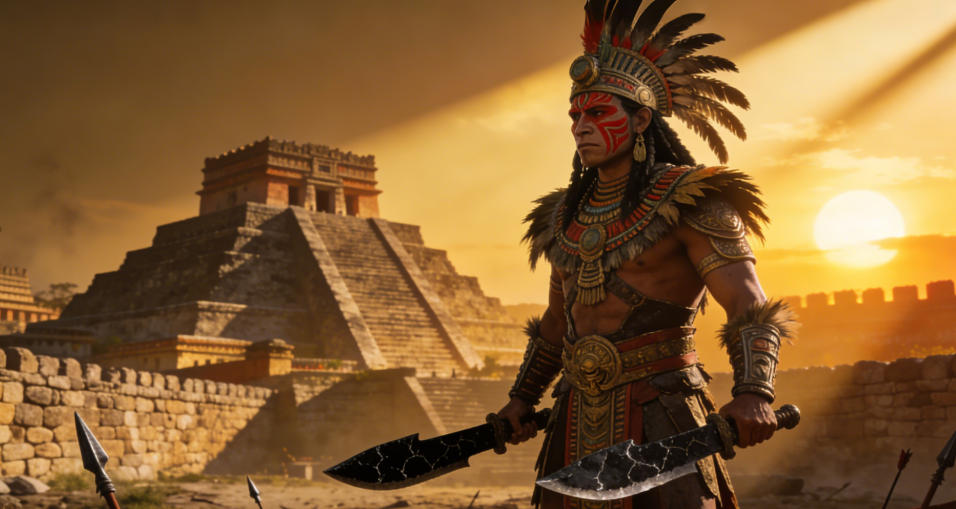
Warum das Macuahuitl die meistgefürchtete Aztekenwaffe auf dem Schlachtfeld war?
In der alten mesoamerikanischen Zivilisation war das Macuahuitl eine legendäre Waffe wie keine andere. Es war weder ein konventionelles Schwert noch bloß eine Holzkeule, sondern eine einzigartige Fusion aus Hartholzkonstruktion und rasiermesserscharfen Obsidianklingen. Diese außergewöhnliche Waffe spielte eine entscheidende Rolle in der aztekischen Militärstrategie und den Schlachtfeld-Taktiken und diente gleichzeitig als mächtiges Symbol der Kriegerkultur und Stärke. Ob in der Militärgeschichtsforschung, beim Sammeln von Klingenwaffen oder bei stark frequentierten Suchanfragen wie aztekisches Schwert, Waffen der Azteken, Macahuitl, das Macuahuitl bleibt ein Thema von erheblichem globalen Interesse.
Dieser Artikel bietet eine umfassende Analyse dieser bemerkenswerten mesoamerikanischen Waffe, einschließlich der Ursprünge, Evolution, Handwerkskunst, Schlachtfeldanwendungen und kulturellen Symbolik des Macuahuitl, und bietet tiefere Einblicke in seine historische Bedeutung und sein anhaltendes Erbe.
Was ist das Macuahuitl? Definition der mesoamerikanischen Kriegsklinge
Das Macuahuitl war eine charakteristische Nahkampfwaffe, die von indigenen mesoamerikanischen Kriegern, insbesondere den Azteken, verwendet wurde. Der Name stammt aus der Nahuatl-Sprache und bedeutet grob übersetzt „Handholz“, was die Art und Weise beschreibt, wie es geführt wurde. Optisch ähnelte das Macuahuitl einem großen Holzpaddel oder einer Keule, aber seine Kanten waren mit mehreren rasiermesserscharfen Obsidianklingen besetzt. Diese vulkanischen Glasfragmente wurden sorgfältig geformt und ausgerichtet und erreichten eine Schärfe, die oft mit modernen chirurgischen Skalpellen verglichen wird.
Diese Waffe kombinierte Stumpfeinwirkung und Schneidfähigkeit in einem Design. Sie konnte je nach Verwendung als zerschmetternde Keule oder als schneidende Klinge fungieren. Es gab leichtere einhändige Versionen sowie massive zweihändige Varianten, die die Höhe eines erwachsenen Kriegers erreichen konnten. Der Kern wurde typischerweise aus dichtem Hartholz wie Eiche oder tropischen Hartholzarten gefertigt, was Langlebigkeit und Widerstandsfähigkeit unter intensiven Kampfbedingungen gewährleistete.
Um die Schneideffizienz zu maximieren, wurden die Obsidianschneiden präzise in geschnitzte Rillen eingesetzt und mit natürlichen Harzen befestigt. Jede Klinge hatte scharfe, kantige Kanten, die tiefe Schnittwunden verursachen konnten. Dieses ausgeklügelte Design spiegelt die fortgeschrittene Handwerkskunst der mesoamerikanischen Zivilisationen wider und erklärt, warum das Macuahuitl eine weitaus größere Tödlichkeit besaß, als sein hölzernes Aussehen vermuten lässt.
Innerhalb des aztekischen Militärs war das Macuahuitl mehr als eine Waffe – es symbolisierte die Identität des Kriegers, Mut und taktisches Geschick. Geschickte Kämpfer nutzten seine Länge und Klingenanordnung, um durch feindliche Linien zu fegen, Formationen zu stören und psychologische Dominanz auf dem Schlachtfeld auszuüben.

Ursprünge und Verbreitung des Macuahuitl
Die Geschichte des Macuahuitl reicht bis vor den Aufstieg des Aztekenreiches zurück. Lange bevor die Metallverarbeitung in Mesoamerika weit verbreitet war, hatten alte Zivilisationen bereits die Gewinnung und Formgebung von Obsidian gemeistert. Die natürlich scharfen Eigenschaften von Obsidian machten ihn ideal für Werkzeuge und Waffen und legten die technologische Grundlage für die Entwicklung des Macuahuitl.
Archäologische Funde von Maya-, Tolteken- und sogar früheren Olmeken-Kulturen zeigen Holzwaffen mit eingebetteten Steinklingen, was auf einen langen evolutionären Prozess hindeutet. Mit der Expansion des Aztekenreiches wurde das Macuahuitl zu einer der ikonischsten Waffen, die aztekische Truppen in die Schlacht führten.
Die aztekische Militärexpansion, deren Zentrum Tenochtitlan war, beruhte stark auf diszipliniertem Infanteriekampf. Da die aztekische Kriegsführung oft darauf abzielte, Feinde gefangen zu nehmen, anstatt sie direkt zu töten, bot das Macuahuitl eine einzigartige Balance aus verheerender Schneidkraft und kontrollierter Gewalt. Diese Vielseitigkeit machte es zu einem zentralen Element der aztekischen Schlachtfelddoktrin.
Geografisch verbreitete sich das Macuahuitl in ganz Zentral- und Südmexiko, mit regionalen Variationen in Größe und Klingenanordnung. Einige Designs bevorzugten Agilität und Geschwindigkeit, während andere die Größe eines zweihändigen Kriegsschwertes erreichten. Diese Vielfalt zeigt, dass das Macuahuitl keine statische Waffe war, sondern über Generationen von Kriegsführung und kulturellem Austausch verfeinert wurde.
Vor der Ankunft spanischer Stahlschwerter gehörte das Macuahuitl zu den furchterregendsten Nahkampfwaffen in Mesoamerika. Obwohl nicht aus Metall gefertigt, wurde es aufgrund seiner Hiebwirkung und Schlachtfeldleistung oft als eine Art Azteken-Schwert bezeichnet.
Handwerkskunst und Konstruktion
Die Herstellung eines hochwertigen Macuahuitl erforderte Geschick und Präzision:
-
Hartholz-Kern: Dichtes, widerstandsfähiges Holz bildete das strukturelle Rückgrat, das schwere Stöße absorbieren konnte.
-
Obsidianklingen: Sorgfältig geformte Vulkanglas-Klingen lieferten außergewöhnliche Schneidkraft.
-
Rilleneinbettung und Harzfixierung: Die Klingen wurden in geschnitzte Kanäle eingesetzt und mit natürlichen Klebstoffen befestigt, um ein Herauslösen während des Kampfes zu verhindern.
Diese Fusion aus Widerstandsfähigkeit und rasiermesserscharfer Schärfe ermöglichte es dem Macuahuitl, sowohl stumpfes Trauma als auch Schnittschäden zu verursachen – eine geniale Lösung in einer Region ohne weit verbreitete Metallwaffenproduktion.

Effektivität des Macuahuitl auf dem Schlachtfeld
Innerhalb der aztekischen Militärhierarchie wurde das Macuahuitl als primäre Nahkampfwaffe angesehen. Als eine der bekanntesten Waffen, die aztekische Krieger führten, bot es ein beeindruckendes Kampfpotential.
-
Hieb- und Reißkraft
Die Obsidiankanten erzeugten tiefe, breite Wunden. Beim Aufprall kombinierte die Waffe zerschmetternde Kraft mit Schneidwirkung, was zu verheerenden Doppelschäden führte. -
Formationsstörung
Im dichten Infanteriekampf konnte ein zweihändiges Macuahuitl feindliche Reihen durchbrechen, Formationen sprengen und Lücken schaffen. -
Taktische Flexibilität
Im Vergleich zu europäischen schweren Schwertern betonte das Macahuitl fegende und schneidende Bewegungen. Krieger konnten die Winkel für Abwärtsschläge, diagonale Schnitte oder seitliche Feger schnell anpassen. -
Psychologische Wirkung
Der Anblick von Sonnenlicht, das sich in den auf einem massiven Holzrahmen befestigten Obsidianklingen spiegelte, erzeugte eine einschüchternde Präsenz. Psychologische Kriegsführung spielte im vormodernen Kampf eine entscheidende Rolle, und das Macuahuitl verstärkte die Angst, bevor die physische Auseinandersetzung überhaupt begann.
Historische Berichte legen nahe, dass das Macuahuitl selbst im Kampf gegen Kavallerie oder gepanzerte Gegner eine beträchtliche Schlachtfeldpräsenz behielt. Seine explosive Hiebkraft festigte seinen Ruf als eine der ikonischsten Waffen, die die Azteken je eingesetzt haben.
Vergleich mit europäischen Waffen
Bevor europäische Stahlschwerter in Mesoamerika Einzug hielten, gehörte das Macuahuitl zu den gefürchtetsten Nahkampfwaffen der Region.
-
Schärfe: Obsidianklingen waren außerordentlich scharf und konnten es in ihrer Schneidfähigkeit mit Metallklingen aufnehmen.
-
Zerbrechlichkeit: Im Gegensatz zu Stahl konnte Obsidian bei anhaltender starker Einwirkung absplittern oder brechen.
-
Materialunterschiede: Obwohl von natürlichen Materialien abhängig, erwies sich die Waffe in ihrem historischen Kontext als äußerst effektiv.
Kulturelle Symbolik des Macuahuitl
Das Macuahuitl ging über seine Rolle als Waffe hinaus. Es symbolisierte:
-
Kriegerehre und Mut
-
Status innerhalb der aztekischen Gesellschaft
-
Militärische Disziplin und spirituelle Identität
In modernen Medien, einschließlich Filmen und Videospielen, erscheint das Macuahuitl häufig als eine unverwechselbare Waffe mit hohem Schaden, was das globale Interesse an der aztekischen Geschichte und der mesoamerikanischen Kriegsführung erneuert.
Fazit: Warum das Macuahuitl wichtig ist
Das Macuahuitl repräsentiert den Einfallsreichtum der aztekischen Militärtechnik und die umfassendere Innovation der alten mesoamerikanischen Zivilisationen. Es verkörpert:
-
Einzigartiges Klingenwaffen-Design
-
Extreme Obsidianschärfe
-
Zentrale Bedeutung in der aztekischen Schlachtfeldtaktik
Das Verständnis von Macuahuitl, aztekischem Schwert, Waffen der Azteken, Macahuitl bietet wertvolle Einblicke in die präkolumbianische Kriegsführung, technologische Anpassung und die kulturellen Grundlagen einer der faszinierendsten Zivilisationen der Geschichte.

