


Anatomie des mittelalterlichen Langschwerts erklärt: Aufbau von Klinge und Griffstück
- von COOLKATANA
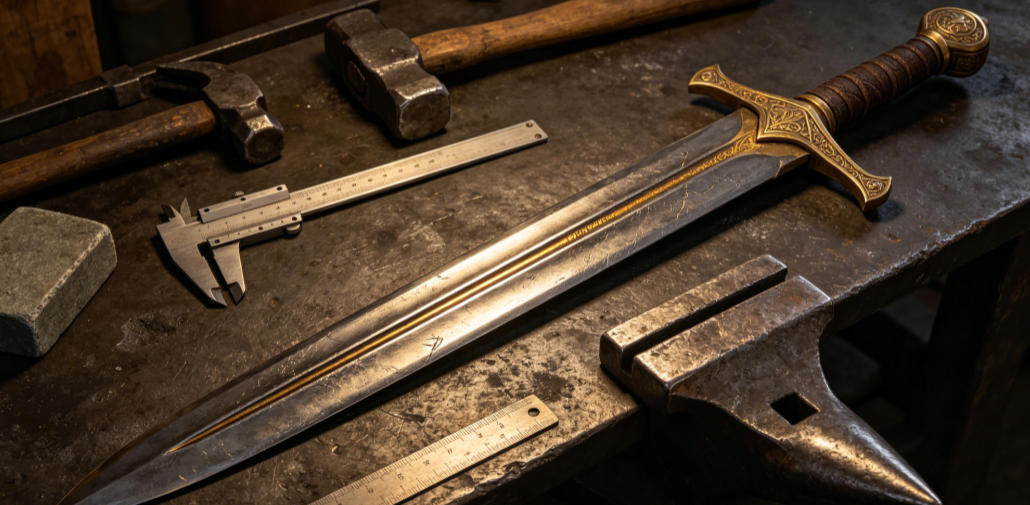
Woraus besteht ein mittelalterliches Langschwert? Klinge und Griffelement erklärt
In der europäischen Geschichte der Blankwaffen gehört das Langschwert (mittelalterliches Langschwert) zu den bekanntesten Waffen. Es war nicht nur ein wichtiges Werkzeug für Ritter auf dem Schlachtfeld, sondern auch ein Spiegelbild fortschrittlicher metallurgischer Handwerkskunst und praktischer Kampfentwicklung. Ob in der historischen Rekonstruktion, in HEMA (Historische Europäische Kampfkünste) oder in Filmen und Spielen – das Langschwert ist nach wie vor äußerst beliebt.
Um den Wert eines Langschwerts wirklich zu verstehen, muss man seine innere Struktur studieren – gemeinhin als Schwert-Anatomie bezeichnet. Jedes scheinbar einfache Schwert besteht tatsächlich aus mehreren präzise konstruierten Komponenten, die zusammen seine Leistung, Balance und seinen Kampfstil bestimmen.
Wie wird ein Langschwert genannt?
I. Gesamtkonzept des Langschwerts
Das mittelalterliche Langschwert wurde vom 14. bis 16. Jahrhundert weit verbreitet, einer Zeit, in der sich die europäische Kriegsführung von traditionellem Nahkampf zu technischeren, systematisierten Kampfmethoden wandelte. Sein Aufkommen war keine einfache Waffenverbesserung, sondern eine direkte Antwort auf Veränderungen der Schlachtfeldbedingungen – insbesondere die weit verbreitete Nutzung von Plattenrüstungen. Reine Hiebangriffe reichten nicht mehr aus, daher mussten Waffen Durchschlagskraft, Kontrolle und Vielseitigkeit ausbalancieren.
Aus struktureller Sicht wurde das Langschwert für maximale Anpassungsfähigkeit konzipiert. Es konnte beidhändig für größere Kraft und Stabilität geführt werden, oder in bestimmten Situationen, wie im berittenen Kampf oder in Verbindung mit einem Schild, einhändig verwendet werden. Es unterstützte auch die Halbschwerttechnik, bei der der Benutzer die Klinge direkt greift, um präzise Stöße aus kurzer Distanz auszuführen – besonders effektiv gegen Rüstungslücken.
In Bezug auf das Angriffsdesign balanciert das Langschwert Hieb und Stich gleichermaßen aus, anstatt eine Methode zu bevorzugen. Die Klinge ermöglicht schnelle Schnitte gegen ungerüstete Ziele, während die Spitze für das Durchdringen von Rüstungsschwachstellen wie Achselhöhlen, Hals oder Gelenken optimiert ist.
Ein weiteres Schlüsselprinzip ist die Balance und Gewichtsverteilung. Der Schwerpunkt liegt typischerweise nahe am Parier statt an der Spitze, was die Kontrolle und Reaktionsfähigkeit verbessert. Der Knauf verfeinert diese Balance zusätzlich, sorgt für flüssige Bewegungen und reduziert die Ermüdung beim Führen.
Insgesamt repräsentiert das Langschwert eine Verschiebung von reinen kraftbasierten Waffen hin zu geschicklichkeitsorientierten, kontrollbetonten Kampfwerkzeugen.

II. Klinge: Der offensive Kern
Die Klinge ist der wichtigste Teil des Langschwerts und bestimmt seine Kampfeigenschaften.
1. Spitze (Ort)
Die Spitze ist für präzise Stichangriffe konzipiert. In der Zeit der Plattenrüstung wurden Ritter darauf trainiert, Schwachstellen wie Achselhöhlen, Halsöffnungen und Visierlücken anzugreifen.
Beim Langschwertfechten ist der Stoß (Stechangriff) oft tödlicher als der Hieb.
2. Schneide (Schneide)
Das Langschwert verfügt typischerweise über eine doppelschneidige Klinge, die sowohl Hieb- als auch Verteidigungsaktionen ermöglicht.
Verschiedene Abschnitte der Schneide dienen unterschiedlichen Funktionen, die gemeinhin als starke Schneide und schwache Schneide bezeichnet werden und je nach Entfernung und Hebelwirkung zum Blockieren, Kontrollieren oder Angreifen verwendet werden.
3. Hohlkehle (Blutrinne)
Die Vorstellung der "Blutrinne" ist weit verbreitet, aber irreführend. In Wirklichkeit ist die Hohlkehle dazu gedacht, Gewicht zu reduzieren und die strukturelle Festigkeit zu erhöhen.
Sie hilft dabei:
- Das Gesamtgewicht zu reduzieren
- Die Schwunggeschwindigkeit zu verbessern
- Die Steifigkeit zu erhalten
Deshalb fühlen sich hochwertige Langschwerter leicht und doch kraftvoll an.
4. Starke und schwache Abschnitte
In der Schwertkampflehre wird die Klinge in funktionelle Zonen unterteilt:
- Stark (nahe am Parier): zum Blockieren und Kontrollieren der Waffe des Gegners verwendet
- Schwach (nahe an der Spitze): zum Angreifen und für schnelle Hiebe verwendet
Dies verwandelt das Schwert in ein präzises Kontrollsystem statt eines einfachen Schlagwerkzeugs.
III. Der Griff: Das Kontrollsystem des Schwertes
Wenn die Klinge für den Angriff zuständig ist, so ist das Griffstück für die Kontrolle verantwortlich. In der Langschwert-Tradition ist das Griffstück nicht nur ein Haltegriff – es ist ein kritisches System, das Stabilität, Flexibilität und die gesamte Kampfeffizienz bestimmt.
1. Griff
Der Griff besteht typischerweise aus einem Holzkern, der mit Leder, Schnur oder Draht umwickelt ist. Sein Hauptzweck ist die Sicherstellung eines sicheren Halts und die Verhinderung des Abrutschens.
Im HEMA-Training und -Kampf ist der Griff in der Regel lang genug für den beidhändigen Gebrauch, was einen der Hauptunterschiede zwischen Langschwertern und Einhandschwertern darstellt.
Hochwertige Reproduktionen verfeinern oft die Ergonomie des Griffs – sie passen Durchmesser, Textur und Balance an, um Ermüdung zu reduzieren und flüssige Bewegungen bei Technikwechseln zu verbessern.
2. Parier
Das Parier dient nicht nur dem Schutz der Hände, sondern ist auch ein funktionales Kontrollwerkzeug im Kampf – manchmal wird es als sekundäres Angriffs-/Verteidigungssystem betrachtet.
Gängige Typen sind:
- Kreuzparier: das klassische ritterliche Design, einfach und doch hochwirksam
- S-förmiges Parier: verbessert das Binden und Ablenken im Nahkampf
- Komplexes Parier: spätere europäische Designs, die einen mehrdirektionalen Schutz bieten
Während des Kampfes kann das Parier gleitende Klingenangriffe abwehren und dabei helfen, die Waffe des Gegners zu kontrollieren oder zu fangen, was flüssigere Übergänge zwischen Angriff und Verteidigung ermöglicht.
3. Knauf
Der Knauf, am Ende des Schwertes gelegen, mag dekorativ aussehen, ist aber tatsächlich entscheidend für die Balance.
Seine Funktionen umfassen:
- Anpassung des Schwerpunkts des Schwertes
- Dient als Gegengewicht für sanfteres Handling
- Dient als Schlagwerkzeug im Nahkampf
Ein schlecht gewichteter Knauf kann dazu führen, dass sich das Schwert „kopflastig“ anfühlt, was Kontrolle und Geschwindigkeit reduziert. Ein gut gestalteter Knauf verbessert das Handling und die Reaktionsfähigkeit erheblich.

IV. Balance- und Handhabungssystem
Ein gutes Langschwert zeichnet sich nicht durch sein Gewicht, sondern durch seine Balance aus.
Wichtige Faktoren sind:
- Balancepunkt: meist einige Zentimeter vor dem Parier
- Gewichtsverteilung: beeinflusst Geschwindigkeit und Kontrolle
- Dynamische Reaktion: beeinflusst Blockaden und Gegenangriffe
Bei richtiger Balance fühlt sich das Schwert wie eine natürliche Verlängerung des Arms an.
V. Verschiedene Arten von Langschwertstrukturen
1. Kampftaugliches Langschwert
- Dickere Klinge
- Vorwärts gerichtete Balance
- Optimiert für Rüstungsdurchdringung und Aufprall
2. HEMA Trainingslangschwert
- Präzise Balanceeinstellung
- Stumpfe Kanten für Sicherheit
- Fokus auf Kontrolle und Technik
3. Dekoratives / Ausstellungs-Langschwert
- Hochdekoratives Design
- Komplexe Gravuren
- Geringere Kampffunktionalität
VI. Komplette Zusammenfassung der Schwert-Anatomie
Ein typisches mittelalterliches Langschwert besteht aus:
-
Klinge
- Spitze
- Schneide
- Hohlkehle
- Starke / Schwache Abschnitte
-
Griffelement
- Griff
- Parier
- Knauf
Zusammen bilden diese Komponenten ein vollständiges Kampfsystem und nicht nur eine einfache Waffe.
VII. Warum das Verständnis der Schwertstruktur wichtig ist
Das Studium der Langschwert-Anatomie ist nicht nur historische Neugier – es hat praktischen Wert:
- Hilft bei der Bewertung hochwertiger Repliken
- Verbessert das Verständnis der HEMA-Techniken
- Unterstützt Sammler bei der Wertschätzung
- Vertieft das Wissen über mittelalterliche Kampfsysteme
Fazit
Das mittelalterliche Langschwert ist nicht nur eine Waffe – es ist ein hochentwickeltes System, bei dem jede Komponente einem bestimmten Zweck dient. Jeder Teil des Schwertes trägt zu Effizienz, Kontrolle und Kampfwirksamkeit bei.
Sobald man seine Struktur versteht, wird das Langschwert mehr als ein historisches Artefakt – es wird zu einer Fusion aus Ingenieurkunst, Kampftechnik und Kunstfertigkeit.

