


Warum gibt es ein Neunringschwert? Geschichte, Bedeutung und Kampflogik
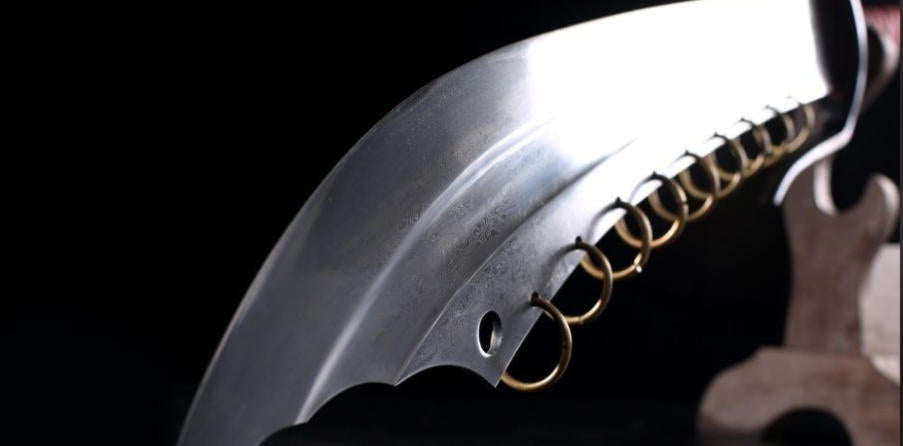
Innerhalb des Systems der alten chinesischen Waffen ist das Neun-Ring-Schwert eine der bekanntesten und legendärsten Waffen, die je geschaffen wurden. Im Gegensatz zu gewöhnlichen Kriegsklingen ist sein bestimmendes Merkmal nicht die Klingenlänge oder die Schneidengeometrie, sondern die Reihe von Metallringen, die entlang des Klingenrückens der Waffe angebracht sind. Diese Ringe schaffen eine einzigartige visuelle Identität und haben die Waffe zu einem der bekanntesten Symbole in der traditionellen chinesischen Kampfkunst, der volkstümlichen Waffenkultur und der Filmgeschichte gemacht.
Viele Leute, die nach Begriffen wie warum gibt es ein Neun-Ring-Schwert, chinesisches Ringschwert oder Geschichte des Neun-Ring-Säbels suchen, stellen oft dieselbe Frage:
Warum haben die Menschen in der Antike neun Metallringe an einem Schwert befestigt? Waren sie für den Kampf, die psychologische Einschüchterung oder einfach nur zur Dekoration gedacht?
Mit dem Aufkommen von Kampfkunstfilmen, der Fantasy-Waffenkultur und dem wachsenden Suchinteresse an s.w.o.r.d. #9 | sword 9 ist das Neun-Ring-Schwert erneut zu einem Diskussionsthema unter Liebhabern historischer Waffen, Forschern und Sammlern weltweit geworden.
Was das Thema besonders faszinierend macht, ist, dass es nie eine allgemein anerkannte Erklärung für den Zweck des Neun-Ring-Schwerts gab.
1. Was ist ein Neun-Ring-Schwert?
Das Neun-Ring-Schwert gehört zu einer einzigartigen Kategorie traditioneller chinesischer langstieliger Klingenwaffen und wird oft dem chinesischen Breitschwertsystem zugeordnet.
Seine primären strukturellen Merkmale umfassen:
- Große Breitschwertklingenstruktur
- Langstieliges Waffendesign
- Klingenrückenaussparungen zur Ringbefestigung
- Metallringkonstruktion
- Typischerweise mit neun Ringen konfiguriert
In modernen Kampfkunstkreisen kann es auch bezeichnet werden als:
- Neun-Ring-Breitschwert
- Chinesisches Ringschwert
- Traditionelle chinesische Kriegsklinge
- Ring Dao Waffe
Aufgrund seines sehr markanten Aussehens suchen einige moderne Nutzer auch nach s.w.o.r.d. #9 | sword 9, was es zu einem aufkommenden Long-Tail-Keyword im Zusammenhang mit Ringschwertern und der chinesischen Waffenkultur macht.
Interessanterweise hatten nicht alle historischen Ringschwerter genau neun Ringe.
Einige Beispiele zeigten:
- Drei Ringe
- Fünf Ringe
- Sieben Ringe
- Neun Ringe
Die Zahl Neun wurde schließlich zur ikonischsten Version, aufgrund ihrer tiefen kulturellen Bedeutung in der chinesischen Zivilisation.

2. Warum neun Ringe? Symbolik hinter der antiken chinesischen Numerologie
Wenn man fragt, warum die Waffe neun Ringe enthält, ist die häufigste Erklärung möglicherweise überhaupt nicht militärisch.
Stattdessen könnte sie kulturell bedingt sein.
Im alten China hatte die Zahl Neun eine außergewöhnliche Bedeutung.
Sie symbolisierte oft:
- Kaiserliche Autorität
- Vollendung
- Überlegenheit
- Ewigkeit
- Kosmische Ordnung
Die Zahl erschien wiederholt in traditionellen chinesischen Systemen:
- Neun Dreifusskessel
- Neun Drachen
- Neun Himmelssphären
- Neunstufiges Bürokratiesystem
- Neunschichtige Kaiserliche Architektur
Deshalb glauben viele Historiker, dass die Ringe nicht zufällig gewählt wurden, sondern Status, Autorität und symbolische Macht darstellten.
Bestimmte Kampfkunsttraditionen schlagen sogar vor:
Neun Ringe symbolisieren ultimative Einheit und Rückkehr.
Obwohl die historischen Beweise begrenzt bleiben, ist diese Interpretation bei Kampfsportlern und Sammlern weiterhin beliebt.
3. Wozu wurden die Metallringe eigentlich verwendet?
Dies ist einer der umstrittensten Aspekte des Neun-Ring-Schwerts.
Derzeit gibt es vier Haupttheorien über den Zweck der Ringe.
1. Klangliche Einschüchterung und Schlachtfeldpsychologie
Die am weitesten verbreitete Theorie besagt, dass die Ringe hauptsächlich Geräusche erzeugten.
Wenn die Waffe geschwungen wurde:
Die Metallringe schlugen wiederholt gegen die Klinge und gegeneinander.
Dies erzeugte:
- Metallische Aufprallgeräusche
- Vibrierende Töne
- Kontinuierliche Rasselgeräusche
Auf alten Schlachtfeldern könnten diese Geräusche geholfen haben:
- Die Präsenz auf dem Schlachtfeld zu erhöhen
- Feinde einzuschüchtern
- Psychologischen Druck zu erzeugen
- Die Moral zu stärken
Klangbasierte psychologische Kriegsführung war in der antiken Kriegsführung üblich.
Beispiele umfassen:
- Kriegstrommeln
- Bronzegongs
- Militärhörner
- Pferdeschellen
Das Neun-Ring-Schwert könnte als Teil eines ähnlichen akustischen Einschüchterungssystems fungiert haben.
Einige Kampfforscher vermuten sogar, dass der Klang Feinde dazu bringen könnte, die Größe der Waffe oder die Truppenstärke bei chaotischen Auseinandersetzungen zu überschätzen.
2. Änderung der Gewichtsverteilung und Schwungdynamik
Eine andere Theorie stammt aus der Waffenmechanikforschung.
Die Ringe könnten sich auf Folgendes ausgewirkt haben:
- Lage des Gleichgewichtspunkts
- Schwungträgheit
- Abwärts gerichtete Schlagkraft
- Rückmeldung der Klinge
Theoretisch könnte zusätzliches Gewicht den Schwung bei Hackbewegungen erhöhen.
Allerdings birgt eine erhöhte Masse auch Nachteile.
Zusätzliches Gewicht kann Folgendes reduzieren:
- Geschwindigkeit
- Flexibilität
- Erholungszeit
Daher glauben viele Forscher, dass die Ringe eher als ergänzende Merkmale denn als primäre Kampfmechanismen fungierten.
3. Beeinflussung feindlicher Waffen
Eine weniger verbreitete Theorie besagt, dass die Ringe mit gegnerischen Waffen interagiert haben könnten.
Mögliche Auswirkungen umfassen:
- Fangen feindlicher Klingen
- Störung von Angriffswinkeln
- Erhöhung der Kollisionskomplexität
Historische Belege für diese Theorie sind schwach.
Die meisten Gelehrten bleiben skeptisch.
4. Trainingsfunktionen für Kampfkünste
In den modernen chinesischen Kampfkünsten ist der praktische Nutzen des Neun-Ring-Schwerts viel klarer:
Training.
Während der Formen und Routinen geben die Ringe kontinuierlich Bewegungsfeedback.
Dies hilft Praktizierenden, Folgendes zu tun:
- Schwunggeschwindigkeit kontrollieren
- Krafterzeugung verbessern
- Bewegungsstabilität erhöhen
- Explosivkraft entwickeln
Innerhalb moderner chinesischer Kampfkunstwaffensysteme fungiert das Neun-Ring-Schwert oft mehr als Trainings- und Performance-Tool denn als Schlachtfeldwaffe.
4. Wurde das Neun-Ring-Schwert tatsächlich im Krieg eingesetzt?
Dies ist eine der größten historischen Debatten um das Neun-Ring-Schwert.
Filme stellen es oft als verheerende Schlachtfeldwaffe dar.
Die Realität könnte viel komplizierter gewesen sein.
Gängige historische chinesische Militärklingen waren unter anderem:
- Tang Dao
- Ringknaufschwert
- Podao
- Weidenblattsäbel
- Yanling Dao
Diese Waffen betonten:
- Ausgewogenes Gewicht
- Dauerhaften Kampfeinsatz
- Effiziente Produktion
- Praktikabilität auf dem Schlachtfeld
Verglichen damit war das Neun-Ring-Schwert:
- Schwerer
- Mechanisch komplexer
- Teurer in der Herstellung
- Weniger agil
Aufgrund dieser Faktoren glauben viele Historiker, dass die Waffe zwar gelegentlich im Kampf eingesetzt worden sein mag, aber wahrscheinlich nie zu einer standardmäßigen militärischen Ausrüstung wurde.
Stattdessen könnte sie Rollen wie die folgenden erfüllt haben:
- Zeremonielle Waffen
- Trainingsgeräte für Kampfschulen
- Volksvorführungen
- Opernbühnenrequisiten
- Statussymbole

5. Warum wurde das Neunringschwert zu einer Kampfkunst-Ikone?
Wenn der Einsatz auf dem Schlachtfeld begrenzt war, warum wurde das Neunringschwert so berühmt?
Die Antwort ist einfach:
Weil es kraftvoll aussieht.
Sein Design erzeugt von Natur aus eine starke visuelle Wirkung:
- Übergroße Klingenform
- Bewegliche Metallringe
- Auffällige Soundeffekte
- Dynamische Bewegungsaesthetik
Dies macht es perfekt für:
- Kampfkunstfilme
- Kung-Fu-Kino
- RPG-Waffensysteme
- Anime-Waffendesigns
- Fantasy chinesische Schwert-Einstellungen
Viele fiktive Darstellungen übertreiben seine Kraft und Mystik.
Heute stoßen Benutzer, die nach Schwert Nr. 9 | Schwert 9 suchen, häufig auf verwandte Inhalte, wodurch eine wachsende SEO-Assoziation zwischen diesen Begriffen und dem Neunringschwert entsteht.
6. Neunringschwert vs. andere alte chinesische Klingen
Neunringschwert vs. Tang Dao
Tang Dao:
- Starke militärische Rolle
- Praktisches Kampfdesign
- Relativ leicht
Neunringschwert:
- Höherer Leistungswert
- Schall- und visuelle Betonung
- Starke symbolische Bedeutung
Neunringschwert vs. Guan Dao
Guan Dao:
- Schwere Schlachtfeld-Stangenwaffe
- Entwickelt zur Unterdrückung der Kavallerie
- Priorisiert rohe Zerstörungskraft
Neunringschwert:
- Visuell markanter
- Stärkere Kampfkunst-Identität
- Größere theatralische Anziehungskraft
7. Warum wird „Schwert Nr. 9 | Schwert 9“ mit Ringschwertern assoziiert?
Da sich Online-Kultur und Sammeltrends entwickeln, werden ungewöhnliche Suchbegriffe zunehmend mit historischen Waffen in Verbindung gebracht.
Beispiele hierfür sind:
Schwert Nr. 9 | Schwert 9
Benutzer können diese Begriffe suchen, um Folgendes zu finden:
- Waffen-Ranglisten
- Legendäre Klingen
- Fantasy-Ausrüstungslisten
- Spielwaffenkonzepte
- Neunringschwert-Sammlerstücke
Obwohl der Ausdruck selbst kein historischer Begriff ist, wandelt das Suchverhalten ihn allmählich in eine Long-Tail-Traffic-Quelle um.
8. Fazit: Was ist die wahre Bedeutung hinter dem Neunringschwert?
Historisch gesehen war das Neunringschwert mehr als nur eine Waffe.
Es repräsentierte eine Kombination aus:
- Kampfdesign
- Symbolische Numerologie
- Rituelle Kultur
- Kampftraditionen
- Visueller Ausdruck
Daher mag die Antwort auf die Frage, warum es ein Neunringschwert gibt, niemals nur den Kampf betreffen.
Das Neunringschwert existierte möglicherweise nicht nur zum Töten, sondern auch für Klang, Status, visuelle Wirkung und kulturelle Symbolik.
Dies erklärt auch, warum das Neunringschwert heute in der Kampfkunstkultur, in Filmen, in Sammlergemeinschaften und in weltweiten Waffendiskussionen weiterhin präsent ist – und durch Suchbegriffe wie Schwert Nr. 9 | Schwert 9 neue Aufmerksamkeit erlangt.

