


Japanese Weapons Guide: Samurai Weapons Types & History
- von COOLKATANA
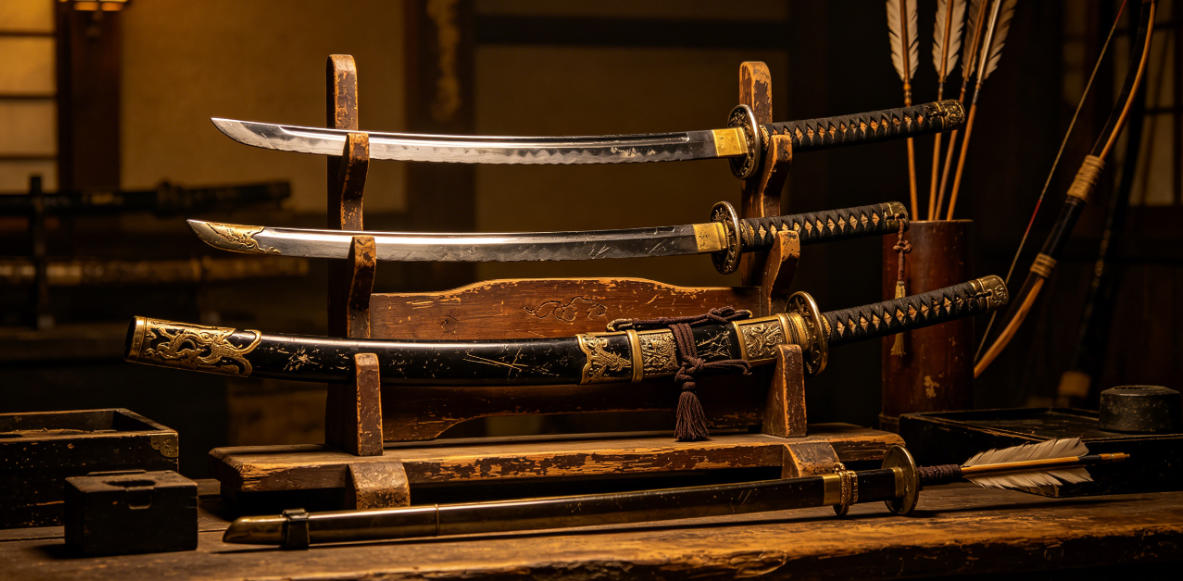
What Are Japanese Weapons and Which Samurai Weapons Were Most Important?
In the world of historical cold weapons, japanese weapons stand out for their refined craftsmanship, distinctive design, and deep cultural heritage. Meanwhile, weapons samurai are more than tools of war—they symbolize samurai identity and the core values of Bushido. As search trends like ‘samurai weapons list’, ‘types of japanese weapons’, and ‘traditional japanese weapons’ continue to rise, more enthusiasts are exploring the history and function of these legendary arms.
This guide explores weapon types, battlefield roles, and cultural significance, helping you fully understand the legacy behind ‘samurai sword and weapons’.
What Are Japanese Weapons?
japanese weapons refer to the complete system of traditional arms developed throughout Japanese history, especially those used by the samurai class. In high-volume searches such as ‘types of japanese weapons’, ‘traditional japanese weapons history’, and ‘samurai sword and weapons’, the concept goes beyond weapon categories to include forging techniques, combat methods, and symbolic meaning.
Compared to other weapon traditions, japanese weapons uniquely combine practicality with artistic expression. For example, the folded steel construction, hamon (temper line), and balanced proportions of samurai swords enhance both performance and aesthetics. This is why terms like ‘authentic japanese weapons’ and ‘hand forged samurai weapons’ remain highly searched.
From a structural perspective, weapons samurai form a multi-layered system. In ‘samurai weapons list’ and ‘samurai weapons and armor’, they are typically grouped into:
- Bladed weapons: Katana, Wakizashi, Tanto—the core of ‘samurai sword and weapons’
- Polearms: Yari (spear), Naginata—common in ‘japanese polearm weapons’
- Ranged weapons: Yumi (longbow), central to ‘samurai archery weapons’
- Specialized weapons: Kanabo, Kusarigama—often seen in ‘unique samurai weapons’ and ‘rare japanese weapons’
These weapons evolved across periods. In ‘history of samurai weapons’, early samurai relied on archery, while the Sengoku era emphasized spears, and the Edo period transformed swords into cultural symbols rather than battlefield necessities.
Additionally, japanese weapons are deeply tied to Bushido. In searches like ‘samurai sword meaning’ and ‘why samurai weapons are important’, users are interested not only in the weapons themselves but also in the values of loyalty, honor, and duty they represent.

Samurai Swords: The Core of Samurai Sword and Weapons
Among all ‘samurai sword and weapons’, the samurai sword is the most iconic.
Katana (Samurai Sword)
The Katana is one of the most recognizable japanese weapons, and also the most searched ‘authentic samurai sword’, dominating keywords like ‘real katana sword’, ‘hand forged katana’, and ‘buy japanese katana online’.
- Curved, single-edged blade combining sharpness and durability
- Designed for fast drawing and decisive strikes
- Made with folded steel construction for strength and beauty
- Frequently searched as ‘best samurai sword katana’ and ‘traditional katana sword’
Beyond structure, the Katana represents a sophisticated craftsmanship process—from steel selection and forging to tempering and polishing. The hamon is both a functional and artistic feature.
In samurai culture, the Katana is considered the ‘soul of the samurai’, symbolizing loyalty and honor. It remains central in ‘samurai sword meaning’ and ‘katana spiritual symbolism’, making it irreplaceable in the ‘samurai sword and weapons’ system.
Wakizashi (Short Sword)
The Wakizashi is a vital companion blade in the weapons samurai system, frequently appearing in ‘samurai weapons list’, ‘samurai short sword types’, and ‘wakizashi vs katana’.
- Typically 30–60 cm in length for close combat
- Paired with Katana as the ‘Daisho’ set
- Ideal for indoor fighting and confined spaces
- Common in ‘buy wakizashi sword’ and ‘traditional wakizashi for sale’ searches
Highly practical, the Wakizashi was carried at all times. It also had ceremonial uses, often referenced in ‘samurai seppuku ritual knife’.
Culturally, carrying both Katana and Wakizashi signified true samurai status, which is why they are always featured together in ‘samurai weapons and armor’.
Tanto (Dagger)
The Tanto is a compact stabbing weapon, frequently appearing in ‘types of japanese weapons’, ‘japanese tanto knife’, and ‘samurai dagger tanto’.
- Usually under 30 cm in length
- Designed for powerful thrusting attacks
- Easy to conceal and carry
- Popular in searches like ‘best tanto knife’, ‘traditional tanto blade’, and ‘tanto for self defense’
Its design emphasizes practicality, often used as a backup weapon in close combat. It also holds ceremonial and symbolic roles, appearing in ‘samurai dagger meaning’ and ‘tanto cultural significance’.
Modern interest in ‘handmade tanto knife’ and ‘custom tanto blade’ shows its continued appeal in both collecting and utility use.
Hand Forged Tanto Sword Clay Tempered Japanese Short Sword 1 Mini Katana 095 Carbon Steel Battle Ready

Polearms: The Battlefield Core of Weapons Samurai
In real warfare, weapons samurai extended far beyond swords—polearms were decisive.
Yari (Spear)
Yari is one of the most widely used ‘traditional japanese weapons’:
- Long reach, ideal for formations
- Popular in ‘samurai spear weapon’ and ‘yari spear samurai’
- Dominant during the Sengoku period
It marked the shift from individual duels to organized warfare.
Naginata (Polearm Blade)
Naginata is a key entry in ‘samurai weapons list’:
- Combines slicing power with reach control
- Appears in ‘naginata weapon samurai’ and ‘japanese polearm weapon’
- Highly effective against cavalry
Its versatility makes it one of the most iconic ‘types of japanese weapons’.
Ranged Weapons: Essential Japanese Weapons
Yumi (Longbow)
In early history, archery was central to samurai warfare, with ‘samurai archery yumi’ gaining popularity:
- Asymmetrical design for mounted use
- Long range and high accuracy
- Among the oldest ‘traditional japanese weapons’
It often appears alongside cavalry tactics in ‘samurai weapons and armor’.
Other Classic Samurai Weapons
Beyond the main weapons, ‘samurai weapons list’ includes:
- Tachi: Seen in ‘tachi vs katana difference’, predecessor to Katana
- Odachi / Nodachi: Known from ‘odachi long sword samurai’ for extreme length
- Kanabo: Featured in ‘kanabo weapon samurai’ for armor-breaking power
- Kusarigama: Found in ‘kusarigama weapon chain sickle’, emphasizing flexibility
These expand the diversity of ‘types of japanese weapons’.
Evolution of Samurai Weapons
From the perspective of ‘history of samurai weapons’:
- Heian period: Archery dominated, ‘samurai archery’ was core
- Kamakura period: Swords emerged, shaping ‘samurai sword history’
- Sengoku period: Spears became primary, ‘yari spear samurai’ widespread
- Edo period: Warfare declined, ‘katana as symbol’ became cultural
This reflects the transformation of japanese weapons from tools of war to cultural icons.
Cultural Value of Japanese Weapons
In searches like ‘why samurai weapons are important’, weapons samurai represent:
- Bushido philosophy
- Loyalty, honor, and duty
- Social status and identity
Katana remains central in ‘samurai sword meaning’.
Why Samurai Weapons Remain Popular
Today, japanese weapons continue to grow in popularity:
- Featured in films, anime, and games
- Rising demand for ‘real samurai sword for sale’
- ‘samurai sword collection’ as a hobby
These trends keep ‘traditional japanese weapons’ relevant worldwide.
Conclusion
From Katana to Yari, from Naginata to Yumi, japanese weapons form a complete and sophisticated system. These weapons samurai not only shaped Japanese history but also defined samurai culture.
Whether you are searching for ‘samurai weapons list’, exploring ‘types of japanese weapons’, or interested in ‘samurai sword and weapons’, this legacy continues to inspire collectors and enthusiasts around the world.

