


Geschichte des Nagamaki-Schwerts: Japans Samurai-Waffe mit langem Griff erklärt
- von COOLKATANA
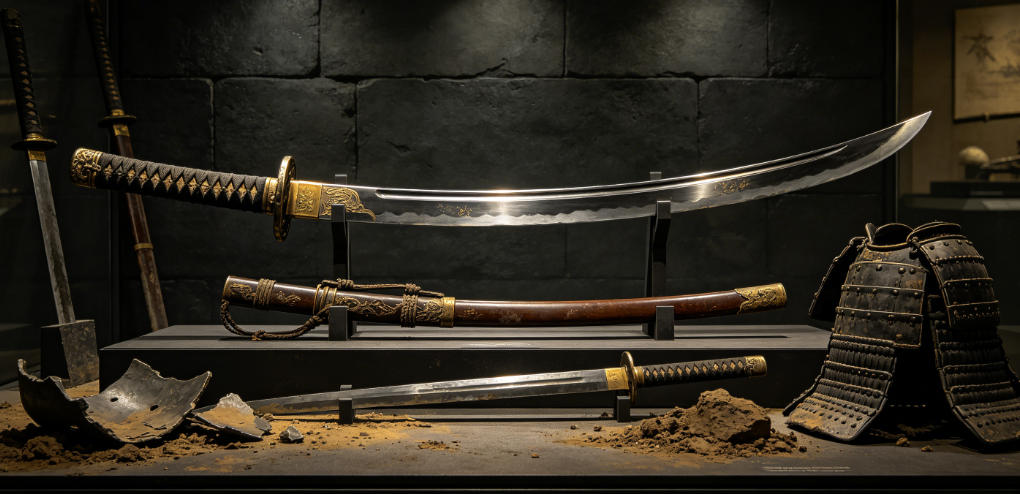
Was ist Nagamaki? Was genau ist Nagamaki, und welche Rolle spielte es in der japanischen Samurai-Geschichte?
Im traditionellen japanischen System der kalten Waffen ist das Nagamaki (langgewickeltes Schwert) eine einzigartige Waffe, die zwischen einem Samuraischwert und einer Stangenwaffe angesiedelt ist. Es ist weder ein Standard-Katana (Samuraischwert) noch eine Naginata (Stangenwaffenglefe), sondern eine spezialisierte, langstielige Klingenwaffe, die für den Nahkampf auf dem Schlachtfeld und den Kampf gegen Kavallerie entwickelt wurde.
Mit dem wachsenden Interesse an Waffengeschichte und Sammlerstücken nehmen Suchanfragen wie Nagamaki Geschichte, was ist eine Nagamaki Waffe, japanische Stangenwaffenschwerter und Nagamaki vs Naginata Unterschied weiter zu, was es zu einem wichtigen Nischen-Thema in der japanischen Kampfkunst-Waffenforschung macht.
Der Ursprung des Nagamaki: Evolution von der späten Heian- bis zur Sengoku-Zeit
Die Geschichte des Nagamaki lässt sich bis in die späte Heian-Zeit (etwa 12. Jahrhundert) zurückverfolgen, wo es sich während der Kamakura-Zeit allmählich entwickelte und in der Muromachi- und Sengoku-Zeit seine volle Reife auf dem Schlachtfeld erreichte. Seine Entstehung war kein Zufall, sondern eine direkte Reaktion auf die Transformation der japanischen Kriegsführung vom aristokratischen Kampf zur umfassenden Samurai-Kriegsführung.
Als sich das Ausmaß der Schlachtfelder erweiterte, Kavallerieangriffe häufiger wurden und Infanterieformationen strukturierter wurden, begann die japanische Waffenentwicklung, eine größere Reichweite und stärkere Schneidkraft zu priorisieren. Das Nagamaki entstand als Antwort auf diese sich entwickelnden Kampfanforderungen.
1. Späte Heian-Zeit: Aufstieg der Samurai-Klasse und sich wandelnde Kriegsführung (12. Jahrhundert)
Während der späten Heian-Zeit wurde Japan noch immer von der aristokratischen Herrschaft dominiert. Doch als die regionalen Militärkräfte stärker wurden, begann die Samurai-Klasse aufzusteigen, und die Kriegsführung verlagerte sich von Hofkonflikten zu bewaffneten Auseinandersetzungen zwischen regionalen Fürsten.
Wesentliche Merkmale der Kriegsführung in dieser Zeit:
- Häufige kleine Konflikte zwischen Fürsten
- Berittene Samurai werden zur Kernkampftruppe
- Bogenschießen (Yumi) als primäre Fernwaffe
- Nahkampf noch immer auf Tachi und Kurzwaffen angewiesen
Doch als die Schlachten intensiver wurden, zeigten traditionelle Waffen Grenzen auf, insbesondere bei Kavallerie-Begegnungen und im Nahkampf.
Infolgedessen begannen sich längere und stärkere Waffen zu entwickeln, darunter:
- Frühe Tachi (längere Schwerter, optimiert für den Kampf zu Pferd)
- Waffen mit verlängerter Klinge und stärkerer Schneidkraft
- Primitive Stangenwaffen zur Verteidigung gegen Kavallerie
Diese experimentellen Waffen legten den Grundstein für die Nagamaki-Struktur.

2. Kamakura-Zeit: Etablierung der Samurai-Herrschaft und taktische Entwicklung (1185–1333)
Während der Kamakura-Zeit trat Japan in ein von Samurai geführtes politisches System ein. Die Kriegsführung wurde unter dem Shogunat organisierter und strukturierter.
Die Schlachtfeldmerkmale umfassten:
- Kavallerie-Samurai als dominante Kraft
- Kampftaktiken basierend auf Angriffen
- Früher Formationskampf
- Verstärkter Fokus auf Rüstungsdurchschlag und Reichweite
In diesem Umfeld waren Kurzwaffen gegenüber berittenen Kriegern im Nachteil. Die Waffenentwicklung verlagerte sich daher hin zu längeren Stielkonstruktionen.
Frühe Prototypen des Nagamaki begannen Gestalt anzunehmen, mit Schlüsselideen wie:
- Verlängerung der Reichweite zur Abwehr von Kavallerie
- Erhöhung der Schneidkraft zum Durchbrechen von Rüstungen (Yoroi)
- Verbesserung der Kontrollfähigkeit auf dem Schlachtfeld
Diese Periode markierte den Übergang des Nagamaki vom Konzept zum strukturellen Prototyp.
3. Muromachi-Zeit: Häufige Kriege führen zur Waffenstandardisierung (1336–1573)
Die Muromachi-Zeit war geprägt von ständigen Bürgerkriegen zwischen regionalen Fürsten. In dieser Ära gab es eine rasche Entwicklung in der japanischen Waffentechnologie.
Waffen mussten Folgendes erfüllen:
- Höhere Tödlichkeit
- Größere Haltbarkeit
- Anpassungsfähigkeit an komplexe Schlachtfelder
In dieser Zeit wurde das Nagamaki allmählich standardisiert.
Seine ausgereifte Form wies folgende Merkmale auf:
- Eine längere, schwerere Klinge, ähnlich einem Tachi, aber kraftvoller
- Ein verlängerter Griff, umwickelt mit Tsuka-Maki-Kordel
- Zweihändige Griffführung für Stabilität
- Weit ausholende und kraftvolle Hiebfähigkeit
Das Nagamaki wurde als „bahnbrechende Schlachtfeldwaffe“ eingestuft, besonders effektiv zum Brechen feindlicher Formationen.
4. Sengoku-Zeit: Der Höhepunkt des Nagamaki-Einsatzes (15. bis 16. Jahrhundert)
Die Sengoku-Zeit (Zeit der streitenden Reiche) war eine der kriegsintensivsten Epochen der japanischen Geschichte. Großschlachten wurden zur Norm, und die militärische Spezialisierung nahm zu.
In dieser Zeit erreichte das Nagamaki seinen Höhepunkt der Nutzung auf dem Schlachtfeld.
Rollen auf dem Schlachtfeld:
- Waffe der Infanterie an vorderster Front
- Abwehrwerkzeug gegen Kavallerie
- Waffe zum Brechen von Formationen
- Waffe für den Nahkampf mit großer Reichweite
Es wurde oft Elite-Infanterie oder mittelrangigen Samurai ausgehändigt, um feindliche Formationen zu durchbrechen.
Taktische Vorteile:
In der Sengoku-Zeit ging es bei der Kriegsführung nicht mehr um einzelne Duelle, sondern um groß angelegte Konfrontationen zwischen Armeen. Zu den Vorteilen des Nagamaki gehörten:
- Längere Reichweite als Katana
- Größerer Angriffsradius als Standardschwerter
- Effektiver im Nahkampf als Speere
- Hohe Effizienz in chaotischen Nahkämpfen
Es diente als Übergangswaffe zwischen Schwertern und Stangenwaffen.
Kavalleriekampf und Rüstungsdurchschlag
Die Samurai-Rüstung (Yoroi) wurde fortschrittlicher, und Kavallerieangriffe wurden häufig. Die schwere Klingenstruktur des Nagamaki war wirksam gegen:
- Angriffe berittener Samurai
- Gepanzerte Infanterieformationen
- Dichte Verteidigungsformationen
Seine Kombination aus großer Reichweite und schwerer Schneidkraft machte es besonders effektiv beim Durchdringen von Rüstungen.
Struktur und technische Merkmale des Nagamaki
1. Klingenstruktur (Entwicklung)
Die Nagamaki-Klinge folgt traditionellen japanischen Schwertschmiedetechniken:
- Einseitige Klingenstruktur (Katana-ähnliche Schneide)
- Gekrümmte Klinge für verbesserte Schneideffizienz
- Hochkohlenstoffstahl-Schmieden für Haltbarkeit
- Länger als ein typisches Tachi
Dies verleiht ihr sowohl Schneide- als auch Durchdringungsfähigkeiten.
2. Langer Griff (historische Ingenieurskunst)
Die entscheidende Innovation des Nagamaki ist sein verlängerter Griff:
- Typischerweise 1–2 Meter Gesamtlänge
- Mit Tsuka-Maki-Technik umwickelt
- Verbesserte Griffsicherheit
- Ermöglicht beidhändige Fernschläge
Dies ermöglichte es den Kriegern, Distanz zu halten, während sie Feinde angriffen.

Nagamaki vs. Naginata: Historische Unterschiede
Viele historische Quellen vergleichen Nagamaki mit der Naginata:
Nagamaki
- Schwerere und längere Klinge
- Eher wie ein langstieliges Schwert
- Fokus auf Schneiden und Rüstungsdurchschlag
- Für den frontalen Kampf eingesetzt
Naginata
- Kürzere Klinge
- Sichelförmige Stangenwaffe
- Fokus auf fegende Angriffe und Kontrolle
- Besser für den defensiven Infanterieeinsatz geeignet
Sie wurden in verschiedenen taktischen Systemen eingesetzt, anstatt sich gegenseitig zu ersetzen.
Kulturelle Rolle des Nagamaki in der Samurai-Gesellschaft
Das Nagamaki war keine tägliche Seitenwaffe, sondern eine waffenspezifische Waffe für das Schlachtfeld.
Zu den Benutzern gehörten:
- Mittlere bis hochrangige Samurai
- Kommandoorientierte Krieger
- Elite-Infanterieeinheiten
Es repräsentierte nicht den Status, sondern:
- Taktische Effizienz
- Anpassungsfähigkeit auf dem Schlachtfeld
- Kampftödlichkeit
Niedergang des Nagamaki: Der friedliche Übergang der Edo-Zeit
Nach der Edo-Zeit (1603–1868) trat Japan in eine lange Friedenszeit ein.
Das Nagamaki verschwand allmählich aus dem Schlachtfeldgebrauch aufgrund von:
- Langwaffen, die im städtischen Polizeidienst unpraktisch waren
- Samurai, die sich auf zeremonielle Schwerter (Katana) verlegten
- Das Ende groß angelegter Kriege
Es überlebte hauptsächlich als:
- Familienerbstücke
- Kampfkunstartefakte
- Zeremonielle Waffen
Modernes Sammeln und Reproduktion von Nagamaki
Mit dem globalen Aufkommen der Samurai-Kultur und des Sammelns kalter Waffen hat das Nagamaki-Schwert auf modernen Märkten neue Aufmerksamkeit erlangt.
Sammler suchen oft historisch genaue Reproduktionen aus hochkohlenstoffhaltigen Stählen wie T10 oder 1095 Stahl, die mit traditionellen Techniken geschmiedet werden, um eine authentische Textur und Klingenleistung nachzubilden.
Moderne Reproduktionen betonen:
- Traditionelle Tsuka-Maki Griffwicklung
- Strukturelle Verstärkung für Haltbarkeit
- Historische Genauigkeit bei Klingenkrümmung und Proportionen
Die Produkte werden typischerweise unterteilt in:
- Display-Modelle (Fokus auf Ästhetik und Handwerkskunst)
- Funktionsmodelle (Fokus auf Stärke und Gebrauchstauglichkeit)
Für Sammler ist das Nagamaki nicht nur ein Kunstobjekt, sondern auch eine kulturelle Erweiterung, die moderne Handwerkskunst mit der Schlachtfeldlogik der Samurai verbindet.
Fazit: Warum ist das Nagamaki in der Waffengeschichte so einzigartig?
Das Nagamaki (langgewickeltes Schwert) repräsentiert die Evolution der japanischen Kriegsführung von der Heian- bis zur Sengoku-Zeit. Es ist nicht nur eine Waffe, sondern ein Produkt seiner Epoche, das das Streben der Samurai nach Distanz, Kraft und Effizienz auf dem Schlachtfeld widerspiegelt.
Heute bleibt es sowohl ein Gegenstand historischer Forschung als auch ein hochgeschätztes Sammlerstück in der Welt der Samurai-Waffen und Kampfkunstkultur.

