


Macuahuitl: Wann wurde das aztekische Schwert zur Legende?
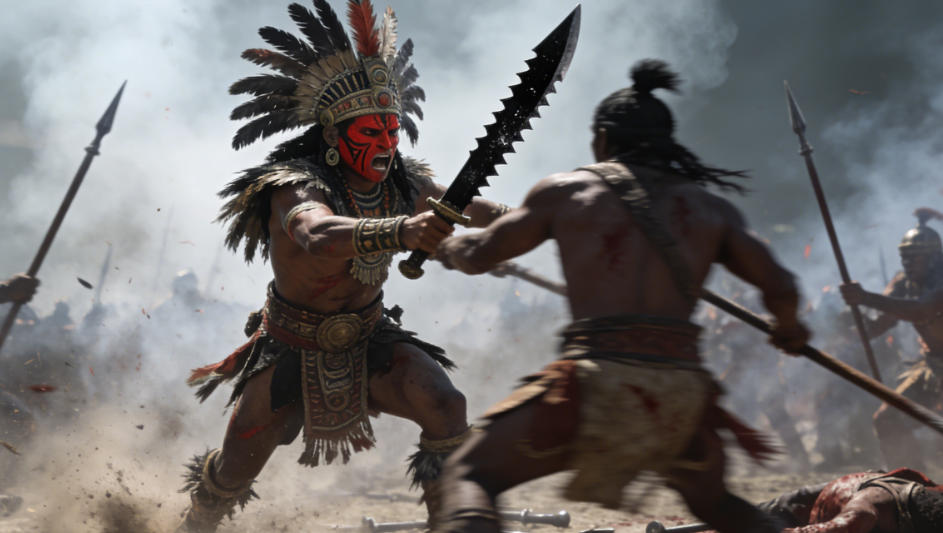
Was ist ein Macuahuitl und warum war es die tödliche Waffe der aztekischen Krieger?
In den antiken mesoamerikanischen Zivilisationen gehörte das Macuahuitl zu den bekanntesten und gefürchtetsten Waffen auf dem Schlachtfeld. Als einzigartiges aztekisches Schwert unterschied es sich von jeder Metallklinge: In seinem bemerkenswerten Design verband es Holz und Obsidian und wurde so zu einer der tödlichsten Waffen der Azteken.
Das Macuahuitl war mehr als eine Waffe – es verkörperte die aztekische Kriegerkultur, Kampfstrategie und spirituelle Symbolik.
Ursprung und Name: Warum es als „aztekisches Schwert“ bezeichnet wird
Der Begriff „Macuahuitl“ stammt aus der Nahuatl-Sprache und bedeutet „Handholz“ oder „handgeführte Holzwaffe“. Obwohl es heute oft als aztekisches Schwert bezeichnet wird, handelt es sich nicht um ein traditionelles Metallschwert. Stattdessen ist es eine Verbundwaffe mit scharfen Obsidianklingen, die in einen massiven Holzkörper eingelassen sind. Ihr Design vereint die Schärfe eines Schwertes mit der Wucht einer Keule und ermöglicht es, im Kampf sowohl Schnitt- als auch stumpfe Verletzungen zu verursachen – ein entscheidendes Werkzeug für aztekische Krieger im Nahkampf.
Diese einzigartige Waffe entstand aufgrund der Knappheit an Metallen in Mesoamerika. Im Gegensatz zu europäischen Stahlschwertern nutzten die Azteken geschickt das reichlich vorhandene Obsidian aus der Region, formten daraus scharfe Klingen und befestigten sie in sorgfältig gefertigten Holzgriffen. Obsidianklingen waren unglaublich scharf und konnten Fleisch und Knochen durchtrennen, während der robuste Holzkörper genug Gewicht und Aufprallkraft für den ein- oder beidhändigen Einsatz bot.
Darüber hinaus spiegelt das Design des Macuahuitl nicht nur praktische Kampferfordernisse wider, sondern auch das umfassende Verständnis der aztekischen Handwerker für Materialien und Taktik. Faktoren wie die Widerstandsfähigkeit des Holzes, ein rutschfester Griff, der Winkel der Klingen und die Gewichtsverteilung wurden sorgfältig bedacht. Dadurch wurde das Macuahuitl zu einer der tödlichsten und taktisch vielseitigsten aztekischen Waffen. Es war nicht nur ein Werkzeug für das Schlachtfeld, sondern auch ein Symbol für die Identität und Kampfklugheit der Krieger.
Design und Handwerkskunst: Der einzigartige Aufbau des aztekischen Schwertes
Das Macuahuitl zeugt vom Einfallsreichtum mesoamerikanischer Handwerker und ihrem geschickten Umgang mit begrenzten Ressourcen sowie vom Verständnis aztekischer Krieger für die Leistungsfähigkeit von Waffen:
-
Holzkern: Aus widerstandsfähigem heimischem Hartholz gefertigt, um optimales Gewicht, Belastbarkeit und Haltbarkeit zu gewährleisten und wiederholten Schlägen standzuhalten, ohne zu brechen.
-
Obsidianklingen: In gleichmäßigem Abstand wurden Rillen in den Holzkörper geschnitzt, in die scharfe Obsidianklingen eingesetzt wurden. Diese Klingen konnten mühelos Fleisch und Knochen durchtrennen und waren damit entscheidend für die tödliche Wirkung des Macuahuitl.
-
Befestigung der Klingen: Natürliche Harze, Pech oder Klebstoffe hielten die Klingen sicher an ihrem Platz und verhinderten, dass sie sich im Kampf lockerten oder lösten. Präzision bei diesem Arbeitsschritt war entscheidend für die Haltbarkeit und Wirksamkeit der Waffe auf dem Schlachtfeld.
-
Schärfe: Die Schneiden aus Obsidian waren schärfer als hochwertige Stahlrasierklingen und konnten sofort tödliche Verletzungen verursachen. Anordnung und Abstand der Klingen waren sorgfältig darauf ausgelegt, die Schneidwirkung zu maximieren.
Das Gesamtdesign des Macuahuitl vereinte Schneid- und Schlagfunktionen und ermöglichte schnelle Hiebe sowie kraftvolle Schläge. Auf dem Schlachtfeld bedeutete dies, dass die Waffe feindliches Fleisch und Knochen durchtrennen und im Nahkampf zugleich erhebliche Wucht entfalten konnte. Gewichtsverteilung, Anordnung der Klingen und Griffgestaltung waren präzise berechnet. So wurde das Macuahuitl zu einer der tödlichsten, vielseitigsten und taktisch wertvollsten Waffen der aztekischen Armee und zu einem charakteristischen Vertreter der aztekischen Waffen.

Das Macuahuitl auf dem Schlachtfeld: eine zentrale Rolle unter den mesoamerikanischen Waffen
Als zentrale aztekische Waffe war das Macuahuitl ein wichtiges Werkzeug für aztekische Soldaten. Zu seinen taktischen Vorteilen gehörten:
-
Hohe Zerstörungskraft: Obsidianklingen konnten tiefe Schnittwunden verursachen
-
Vielseitigkeit: Konnte eingesetzt werden, um Gefangene zu töten oder zu verstümmeln
-
Taktische Kombinationen: Wurde oft mit Schilden (Chimalli) kombiniert
-
Flexibler Einsatz: Konnte ein- oder beidhändig geführt und an unterschiedliche Kampfsituationen angepasst werden
Historische Berichte spanischer Konquistadoren halten fest, dass sie von der Schärfe der Waffe beeindruckt waren. Einige beobachteten, wie ein Macuahuitl Gliedmaßen von Feinden oder sogar Pferden abtrennte.
Das belegt, dass das Macuahuitl nicht bloß ein Symbol, sondern eine äußerst wirksame Waffe auf dem Schlachtfeld war.
Vergleich mit anderen Waffen: Was es so besonders machte
Unter den Waffen mesoamerikanischer Krieger ergänzte das Macuahuitl andere Waffen wie Speere (Tepoztopilli) oder Streitäxte (Tlaximaltepoztli), doch seine Eigenschaften waren einzigartig:
-
Im Vergleich zu Speeren eignete es sich besser für Hiebe im Nahkampf
-
Im Vergleich zu anderen Holzwaffen waren seine Klingen schärfer und tödlicher
-
Gegen Metallwaffen erwies es sich im Nahkampf als außerordentlich wirksam
Dieses besondere Design machte das Macuahuitl zu einer der vertrauenswürdigsten Waffen aztekischer Krieger und anderer mesoamerikanischer Kämpfer.

Religiöse und kulturelle Bedeutung: mehr als nur eine Waffe
Über den Krieg hinaus hatte das Macuahuitl eine tiefe kulturelle und religiöse Bedeutung. Es tauchte häufig bei zeremoniellen Anlässen und in symbolischen Verzierungen auf und stand für den Status, die Ehre und die Macht eines Kriegers.
Die aztekische Gesellschaft schätzte Kampf und Opfer sehr, und das Macuahuitl symbolisierte die Treue und Hingabe eines Kriegers gegenüber seinem Stamm und den Göttern.
Moderner Einfluss und kulturelles Erbe
Obwohl nur wenige originale Macuahuitl-Waffen erhalten geblieben sind, da Holz und Obsidian empfindlich sind, hat dieses einzigartige aztekische Schwert bis heute großen Einfluss und kulturelle Bedeutung:
-
Geschichtsbegeisterte und Nachstellungen: Das Macuahuitl ist bei Geschichtsdarstellern und Waffensammlern beliebt und wird bei Vorführungen aztekischer Taktiken und Kampfstile eingesetzt.
-
Filme, Spiele und Comics: Häufig als aztekisches Schwert dargestellt, kommt es in Filmen, Romanen, Animes und Strategie- sowie Actionspielen vor und ist zu einem weltweiten Symbol für mesoamerikanische Krieger geworden.
-
Bildung und kulturelle Vermittlung: Das Macuahuitl wird in Dokumentationen, Museumsausstellungen und wissenschaftlichen Arbeiten vorgestellt und vermittelt dem Publikum Wissen über aztekische Militärsysteme, Handwerkskunst und Kriegerethos.
Durch diese modernen Verwendungen hat sich das Macuahuitl von einer einfachen Waffe zu einem Symbol entwickelt, das Geschichte und Kultur verbindet, den antiken taktischen Einfallsreichtum veranschaulicht und Menschen weltweit begeistert.
Fazit: Macuahuitl – das ewige Symbol des aztekischen Kriegergeistes und der mesoamerikanischen Waffenkultur
Als einzigartiges aztekisches Schwert war das Macuahuitl ein zentraler Bestandteil der Waffen der Azteken und zeugt vom Einfallsreichtum einer Zivilisation, die begrenzte Ressourcen für taktische Vorteile optimal nutzte. Als Verbindung von kultureller Symbolik, Kampfwirkung und handwerklichem Können ist es unverzichtbar für das Verständnis der antiken mesoamerikanischen Zivilisation.
Ob in der historischen Forschung, in Museumsausstellungen oder in der modernen Popkultur – das Macuahuitl weckt mit seinem unverwechselbaren Design und seiner legendären Geschichte weiterhin die Neugier auf antike Waffen und Zivilisationen.
Als legendäres aztekisches Schwert zählt das Macuahuitl zu den bekanntesten aztekischen Schwert-Designs der Geschichte und steht für den Einfallsreichtum hinter den antiken aztekischen Waffen und der Kriegerkultur.

