


Gladius Sword: History, Design, and Roman Legion Battlefield Tactics
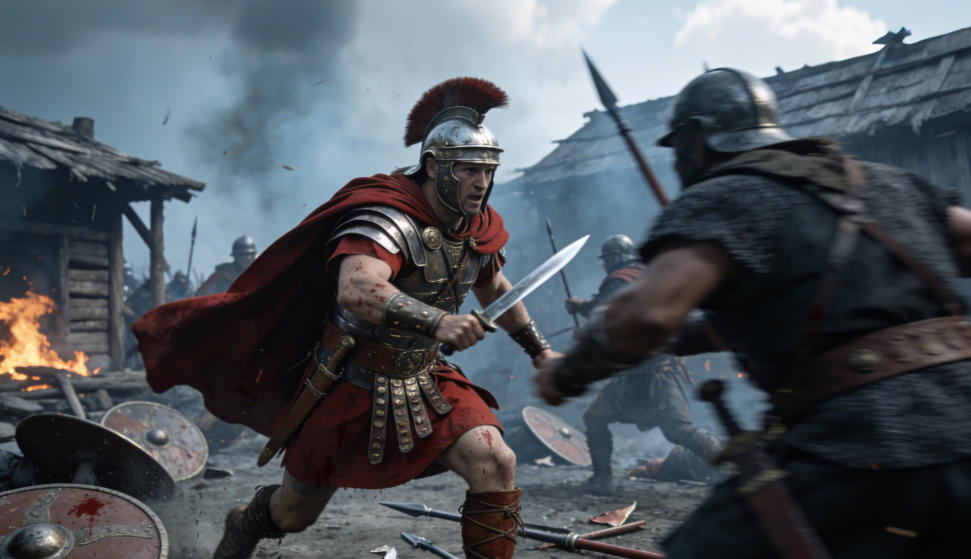
What Is a Gladius and How Did Roman Legionaries Use It in Battle?
In the history of ancient weapons, the gladius stands out as one of the most recognizable and influential swords ever used in warfare. As the standard weapon of Roman legionaries, the gladius sword represented not only the discipline and tactical superiority of the Roman army but also the military culture of the Roman Empire itself. From the Roman Republic to the Imperial era, this short sword played a decisive role on countless battlefields.
As interest grows in topics such as Roman gladius, gladius sword history, ancient Roman weapons, Roman legion sword, and Roman short sword, historians, collectors, and enthusiasts are increasingly exploring the origins, design, and battlefield tactics associated with this legendary weapon.
What Is the Gladius (Roman Short Sword)
The gladius was one of the most famous close-combat weapons used by Roman legionary infantry. Often referred to as the Roman short sword, it is characterized by its double-edged blade and relatively short length, making it ideal for close-quarters fighting. Because Roman armies typically fought in tightly organized infantry formations, the compact structure of the gladius sword allowed soldiers to deliver fast and precise thrusts while maintaining formation discipline.
A typical gladius sword includes several defining structural features:
-
Double-edged straight blade
-
Sharp pointed tip designed for thrusting
-
Short, single-handed grip
-
Rounded or spherical pommel for balance
In general, the blade length of a gladius ranges from 45 to 60 cm, with a total length of around 65 to 85 cm. The weapon usually weighs between 0.7 and 1 kilogram. These proportions give the gladius sword excellent agility while still maintaining powerful close-combat effectiveness, especially in dense battle formations.
In Roman legion tactics, soldiers typically fought behind a large rectangular shield called the Scutum. Legionaries formed tight shield lines and used the gaps beside their shields to quickly thrust the gladius toward the enemy. This tactic allowed soldiers to remain protected while delivering lethal attacks in a very short amount of time. Roman training therefore emphasized thrusting attacks rather than wide slashing movements, since thrusts were more likely to penetrate armor and strike vital organs.
From a weapon design perspective, the blade of the gladius sword was usually thick and durable, capable of withstanding repeated thrusting motions while retaining sharpness. The two sharpened edges also allowed for occasional cutting attacks when necessary, giving the weapon versatility in different combat situations.
The hilt design of the gladius was also highly practical and ergonomic. Grips were often made from wood, bone, or ivory and featured grooves or contours that improved grip stability during combat. The pommel at the end of the hilt helped balance the sword and provided additional control during rapid thrusting motions.
Because of its efficient design, balanced weight, and perfect compatibility with Roman infantry tactics, the gladius became one of the most recognizable weapons of the Roman legion. It symbolized Roman discipline, battlefield efficiency, and the integration of weapon design with military strategy.
Overall, the gladius sword was a weapon specifically optimized for close-range combat. Its compact size, lethal thrusting capability, and synergy with shield formations allowed it to dominate ancient battlefields and secure its place as one of the most famous short swords in world history.

The Historical Origins of the Gladius
Iberian Influence and Roman Adoption
Most historians believe that the gladius was heavily influenced by weapons used in the Iberian Peninsula. Around the 3rd century BCE, Roman forces encountered Celtic-Iberian warriors who used short swords that proved highly effective in close combat.
These swords featured shorter blades with sharp points that allowed quick and deadly thrusts. In dense combat situations, they were often more efficient than longer swords.
The Roman military was known for adopting useful innovations from enemy cultures. After observing the effectiveness of these Iberian weapons, the Romans began producing their own versions and gradually incorporated them into the standard equipment of legionary soldiers. This early variant became known as the Gladius Hispaniensis, meaning “Spanish-style sword.”
The Gladius Hispaniensis typically had a relatively long blade with a slight leaf shape and a very sharp point. This design allowed the gladius sword to perform both thrusting and cutting attacks effectively. For Roman soldiers, this weapon proved extremely versatile in chaotic battlefield environments.
As the Roman Republic expanded across the Mediterranean and into continental Europe, the gladius sword became the standard weapon of Roman legion infantry. In many campaigns, the combination of disciplined formations and effective short-sword combat helped Roman forces defeat larger armies.
Development During the Roman Empire
As the Roman Empire expanded and the army grew larger, the design of the gladius gradually became more standardized. To equip large numbers of soldiers, Rome developed organized military production systems where workshops manufactured gladius swords and other equipment for the legions.
During this period, weapon makers refined the structure of the gladius, adjusting blade shape, balance, and hilt construction to improve durability and battlefield performance. Some versions featured straighter blades and sharper tips to maximize thrusting effectiveness.
At the same time, Roman military training became extremely disciplined. Soldiers repeatedly practiced coordinated combat techniques using the gladius alongside the large Scutum. Training emphasized quick, controlled thrusts rather than large swings.
On the battlefield, Roman legionaries fought in tightly organized formations. Protected by their shields, they would quickly thrust their gladius sword from behind the shield line toward the enemy's vital areas. This short, rapid attack method proved extremely deadly and became one of the key reasons for Roman battlefield success.
Supported by rigorous training and standardized weapon production, the gladius became the most iconic weapon of the Roman legion and played a major role in the expansion and consolidation of Roman military power for centuries.
Structural Features of the Gladius Sword
Blade Design
The blade of the gladius is typically double-edged with an extremely sharp point. This design allows powerful thrusting attacks capable of penetrating armor or striking vital organs.
In Roman combat tactics, soldiers would remain protected behind their shields and thrust the gladius sword through openings in the shield wall. This approach allowed fast attacks while minimizing exposure to enemy strikes.

Hilt and Guard Structure
The hilt of a gladius sword is relatively short and designed for a stable grip. Common materials used in its construction included:
-
Wood
-
Bone
-
Ivory
-
Decorative metal fittings
The pommel at the end of the hilt is often round or disc-shaped, helping balance the blade and improving weapon control during combat.
The guard of the gladius is relatively small because Roman soldiers relied primarily on the large Scutum for protection.
Scabbard and Carrying Method
The gladius was usually carried in a wooden scabbard covered with leather and decorated with metal fittings. The scabbard could be attached to a belt or shoulder strap, allowing soldiers to draw the gladius sword quickly during combat.
For officers or higher-ranking soldiers, scabbards sometimes featured elaborate metal engravings or decorative reliefs that indicated status or rank.
The Role of the Gladius on the Roman Battlefield
Legion Formation Tactics
Roman legions were famous for their disciplined formations. Soldiers stood in tightly packed ranks holding the large Scutum, forming a defensive wall before attacking with their gladius.
This tactic offered several advantages:
-
Fast attack speed
-
Stable formation
-
Strong defensive protection
-
Minimal exposure to enemy weapons
Within this system, the gladius sword became one of the most lethal close-combat weapons in the ancient world.
Close-Range Thrusting Combat
Roman military training emphasized thrusting attacks because they were more accurate and more likely to cause fatal wounds than slashing strikes.
Legionaries often aimed for vulnerable areas such as:
-
Abdomen
-
Chest
-
Thighs
A quick and precise thrust could disable or kill an opponent almost instantly, which explains why the gladius proved so effective in ancient warfare.
Major Types of Gladius
As Roman military equipment evolved, several different forms of the gladius sword appeared.
Gladius Hispaniensis
The earliest Roman version, featuring a longer blade with a slight leaf shape that allowed both thrusting and cutting.
Mainz Gladius
Widely used in the early Roman Empire, this version had a wider blade near the center and a longer tapered point optimized for thrusting.
Pompeii Gladius
A later and more simplified design with straighter edges, making it easier to mass-produce for large Roman armies.
These variations demonstrate how the gladius evolved alongside Roman battlefield tactics and military logistics.
Decline and Replacement of the Gladius
By the 3rd century CE, changes in warfare and army organization led to the gradual replacement of the gladius by longer swords, most notably the Spatha.
The spatha featured a longer blade that offered greater reach and proved especially effective for cavalry combat. As cavalry became increasingly important on the battlefield, longer swords gradually replaced the traditional Roman short sword.
Despite this transition, the gladius sword remains one of the most iconic weapons in Roman military history, symbolizing the golden age of the Roman legion.
The Gladius in Modern Culture
Today, the gladius continues to appear in many forms of modern media and historical study. It is frequently featured in:
-
Ancient Rome themed films
-
Historical documentaries
-
Video games and fantasy stories
-
Historical reenactment events
Many craftsmen and collectors also produce high-quality gladius sword replicas, preserving the legacy of Roman weapon craftsmanship and military heritage.
Why Collectors Appreciate the Gladius
For historical weapon enthusiasts, the gladius offers several compelling attractions:
-
Rich historical significance as the primary weapon of Roman legionaries
-
Efficient and iconic design optimized for close combat
-
Strong cultural influence in film, games, and historical research
-
High collectible value in modern replica craftsmanship
Conclusion
As one of the most iconic weapons of the Roman legion, the gladius represents far more than a simple short sword. It embodies the discipline, strategy, and military innovation that helped build the Roman Empire. From its Iberian origins to its dominance on ancient battlefields, the gladius sword demonstrates the powerful relationship between weapon design and battlefield tactics.
Whether studied as a historical artifact, admired as a piece of craftsmanship, or collected as a replica weapon, the gladius remains one of the most fascinating and influential swords in the history of warfare.

