


Katana & Saya: The Spiritual Balance Behind Japanese Sword Culture
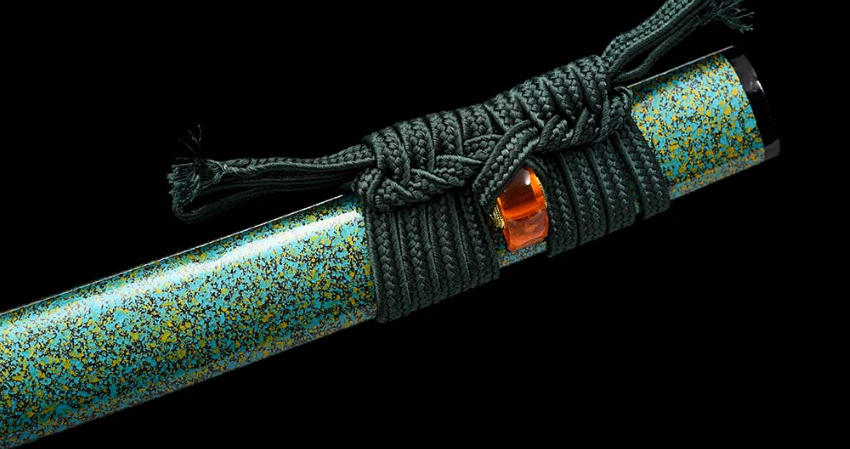
Why Is the Saya Considered the Spiritual Extension of the Katana in Japanese Sword Culture?
In Japan’s long and storied samurai history, the katana has always been regarded as the soul of the warrior. Yet the true guardian of that soul — the saya (scabbard) — is often overlooked.
In truth, the saya is far more than a mere protective covering; it embodies aesthetic refinement, social status, and spiritual symbolism. It is an inseparable part of Japanese sword culture — a masterpiece where history, craftsmanship, and philosophy intertwine.
What Does 'Saya' Mean?
The Japanese term 'Saya (鞘)' refers to the scabbard of a samurai sword, the protective sheath that covers and preserves the blade.
In Japanese sword culture, the saya carries not only practical value but also profound cultural and artistic meaning:
-
Protection – The saya prevents the blade from rusting or being damaged and allows the warrior to carry it safely.
-
Symbolism – The blade represents yang (power and aggression), while the saya symbolizes yin (restraint and preservation). Together, they embody the samurai’s balance between strength and discipline.
-
Aesthetics – Traditional saya are usually crafted from magnolia wood, coated with natural urushi lacquer, and sometimes wrapped with sageo cords or inlaid with intricate decorations such as family crests and shell inlays. These details reflect the owner’s rank, taste, and individuality.
Simply put, the saya is the 'protective garment' of the katana — practical, spiritual, and artistic in equal measure.

The Origins and History of the Saya
The history of the saya dates back to the Heian period (794–1185), when Japan began transitioning from an aristocratic to a samurai-led society.
During this time, the sword evolved beyond its role as a mere weapon — it became a symbol of identity, honor, and inner discipline. As the Japanese katana developed in curvature, blade design, and forging technique, the saya evolved in both form and symbolism.
Early saya were purely functional, designed to shield the blade from moisture, dust, and corrosion. But as the samurai class rose to prominence, the saya’s role expanded beyond practicality — it became a reflection of rank, character, and personal refinement.
During the Sengoku period (Warring States Era), when battles raged across Japan, the saya became an extension of one’s social identity. Its materials, lacquer color, and ornamentation revealed the warrior’s background and stature at a glance.
-
High-ranking samurai and daimyō retainers used urushi-lacquered saya, made from finely carved wood coated in multiple layers of lacquer. Polished to a mirror finish, these saya resisted humidity and symbolized honor and prestige. Gold and silver powders, family crests, and ornate metal fittings adorned their surfaces, representing noble lineage.
-
Ordinary samurai and rōnin favored simpler wooden saya, focusing on practicality and mobility. With plain wood grain or minimal lacquer, these scabbards embodied the humble resolve of warriors ready to face death without vanity.
-
Nobility and shoguns often commissioned exquisitely decorated saya, carved with kamon (family crests) and inlaid with metals, gold leaf, or shell patterns. These were more than tools — they were ceremonial art pieces displayed as symbols of legacy and power.
Every saya told a silent story about its bearer.
Black lacquer signified solemnity and restraint; crimson stood for courage and passion; gold embellishments denoted victory and indomitable will.
Thus, the saya became a tangible expression of the Bushidō spirit, where beauty and honor coexist.
Philosophically, the relationship between the blade and its saya reflects the yin-yang balance of Japanese thought — the harmony between opposing forces.
The sword is yang, representing strength and aggression; the saya is yin, representing protection and calm.
Together, they embody the samurai’s lifelong pursuit of balance between power and reason, passion and restraint — as the saying goes:
'The sword is sheathed; the heart is still.'
In this sense, the history of the saya mirrors the evolution of Japanese craftsmanship and spiritual culture — from functional sheath to symbol of identity, discipline, and artistry, now cherished by collectors and artisans of traditional Japanese swords worldwide.
The Cultural Symbolism of the Saya
In traditional Japanese philosophy, the union of sword and saya represents the harmony of yin and yang.
The katana embodies strength, courage, and decisive action; the saya embodies compassion, restraint, and wisdom.
This duality echoes the Bushidō code, where power must always be governed by morality and self-control.
As the samurai proverb goes:
'The sword is hidden within the sheath, and the heart remains calm.'
This idea goes beyond combat — it is a spiritual discipline.
A true swordsman is not one who kills, but one who knows when to draw the blade and when to refrain.
The saya carries multiple layers of symbolism:
-
Symbol of Status – In feudal Japan, the decoration and materials of a saya reflected the samurai’s rank.
Lavish urushi-lacquered saya with gold inlays denoted high-ranking warriors, while plain wooden saya symbolized loyalty and humility. Even the kamon (family crest) engraved on the scabbard revealed one’s lineage. -
Symbol of Spirit – The saya conceals the blade’s deadly edge, just as the samurai conceals his aggression beneath calm composure.
This embodies the principle of 'softness controlling strength,' one of the deepest tenets of Bushidō.
Thus, the saya is not just a vessel — it is an instrument of the soul, symbolizing mastery over emotion and violence. -
Expression of Aesthetics – The saya’s color, texture, and finish express the owner’s personality and artistic taste.
Black represents dignity and composure; red symbolizes loyalty and passion; natural wood grain reflects purity and simplicity.
To collectors and craftsmen, a perfectly balanced katana saya is not merely an accessory but a spiritual artwork.
In essence, the saya is not just a sheath — it is the cultural and spiritual extension of the katana.
It grants form to the warrior’s inner discipline and gives warmth to his power.
Together, the sword and its saya embody the eternal harmony between strength and serenity, action and stillness.
Even in modern times — among Japanese sword collectors, martial arts practitioners, and cosplay enthusiasts — the saya continues to be revered for its craftsmanship and meaning.
Each scabbard tells a story of courage, balance, and the timeless pursuit of beauty that defines Japanese culture.

The Traditional Craftsmanship of the Saya
Creating a perfect saya (scabbard) is an art that combines precision, balance, and beauty.
In the world of the Japanese katana, the saya is considered just as important as the blade itself.
As the old saying goes: 'If the sword is the soul, then the saya is the body.'
The saya protects the blade, but it also reflects the samurai’s aesthetic taste and inner character.
1. Material Selection: The Balance Between Nature and Function
Traditional saya are crafted from lightweight yet durable woods such as magnolia wood or hinoki cypress.
These materials naturally absorb moisture, preventing the blade from rusting, while maintaining a light, sturdy structure ideal for carrying and quick draws.
The interior of the saya is meticulously polished so that the blade fits perfectly—secure, yet without friction.
Every millimeter matters. Sword craftsmen carefully adjust the interior to achieve a flawless fit, ensuring the blade slides in smoothly and rests securely.
This precision represents the essence of Japanese sword craftsmanship, where artistry meets engineering perfection.
2. Urushi Lacquering: The Harmony of Protection and Beauty
The outer surface of the saya is often coated with multiple layers of natural urushi lacquer.
This sap-derived lacquer not only protects the wood from humidity and decay but also gives it a deep, radiant shine.
Each layer is applied, dried, and polished repeatedly — a process that demands time, patience, and mastery.
The lacquer’s color often reflects the owner’s identity and temperament:
-
Black lacquer saya – symbolizes authority and composure
-
Red lacquer saya – represents courage and loyalty
-
Natural wood saya – embodies simplicity and purity
For nobles and high-ranking samurai, the saya was often decorated with gold or silver powder, or raden (mother-of-pearl inlays).
Under sunlight, such saya gleamed softly, representing honor and refinement.
This ancient technique is part of Japan’s urushi art, a timeless embodiment of Eastern patience and philosophy.
3. Sageo and Ornamentation: Function Meets Elegance
Each saya is fitted with a sageo cord, traditionally made from silk or cotton.
The sageo not only secures the saya to the wearer’s belt but also symbolizes discipline and respect for tradition.
The manner in which a samurai ties the sageo, known as “Rei no Kata” (the etiquette of drawing the sword), reflects readiness, composure, and mindfulness.
In addition, metal fittings such as kojiri (end cap), kurikata (cord knob), and koiguchi (mouth fitting) reinforce the structure and serve as ornamentation.
Each style and carving detail reflects the period and school of craftsmanship, making every handcrafted saya a unique piece of historical artistry.
4. The Spirit of Craftsmanship: The Harmony Between Blade and Saya
True artisans pursue not just beauty, but the perfect harmony between the sword and its saya.
The saya must allow for smooth motion—
swift and fluid when drawing, gentle and stable when sheathing.
This seamless balance defines the soul of katana craftsmanship.
Every saya embodies the craftsman’s patience, intuition, and philosophy.
It not only protects the blade but also manifests the Bushido spirit of self-discipline, serenity, and respect for life.
The Role of the Saya in Combat and Ceremony
In the samurai era, the saya was more than a sheath—it served clear combat and ceremonial functions.
Every gesture involving the katana was governed by ritual precision:
-
The katana was worn with the blade facing upward, ready for a quick draw.
-
When entering another’s home, the samurai would place the sheathed sword down, signaling peaceful intent.
-
In iaido and kenjutsu, the coordination between sword and saya is a core principle of training.
This philosophy of 'the sword never leaves the saya without purpose' embodies the Japanese understanding of balance between aggression and restraint, destruction and preservation.
Handmade Sanctuary Blade Katana Sword 1060 Carbon Steel Samurai Sword Full Tang Green Saya
The Handmade Sanctuary Blade Katana Sword is a masterpiece that blends traditional swordsmithing with modern artistry.
Hand-forged by skilled craftsmen using premium 1060 carbon steel, this katana offers both cutting performance and collectible value, representing the perfect harmony of beauty and strength.
1. Traditional Craftsmanship Meets Practical Design
Each sword undergoes multiple hand-forging steps — hammering, quenching, polishing, and sharpening — in strict accordance with Japanese samurai sword-making standards.
The full tang construction ensures optimal strength, balance, and control, making it suitable for both display and martial arts practice.
2. Green Saya: A Symbol of Balance and Nature
The green lacquer saya symbolizes nature, vitality, and inner harmony.
Its smooth, polished finish not only protects against rust and moisture but also provides a distinctive visual appeal.
Whether displayed as a collector’s piece or used as part of a samurai cosplay costume, this Green Saya Katana exudes elegance and energy.
3. Exquisite Details and Comfortable Grip
The tsuka (handle) is traditionally wrapped with ito cord, offering a firm and comfortable grip.
The tsuba (guard) features a minimalist metallic design, adding balance and dignity.
Overall, the proportions and symmetry showcase the refined beauty and restraint of katana aesthetics.
4. Versatility and Collectible Value
This katana is ideal for collectors, martial arts practitioners, or Japanese culture enthusiasts.
It also serves perfectly as a decorative centerpiece, ceremonial item, or cosplay accessory.
For those who appreciate the philosophy of balance between power and serenity, the Handmade Sanctuary Blade Katana Sword is a piece worthy of admiration and legacy.

Conclusion: The Way of the Saya, the Heart of the Swordsman
As the old proverb goes: 'Once the sword leaves the saya, blood must be shed; when it returns, peace is restored.'
The saya represents silent faith — serenity behind sharpness.
Today, whether you are a Japanese sword collector, anime katana enthusiast, or traditional craftsmanship admirer, understanding the history and symbolism of the saya is essential to grasping the spirit of the samurai.
The sword and the saya depend on each other; sharpness and restraint coexist.
This is the eternal harmony at the heart of Japanese sword culture.
For every katana collector, anime fan, and cosplay artist, owning a katana with a green saya is not just about possession — it’s about experiencing the spirit of the warrior and the timeless bond between blade and soul.
Katana Green Sanctuary Blade Katana Swords with Green Saya — a symbol of strength, balance, and devotion, allowing every modern swordsman to hold a piece of samurai legend in their hands.

