


Japanese Tachi Sword: History, Craftsmanship, and Collectible Value
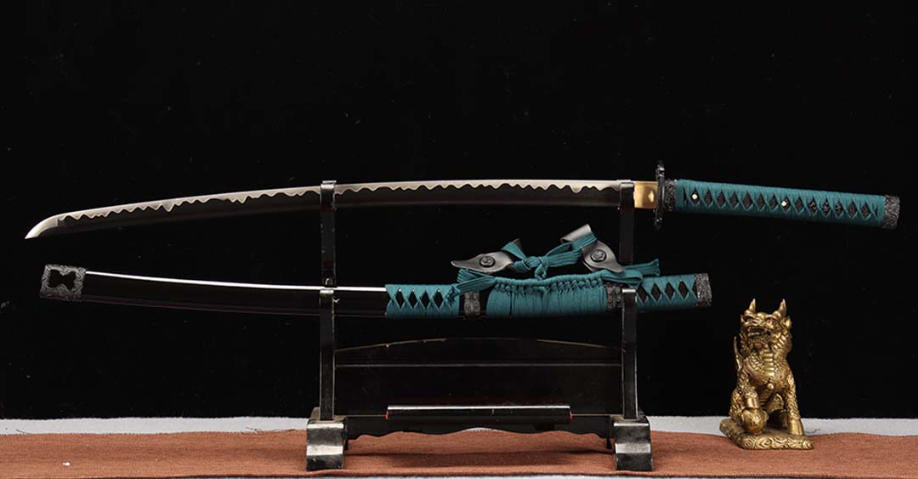
What Is the Japanese Tachi Sword and Why Does It Matter Today?
In the world of Japanese swords (https://en.wikipedia.org/wiki/Japanese_sword), the Tachi stands out with its elegant curves and classical aura, widely regarded as a symbol of the Japanese samurai spirit. Whether for sword collectors, martial arts enthusiasts, or fans of Japanese culture, the Tachi attracts global attention due to its unique historical significance and exquisite craftsmanship. This article provides a comprehensive introduction to this legendary blade, covering its history, uses, structural features, and modern collectible value.
1. The Historical Origins of the Tachi: The Prototype of Japanese Swords
The Tachi originated in Japan during the Heian period (approximately late 8th to 12th century) and is one of the earliest fully formed long swords in Japan, making it an essential reference for studying the origins of Japanese samurai swords. At that time, Japanese swords were transitioning from straight blades to curved designs, and the emergence of the Tachi marked a major evolution in sword-making techniques, laying the foundation for later Japanese sword culture.
The word 'Tachi' literally means 'a sword worn at the side,' as it was traditionally worn edge-down at the waist. This design allowed cavalry to quickly draw the sword while mounted, reflecting the practical combat design of the early Tachi sword history.
From the late Heian to the Kamakura period, cavalry units were the core of Japanese armies. The Tachi’s long, deeply curved blade enabled effective slashing attacks at high speed, demonstrating both the tactical needs of warfare and the ingenuity of ancient swordsmiths in Japanese ancient sword development.
Moreover, the Tachi was more than just a weapon; it symbolized status and honor. Only nobles and high-ranking samurai could carry a Tachi, making it both a practical weapon and a symbol of prestige. Thus, the Tachi became a representation of strength and spirit in ancient samurai society and laid a crucial cultural and craft foundation for the later Katana (https://en.wikipedia.org/wiki/Katana).
2. The Uses of the Tachi: From Battlefield Weapon to Symbol of Status
In the samurai society of ancient Japan, the uses of the Tachi extended far beyond warfare, gaining deeper cultural significance over time.
During the Heian to Kamakura periods, the early Tachi sword primarily served as a battlefield weapon for cavalry. Its long, curved blade allowed samurai to deliver powerful slashing attacks while mounted, quickly breaking through enemy defenses. To samurai, the Tachi was more than a warrior’s sword; it was a companion in life-and-death situations, symbolizing courage and honor.
By the Kamakura and Muromachi periods, as Japanese society gradually stabilized, the Tachi evolved from a purely combat weapon to a symbol of status and rank. Nobles and high-ranking samurai often used the Tachi for ceremonial occasions, official audiences, or as gifts of honor. This gave rise to the cultural practice known as Tachi ceremonial etiquette, where carrying a finely crafted Tachi indicated loyalty, prestige, and social standing.
By the Edo period, the Tachi was gradually replaced by the Katana as the primary sword, yet its cultural and aesthetic value remained intact. Today, the Tachi is seen in traditional festivals, Shinto rituals, and martial arts demonstrations, representing the enduring spirit of samurai and the craftsmanship of Japanese swordsmiths.
Modern collectors often value high-quality Tachi made with traditional techniques such as folded forging and clay tempering, which not only preserve the sharpness of the blade but also showcase the dedication of the swordsmith. Understanding the Tachi sword meaning and historical context is essential for appreciating the collectible value of Japanese swords.
In summary, the Tachi evolved from a battlefield weapon to a status symbol and cultural heritage, reflecting the deep integration of samurai spirit and artistic aesthetics. It is more than a weapon; it is a cultural icon spanning centuries, embodying Japan’s understanding of loyalty, honor, and craftsmanship.

3. Appearance and Structural Features of the Tachi
The Tachi is renowned for its elegant shape, precise proportions, and superb craftsmanship, making it one of the most iconic long swords in Japanese sword culture. Every aspect of its design reflects the unique aesthetics and functional considerations of Japanese Tachi structure.
Blade Length and Curvature
The most distinctive Tachi sword feature is its long, deeply curved blade. Compared to the later Katana, the Tachi’s arc is more pronounced, with blade lengths typically ranging from 70 to 80 cm. This curvature made cavalry attacks more effective, combining fluidity with power. The graceful curve reflects both Japanese aesthetic ideals and the swordsmith’s balance between combat performance and artistry.
Unique Wearing Style
Traditionally, the Tachi was worn edge-down at the waist, the most immediate distinction from the Katana. This design allowed mounted warriors to draw the sword quickly while riding, making it a key feature for distinguishing Japanese Tachi structure in historical context.
Reverse Engraving Direction
Swordsmiths often engraved the blade tang to indicate the maker or origin. Notably, the Tachi’s signature is opposite that of a Katana: the engraving faces outward when worn, whereas a Katana’s engraving faces inward. This difference is a practical clue for distinguishing authentic swords and identifying their historical period.
Exquisite Decoration and Craftsmanship
The Tachi’s scabbard (Saya), handguard (Tsuba), and hilt (Tsuka) were often adorned with gold or silver inlays, carvings, lacquer, and family crests. Different samurai clans or families had distinct decoration styles, showcasing their status and taste. These elaborate designs made the Tachi both a weapon and a work of Japanese sword art.
Modern Handmade Tachi Sword Crafting
In modern replicas and collectible markets, handmade Tachi swords continue traditional sword-making techniques. Common materials include:
-
High Carbon Steel Tachi: Offers excellent hardness and sharpness, suitable for both display and practice.
-
Folded Steel Tachi: Forged through multiple folds, creating layered patterns that improve strength and visual appeal.
-
Clay Tempered Tachi (Clay Hamon): Produces natural Hamon patterns on the blade, combining durability with artistry.
-
Full Tang Tachi Sword: Blade and handle are forged as a single piece, ensuring structural integrity and balance, ideal for collectors and martial artists.
These modern techniques not only replicate the appearance of historical Tachi but also restore traditional Japanese sword craftsmanship. Whether for collection, display, or martial arts, handmade Tachi swords blend functionality and artistry, bridging ancient and modern culture.
In conclusion, the Tachi’s design perfectly combines battlefield practicality with Japanese aesthetic principles. From the elegant curve of the blade to the intricate Hamon patterns, each Tachi embodies centuries of sword-making wisdom and samurai spirit, making it an essential symbol for understanding Tachi sword features and Japanese sword culture.
4. What is the Difference Between a Tachi and a Katana?
Although both the Tachi and Katana belong to Japanese swords, they differ significantly in structure, usage, and cultural symbolism. The Tachi originated during the Heian period (approximately 8th–12th century) and was mainly used by cavalry. It has a long, deeply curved blade, worn edge-down at the waist, with the engraving facing outward, serving both as a weapon and a symbol of status and ceremonial importance. The Katana emerged later during the Muromachi period (approximately 14th century), designed for foot combat and close-range fighting. Its blade has a shallower curve, is worn edge-up at the waist, with engravings facing inward, emphasizing practicality and the samurai spirit. Overall, the Tachi emphasizes mounted combat and ceremonial prestige, while the Katana focuses on foot combat, practicality, and Bushido values. Both swords are distinct yet complementary elements of Japanese sword culture.
| Comparison | Tachi | Katana |
|---|---|---|
| Wearing Style | Edge-down | Edge-up |
| Blade Curvature | Deep curve | Shallow curve |
| Main Usage | Cavalry combat | Foot combat |
| Era of Origin | Heian period | Muromachi period |
| Symbolic Meaning | Nobility, ceremony, classical | Combat, samurai spirit |
The Tachi is the predecessor of the Katana. While the Tachi exudes classical elegance and ceremonial significance, the Katana embodies practical combat use and the modern Bushido tradition.

5. Craftsmanship and Materials of the Tachi
The traditional process of making a Tachi is highly complex, showcasing the exceptional skill and dedication of Japanese swordsmiths (Katana Smiths). Whether ancient masterpieces or modern replicas, a genuine Handmade Japanese Tachi Sword requires multiple forging and polishing steps to achieve both strength and beauty.
1. Steel Selection and Folded Forging
The first step in crafting a Tachi is choosing the right steel(https://en.wikipedia.org/wiki/Steel). Ancient swordsmiths typically used Tamahagane steel, while modern artisans often select 1045 carbon steel or higher-grade carbon steel. Known for its hardness and resilience, 1045 steel maintains a sharp edge while providing excellent impact resistance.
During forging, the steel undergoes repeated heating, folding, and hammering, a process known as Folded Forging. Multiple folds remove impurities, improve blade toughness, and create fine layered patterns, enhancing both the appearance and structural integrity of the blade.
2. Clay Tempering (Hamon Formation)
After forging, artisans apply a special clay mixture to the blade before high-temperature quenching. By controlling the cooling rate, the edge and body develop different hardness levels, resulting in a natural Hamon pattern. This not only strengthens the blade but also gives each Clay Tempered Tachi Sword a unique aesthetic. The shape and flow of the Hamon often indicate the swordsmith’s style and craftsmanship level.
3. Polishing and Sharpening
Polishing is an artistic step in Tachi production. Craftsmen use natural whetstones of varying grit over dozens of hours to achieve a mirror-like finish. The reflective surface highlights the Hamon and emphasizes the depth and texture of the blade, demonstrating the sophistication of Tachi sword forging.
4. Mounting and Fittings
Once the blade is finished, the swordsmith assembles the Tsuba (handguard), Tsuka (handle), and Saya (scabbard) with meticulous attention to detail. Premium Tachi often feature hand-wrapped handles with leather, ray skin, or silk for a secure grip and enhanced aesthetic appeal. Decorations, such as Dragon Pattern Accessories, symbolize power, honor, and protection.
For example, the Handmade Japanese Tachi Sword, 1045 Carbon Steel Full Tang Blade with Dragon Pattern Accessories perfectly combines traditional craftsmanship with modern aesthetics:
-
Full Tang Blade ensures structural integrity and balance.
-
1045 Carbon Steel guarantees sharpness and durability, suitable for both collection and practical use.
-
Dragon Pattern Accessories provide a sense of mystery and prestige, enhancing both visual and symbolic impact.
Such handmade Tachi swords are not only tributes to the spirit of the samurai but also works of art. Whether for display, collection, or as a cultural symbol, their craftsmanship and materials reflect the ultimate pursuit of “beauty and strength” by Japanese swordsmiths.
Handmade Japanese Tachi Sword, 1045 Carbon Steel Full Tang Blade Dragon Pattern Accessories

6. Modern Tachi Collecting and Display
Today, the Tachi is a cultural icon blending history, artistry, and collectible value. Collectors pay attention not only to appearance but also to the integrity of structure, steel quality, and fine craftsmanship.
Collecting Tips:
-
Choose Full Tang blades to ensure durability and balance.
-
Examine the Hamon pattern and blade luster to evaluate craftsmanship.
-
Use multi-tiered display stands for safe and elegant presentation.
-
Perform regular maintenance: wiping, oiling, and rust prevention to preserve shine and longevity.
Modern Tachi are more than decorative; they represent a lifestyle aesthetic and a link to cultural heritage.
7. Cultural Significance and Symbolism of the Tachi
The Tachi is not just a weapon; it embodies the spirit and aesthetics of Japan. It reflects the core values of Bushido—honor, loyalty, and discipline.
In Japanese culture, the Tachi is regarded as a 'soul sword,' representing family honor and personal conviction. Whether in ancient battlefields or modern art, the Tachi symbolizes courage, dignity, and protective spirit, maintaining its cultural resonance across centuries.
8. Conclusion: The Timeless Beauty of the Tachi
As the origin and symbol of Japanese swords, the Tachi Sword showcases the pinnacle of ancient craftsmanship while reflecting the spiritual core of Japanese culture. A well-crafted handmade Tachi is both an artwork and a bridge between the past and the present.
For sword collectors, martial artists, or fans of Japanese culture, the Tachi is worthy of preservation and admiration. It is more than a sword—it is a continuation of history and a legacy of beauty and tradition.

