


Sai Weapon Guide: History, Design, and Techniques of Okinawan Trident
What Is a Sai and How Is It Used in Okinawan Martial Arts?
In the world of traditional martial arts weapons, one stands out for its ancient roots and symbolic significance: the Sai, a classic weapon from Okinawa, Japan. As a hallmark of Okinawan Kobudo, the Sai not only plays a vital role in martial arts combat but is also widely admired by martial arts enthusiasts and weapon collectors worldwide for its unique design and practical value.
Origins and Historical Background of the Sai
The Sai originated in the Okinawan islands, and it was not initially conceived purely as a weapon of war. Instead, it gradually evolved from tools used in everyday life and self-defense. Historians generally believe that the design of the Sai may have been influenced by weapon styles from China, Southeast Asia, and the East Indies, but in the unique social context of Okinawa, it developed into a distinct trident-style short staff.
In historical Okinawa, strict weapon bans prevented ordinary citizens from legally owning swords or other sharp weapons. This environment encouraged people to adapt farming, fishing, or iron tools into defensive implements, with the Sai being a prime example. It could serve as a practical self-defense tool while allowing trained users to master a variety of combat techniques against thieves, wild animals, or sudden attacks.
As Okinawan Kobudo developed, the Sai evolved from a utilitarian defense tool into an essential weapon for martial arts forms and combat training. In the Kobudo system, the Sai is used not only to strengthen wrist muscles and improve reflexes but also carries cultural and spiritual significance, symbolizing the intelligence, flexibility, and resilience of the warrior spirit.
This evolution from everyday tool to martial arts weapon makes the Sai one of the most representative and widely used weapons in Okinawan Kobudo, securing its importance in modern martial arts training, weapon collection, and even anime weapon culture.

Design Structure and Features of the Sai
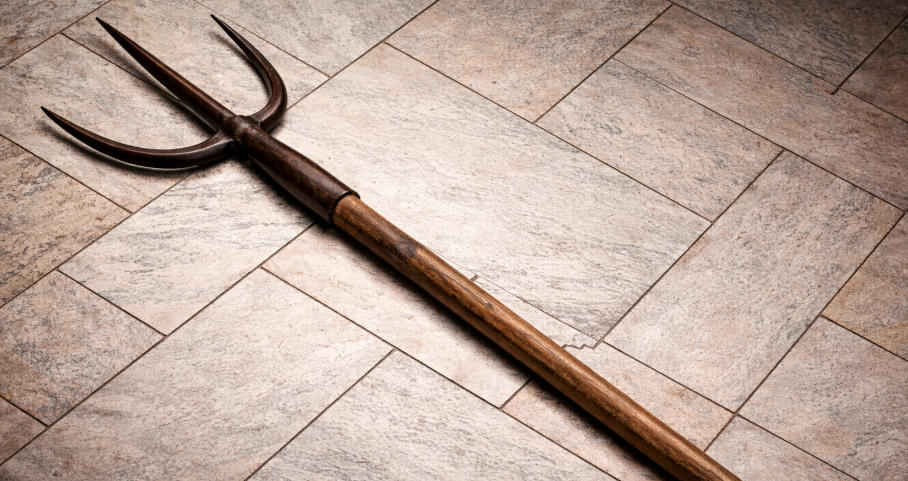
The Sai’s distinctive design has allowed it to endure in martial arts and self-defense practices. As a trident-shaped short staff, its main components include:
-
Central shaft (main rod): Straight for thrusting, stabbing, or blocking attacks.
-
Two side prongs (Yoku): Extend from the base of the shaft to trap or deflect an opponent’s weapon and control attacks.
-
Handle (Tsuka): Typically wrapped for a stable grip.
-
Blunt tip: Can be used for striking or auxiliary defense.
This trident structure allows the Sai to not only thrust but also block, control opponents’ weapons, and counterattack, combining offensive and defensive functionality.
Sai Training and Combat Techniques
In Okinawan Kobudo, the Sai is not just a weapon but also a tool to enhance combat skills and body coordination.
Dual-Wielding and Combo Techniques
Traditionally, Sai are used in pairs, allowing practitioners to:
-
Hold forward for thrusts and pushes
-
Reverse-grip along the arm for blocks and control
-
Coordinate both hands for simultaneous defense and offense
Quick grip changes enable practitioners to handle various attacks while maintaining a balance of offense and defense.
Trapping and Counter Techniques
The side prongs of the Sai play a critical role in combat:
-
Trap opponents’ blades or weapons, disrupting balance
-
Apply control techniques to immobilize joints or weapons
-
Quickly counterattack and suppress enemy moves
These techniques require long-term practice and form training, forming the core skills every Kobudo Sai practitioner must master.

Role of the Sai in Okinawan Martial Arts and Modern Culture
In Okinawan tradition, the Sai symbolizes the ingenuity and self-defense ability of people during periods when swords were forbidden. It is not only a martial arts weapon but also an emblem of status and protection.
As martial arts spread worldwide, the Sai became part of global training programs. Today, it is a standard element in dojos, martial arts schools, and competitive events. Additionally, it frequently appears in films, television, anime, and video games, further boosting its recognition.
High-quality Sai replicas and training versions are sought after by collectors, serving both practical training purposes and display. They have become an important vehicle for preserving and celebrating traditional martial arts culture.
Physical and Skill Benefits of Sai Training
Learning to use the Sai can significantly enhance:
-
Wrist and forearm strength: Control of the Sai demands strong wrist stability
-
Reaction speed and coordination: Quick transitions and responses develop agility
-
Tactical judgment and distance control: Blocking and trapping techniques teach spatial awareness and timing
The Sai is both a historical weapon and an effective training tool, maintaining its importance in modern martial arts systems.
Sai — The Legend and Legacy of the Okinawan Trident
Originating in Okinawa, the Sai (trident short staff) perfectly blends history, self-defense, and martial arts technique. Its unique design, versatile combat applications, and demands on the practitioner’s body and skills make it an indispensable part of the global martial arts weapon repertoire.
Whether from a historical, cultural, Kobudo training, or modern martial arts and collector perspective, the Sai is a legendary weapon worth exploring. For those interested in Sai techniques, Okinawan Kobudo forms, trident training methods, or martial arts collections, the Sai remains a must-learn and must-appreciate classic weapon.

