


Scabbards Explained: History, Function & Modern Sword Scabbards Uses
What Are Scabbards and Why Are They So Important for Swords and Samurai Blades?
In cold weapon culture, samurai sword systems, and European knightly weapon traditions, scabbards are never just 'sword covers.' They function as a critical interface between blade and bearer—integrating protection, portability, display, and ritual significance. Whether on the battlefield or in modern collections, one core truth remains: they're protected by scabbards—the safety and integrity of every blade depend on its scabbard.
Today, scabbards are no longer just weapon accessories; they have become symbols of sword culture, craftsmanship, aesthetics, and historical heritage.
I. The Historical Origin of Scabbards: From Survival Tool to Cultural Symbol
The emergence of scabbards is closely tied to the development of metal weapons. When humans began forging sharper and more lethal blades during the Bronze Age, a practical issue quickly emerged: a sharp blade must be safely stored to prevent injury and damage. Early scabbards were simple constructions made of leather wrapping, wooden shells, or cloth bindings, serving purely as survival tools for safe carrying.
As iron weapons and large-scale warfare developed, scabbards became more structured and functional. Wooden cores provided stability, leather layers increased durability, and belt attachment systems emerged, enabling faster drawing and easier mobility. At this stage, scabbards had already evolved from basic protection into essential military equipment.
In medieval Europe, knightly culture transformed scabbards into symbols of status and power. They were no longer purely functional but became expressions of identity. Nobles and knights decorated their scabbards with metal fittings, intricate engravings, family crests, and ornate textiles. Different social classes used different levels of craftsmanship, turning scabbards into a visual language of hierarchy.
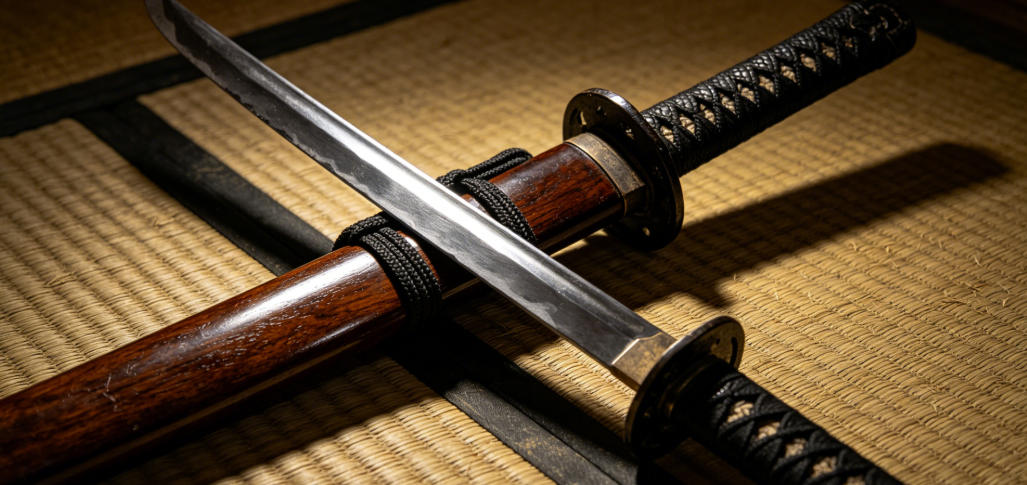
Meanwhile, in Japan’s samurai tradition, sword scabbards (saya) evolved in the opposite direction: extreme precision and restrained aesthetics. Japanese scabbards were typically crafted from lightweight wood, carefully shaped to fit the blade perfectly—smooth insertion, stable hold, and no unnecessary movement. Multiple layers of natural lacquer provided waterproofing, durability, and refined visual appeal. In samurai culture, blade and scabbard were inseparable; the draw itself became a technical discipline. Thus, scabbards were not only protective shells but also crucial to combat rhythm and sword performance.
From a global perspective, the evolution of scabbards reflects two cultural paths: Europe emphasized external symbolism and decoration, while Japan pursued internal precision and functional perfection. Yet regardless of form, their core purpose remained unchanged—protecting the blade, improving portability, and extending weapon lifespan. This is why the statement still holds true: they're protected by scabbards—blade integrity and safety always depend on the scabbard.

II. Core Functions of Scabbards: Far More Than Blade Protection
Many people assume scabbards are simply protective covers, but in professional sword systems, scabbards perform multiple essential roles.
1. Safety Protection: Preventing Injury and Damage
The most fundamental function is safety. Without scabbards, a sharp blade can easily cause accidents during movement, storage, or handling, including injury, equipment damage, or blade chipping. This is why the phrase they're protected by scabbards emphasizes a core truth: blade safety depends on the scabbard system.
2. Extending Blade Lifespan and Sharpness
Well-designed scabbards reduce blade exposure to air and friction. High-quality interiors often minimize oxygen contact, control micro-movement, and reduce metal abrasion. This helps prevent rust, dulling, and surface scratches—especially important in high-end collectibles where scabbards directly determine preservation quality.
3. Portability and Combat Efficiency
Historically, scabbards played a direct role in combat performance. A well-designed scabbard ensures quick drawing, stable retention, and balanced weight distribution. In Japanese sword systems, battōjutsu even evolved into a specialized art form where the scabbard directly influences technique and speed.
4. Identity Symbol and Cultural Expression
Across cultures, scabbards also function as identity markers: European knights used crests, Japanese samurai used lacquer styles and class distinctions, and modern collectors value craftsmanship and aesthetics. A sword’s value is often closely tied to the quality and design of its scabbards.
III. Japanese Sword Scabbards (Saya): A System of Precision Craftsmanship
In Japanese sword culture, scabbards are considered equal in importance to the blade itself.
Typical saya structures include:
- Lightweight wooden core
- Precision-fit internal blade channel
- Multiple layers of natural lacquer
- Moisture and corrosion resistance
This structure makes Japanese scabbards not only lightweight but also highly adaptable to environmental conditions. They emphasize smooth insertion without looseness, stable retention without vibration, and minimalist yet refined aesthetics—hallmarks of disciplined craftsmanship.
IV. European Scabbards: Decorative and Functional Dual Systems
Compared to Japanese systems, European scabbards emphasize visual expression. Common features include leather wrapping, metal fittings, belt suspension systems, and engraved heraldic designs.
During the knightly era, scabbards clearly reflected social hierarchy:
- More ornate = higher status
- More craftsmanship = higher prestige
Thus, scabbards became both practical tools and visible symbols of power.

V. Modern Uses and Cultural Continuation of Scabbards
In modern society, scabbards no longer serve battlefield functions, but they remain highly relevant in multiple fields, evolving into cultural and aesthetic objects while preserving their core logic of protection and integrity.
1. Collecting: Integrity Defines Value
In high-end sword collecting, scabbards are essential. A sword’s completeness depends on whether it has its original and matching scabbard. They protect the blade from oxidation, enhance display value, and significantly influence market pricing.
2. Film and Game Design: Visual Storytelling Element
In movies, animation, and games, scabbards are key visual storytelling tools. They enhance character identity, improve combat choreography (especially draw sequences), build world authenticity, and enrich weapon design detail. Many iconic “draw scenes” rely entirely on the presence of scabbards.
3. Martial Arts Training: Core Structural Component
In modern martial arts such as kendo and iaido, scabbards remain essential training tools. They regulate draw speed, train coordinated movement, and refine spatial control. In iaido, drawing from the scabbard is itself the central technique.
4. Cultural Exhibition and Craftsmanship Art
Today, scabbards are widely recognized as traditional craft artifacts. In museums and exhibitions, they showcase woodworking, lacquer art, structural precision, and historical aesthetics. Some high-end scabbards are even considered standalone artworks rather than simple accessories.
VI. Why Scabbards Remain Irreplaceable Today
Even in the modern industrial era, scabbards have not been replaced due to several reasons:
- Physical protection cannot be substituted
- Collectible swords require structural completeness
- Sword handling systems depend on scabbard interaction
- Cultural symbolism cannot be replaced
As long as swords exist, scabbards remain essential.
Conclusion: Scabbards as the 'Second Life' of the Blade
From a functional perspective, scabbards protect the blade; from a craftsmanship perspective, they extend its lifespan; from a cultural perspective, they carry identity and history.
Therefore, the statement they're protected by scabbards is not only a practical observation but also a summary of the entire sword system.
A blade may be sharp—but only with its scabbards, it becomes complete.

