


Hounskull Bascinet Guide: Structure, Durability, History & Design
What Is a Hounskull Bascinet and Why Was It So Effective?
What Is a Hounskull Bascinet and Why Is It So Popular?
The hounskull bascinet is one of the most iconic knight helmets of the late medieval period, widely used from the 14th to early 15th century. It represents a crucial transitional design, evolving from earlier open-face helmets into fully enclosed protective headgear. The name comes from its distinctive “hound’s skull” visor, a feature that is not only visually striking but also highly functional in combat.
Today, it frequently appears in high-volume search queries such as hounskull, medieval bascinet helmet, hounskull side profile, knight helmet medieval, medieval knight armor helmet, making it a key topic in both historical research and collector markets.
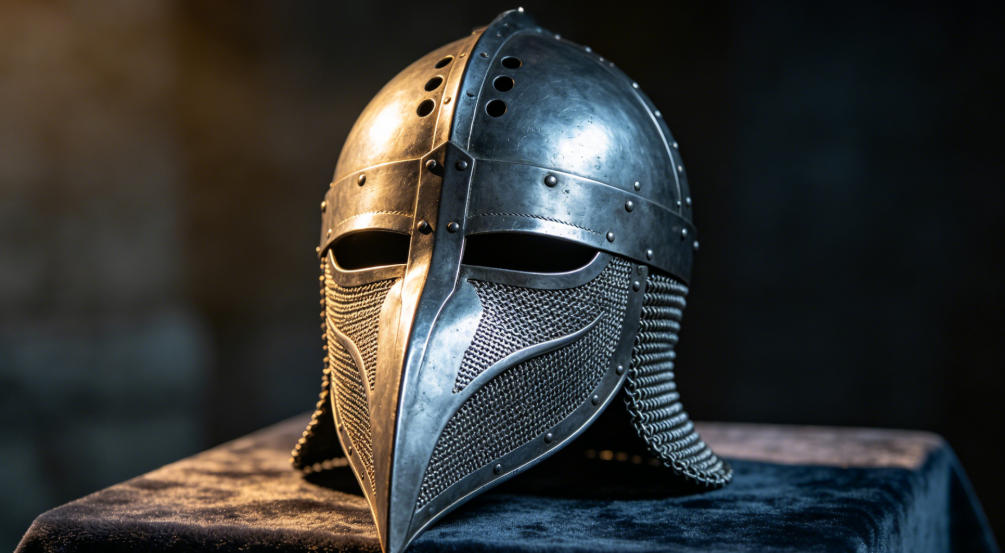
From the recognizable hounskull side profile, the helmet’s most defining feature is its forward-projecting, conical visor. This design is far more than aesthetic—it reflects practical battlefield innovation. The geometry helps deflect incoming blows, such as lance thrusts or sword strikes, away from the face, significantly reducing the risk of penetration. At the same time, the extended space improves airflow, allowing knights to breathe more easily during prolonged combat.
Compared to earlier flat-faced or partially open helmets, the hounskull achieves a superior balance of protection, ventilation, and visibility. The visor is typically perforated with carefully arranged breathing holes and narrow eye slits, maximizing airflow while minimizing exposure—an important advancement in medieval armor engineering.
Moreover, the hounskull bascinet was not a uniform design. Regional variations emerged across Europe. German versions often emphasized durability and heavier protection, while Italian-made milanese bascinets reached a higher level of refinement in both structure and aesthetics. Crafted in Milanese armor workshops, these helmets feature smoother surfaces, more harmonious proportions, and sometimes decorative elements, reflecting the fusion of function and artistry during the late medieval period.
Beyond its practical use, the hounskull also became a symbol of knightly identity and status. Its aggressive, elongated form created psychological intimidation on the battlefield, while in art and ceremonial contexts it reinforced the image of power and authority.
For these reasons, the hounskull bascinet remains a highly studied and widely admired piece in medieval arms research, film production, game design, and historical collecting. In terms of historical importance, engineering innovation, and visual impact, it stands as a key milestone in the evolution of medieval knight helmets.

Hounskull Design: Where Function Meets Aesthetics
1. The Iconic Hounskull Visor
The defining feature of the hounskull is its protruding visor:
- The pointed shape deflects frontal impacts to the sides
- Reduces the risk of direct penetration from swords and lances
- Expands internal breathing space for comfort
- Perforations enhance ventilation
This design represents a sophisticated approach to combat survival and mechanical deflection.
2. The Helmet Skull (Dome Structure)
The top of the hounskull bascinet is typically rounded or slightly pointed:
- Forged from a single steel plate for structural integrity
- Curved surface disperses impact forces
- Improves resistance to blunt trauma
In milanese bascinets, this dome is even more refined, combining mechanical efficiency with elegant craftsmanship.
3. Hinged Visor System
Most hounskull helmets feature a movable visor:
- Hinged mechanism allows opening and closing
- Closed for full protection in combat
- Opened for better visibility and communication
This adaptability marked a major advancement in helmet functionality.
4. Aventail (Mail Neck Protection)
Attached to the lower edge is a chainmail aventail:
- Protects neck, shoulders, and upper chest
- Secured with vervelles (metal loops)
- Provides flexible yet effective coverage
This addition significantly expands the defensive range of the helmet.
Durability Analysis: Why the Hounskull Is So Strong
1. High-Quality Steel Construction
Hounskull bascinets were typically made from medium to high carbon steel:
- Excellent impact resistance
- Capable of withstanding cuts, thrusts, and blunt force
- Surface finishing improves corrosion resistance
2. Structural Engineering Advantages
Durability comes from both material and design:
- Pointed visor disperses incoming force
- Rounded dome reduces stress concentration
- Multi-layer protection enhances defense
3. Reinforced Riveting and Joints
Critical components are secured with rivets:
- Increases overall stability
- Prevents loosening over time
- Improves shock resistance
Craftsmanship: Peak of Medieval Metalworking
Creating a hounskull bascinet involves complex steps:
- Heating and hammer-forging steel plates
- Shaping the dome and visor precisely
- Drilling breathing and vision holes
- Installing hinges and rivets
- Adding internal padding (leather or textile)
- Polishing and finishing
In milanese bascinets, these processes are even more refined, often including decorative enhancements.

Hounskull vs Other Helmets
Compared to earlier helmet types, the hounskull offers:
- Superior protection with full facial coverage
- Improved ventilation through perforated design
- Optimized vision with narrow slits
- Better comfort due to internal spacing
It represents a key evolutionary step toward fully enclosed plate armor helmets.
Visual Impact and Cultural Symbolism
The hounskull is more than armor—it is a symbol:
- Intimidating and aggressive appearance
- Highly recognizable on the battlefield
- Associated with knightly rank and nobility
Its iconic hounskull side profile remains widely featured in films, games, and reenactments.
Modern Applications and Collectible Value
Today, the hounskull bascinet has evolved into a multi-purpose cultural and collectible item, gaining popularity across fields such as hounskull helmet for sale, medieval bascinet replica, hounskull side profile display, knight armor collectible.
Expanding Modern Uses
-
Historical reenactment (reenactment)
Widely used in realistic combat demonstrations, especially in Europe and North America, where durability and historical accuracy are essential. -
Film and stage props
Frequently used to portray elite or heavily armored knights. Its unique profile delivers strong visual impact on screen. -
Armor and weapon collecting
Considered a must-have for serious collectors, especially high-end versions inspired by milanese bascinets. -
Interior decoration
Used in medieval-themed rooms, offices, or luxury displays, often paired with swords and shields. -
Gaming and pop culture
Popular in medieval video games, increasing demand for real-world replicas.
Key Standards of High-Quality Replicas
A premium hounskull bascinet replica typically includes:
- Hand-forged construction for authenticity and strength
- Historically accurate proportions based on museum references
- Authentic materials (steel, leather, chainmail)
- Functional design with wearable features
- Fine craftsmanship details such as rivets and polish
Collector Value and Investment Potential
For collectors, the value goes beyond appearance:
- Strong historical significance
- Blend of art and engineering
- Growing global demand
- Limited handmade pieces increase rarity
A well-crafted hounskull is often seen as a core piece in a knight armor collection.
Why Collectors Prefer Hounskull
- Highly recognizable hounskull side profile
- Combines aggressive aesthetics with practical design
- Clearly tied to the golden age of knights (14th century)
- Complements full armor displays
Today, the hounskull bascinet stands as a fusion of history, craftsmanship, culture, and collectible value, continuing to thrive across reenactment, media, and high-end collecting.
For enthusiasts, it is more than a helmet—it is a tangible piece of medieval history and a powerful symbol of the knightly spirit.
Conclusion
The hounskull bascinet remains one of the most iconic medieval helmets, celebrated for its innovative structure and exceptional durability. From its functional visor design to its advanced construction, it reflects the ingenuity of medieval European warfare technology.
Whether viewed through the lens of engineering, history, or cultural symbolism, the hounskull holds an irreplaceable position. Among its variations, milanese bascinets represent the pinnacle of craftsmanship and design.
Even today, with its unmistakable hounskull side profile, this helmet continues to captivate historians, collectors, and enthusiasts worldwide—keeping the legacy of the knightly era alive.

