


Japanese Dolls Explained: History, Meaning & Traditional Doll Guide
- Posted by COOLKATANA
What Are Japanese Dolls? A Complete Guide to Their History, Meaning, and Culture
In Japanese traditional culture, Japanese dolls are not merely decorative objects. They are cultural symbols that preserve history, art, aesthetics, and the spirit of Japan. From the elegant and mysterious Japanese Geisha dolls to the traditional Japanese dolls representing family blessings and traditional festivals, each type of doll carries its own unique history, craftsmanship, and cultural meaning.
For collectors, the charm of Japanese dolls comes not only from their beautiful appearance but also from the centuries of culture behind them. A small doll may combine Japanese traditional clothing, kimono craftsmanship, wood carving techniques, lacquer art, religious beliefs, and folk traditions. This article will explore the origins, history, major types, craftsmanship, and collectible value of Japanese dolls, helping you discover the cultural stories behind these delicate works of art.
What Are Japanese Dolls? The Meaning of Japanese Dolls
Japanese dolls are traditional artworks created in the form of human figures within Japanese culture. They are not only decorative items but also important representations of Japanese history, aesthetic values, and traditional craftsmanship. Unlike modern children’s toys, many Japanese dolls are considered cultural collectibles, festival decorations, and treasured family heirlooms.
Traditional Japanese dolls express different historical periods and social cultures through their poses, facial expressions, hairstyles, and clothing designs. For example, Japanese Geisha dolls showcase the elegance and artistic spirit of geisha culture that developed during the Edo period, while traditional Japanese dolls preserve Japanese festival customs, family blessings, and folk beliefs.
Creating a beautiful Japanese doll requires a complex handmade process. Craftsmen carefully select materials depending on the doll type, including:
- Wood
- Clay
- Stone powder
- Japanese paper
- Silk
- Lacquer materials
High-quality traditional Japanese dolls are usually handcrafted by experienced artisans. From shaping the doll’s body and designing clothing to painting facial details and adding decorations, every step requires exceptional skill, patience, and attention to detail.
In Japanese culture, dolls represent much more than a human figure. They carry deep symbolic meanings, representing happiness, health, protection, beauty, and wishes for a better future. Traditional dolls used in Japanese festivals often symbolize blessings, while collectible dolls serve as a cultural connection between the past and present.
In many ways, Japanese dolls are 'frozen moments of history.' Through their detailed clothing, unique designs, and traditional craftsmanship, they preserve the stories of different eras and allow modern people to experience the artistic beauty and cultural spirit of Japan.

The History of Traditional Japanese Dolls
Japanese doll culture has a history spanning hundreds of years, deeply connected with Japanese beliefs, lifestyles, and traditional arts. In ancient Japan, dolls were not created only for decoration but were often given special symbolic meanings. People believed that dolls could provide protection, represent human spirits, remove misfortune, and carry wishes for health, peace, and happiness.
One important early tradition was known as Hokō (形代), where people created human-shaped objects and believed they could absorb misfortune or illness. Through rituals, these objects were used as symbolic replacements to remove negative influences. This belief gradually influenced the development of Japanese dolls, transforming them from simple spiritual objects into artistic creations with cultural significance.
Over time, Japanese dolls became part of everyday life and developed into important elements of festivals, family traditions, and collections among the aristocracy. They were used to express wishes for children’s growth, family happiness, and a prosperous future. At the same time, beautifully crafted dolls became important examples of Japanese clothing culture, craftsmanship, and aesthetic philosophy.
The golden age of Japanese doll development came during the Edo Period (1603-1868). During this era, Japan experienced social stability, economic growth, and cultural prosperity. Traditional arts such as kimono making, tea ceremony, ukiyo-e, wood carving, and lacquer craftsmanship reached new levels of refinement.
During the Edo period, doll making gradually developed from a simple folk craft into a sophisticated art form. Craftsmen began focusing more on proportions, clothing details, facial expressions, and overall design. Japanese dolls became symbols of status, wealth, and refined taste.
Many popular traditional Japanese dolls, including Hina dolls and Kimekomi dolls, developed and became established during this period. These dolls not only preserve historical figures and traditions but also reflect the social atmosphere and artistic styles of different eras in Japan.
Japanese Geisha Dolls: The Cultural Story Behind Japanese Geisha Dolls
Among all Japanese dolls, Japanese Geisha dolls are one of the most representative and collectible types. They not only portray the elegant image of traditional Japanese women but also preserve the unique performing arts culture of Japan.
The word Geisha (芸者) comes from Japanese and means “a person of art.” Geisha were not ordinary performers but highly trained traditional artists. They studied various Japanese arts, including shamisen music, dance, tea ceremony, flower arrangement, poetry, and social etiquette.
Geisha culture flourished during the late Edo period, and Kyoto’s Gion district became one of the world’s most famous centers of geisha traditions. Through music, dance, and graceful manners, geisha played an important role in preserving Japanese traditional arts.
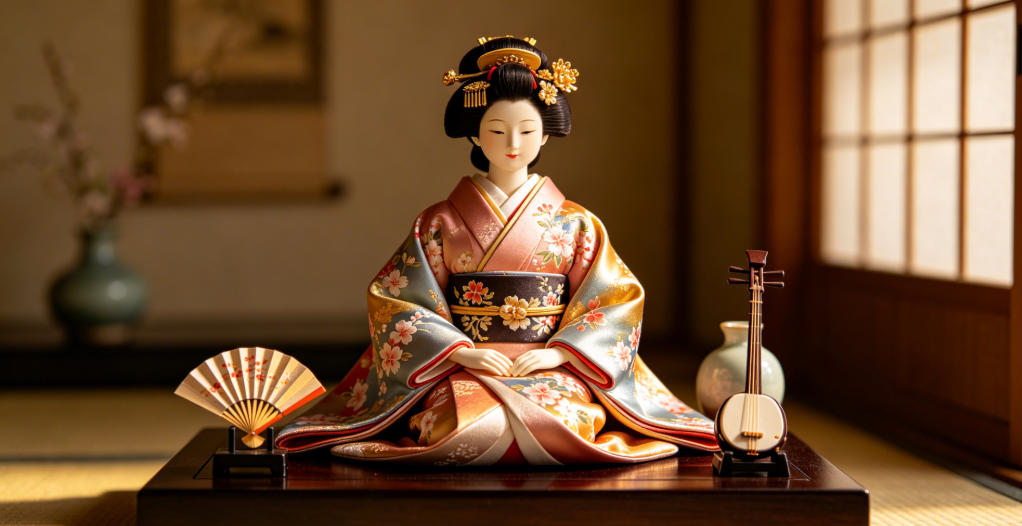
Japanese Geisha dolls capture this unique culture through carefully crafted designs. These dolls often wear elegant traditional kimono, detailed hairstyles, and traditional accessories, representing the beauty and artistic spirit of geisha culture.
Typical Japanese Geisha dolls feature:
- Delicate silk kimono designs: Using traditional clothing elements to showcase Japanese fashion, colors, and patterns.
- Traditional hairstyles and hair ornaments: Recreating historical beauty styles through detailed decorations.
- Fans or traditional instruments: Representing geisha performance arts such as dance and music.
- Graceful and elegant poses: Expressing the balance and subtle beauty of Japanese aesthetics.
Beyond their visual beauty, Japanese Geisha dolls preserve an important part of Japanese cultural memory. Each doll combines clothing, art, history, and craftsmanship, allowing collectors to experience the elegance and spirit of traditional Japan through a small but meaningful artwork.
Today, Japanese Geisha dolls are loved not only by collectors in Japan but also by people around the world who appreciate Japanese history and culture. They represent more than a figure—they represent a timeless tradition of beauty.
The Beauty and Meaning Behind Japanese Geisha Dolls
One of the most attractive features of Japanese Geisha dolls is their clothing design. Traditional kimono often uses high-quality silk combined with hand dyeing, embroidery, and seasonal patterns.
For example:
- Cherry blossoms represent spring and the beauty of life.
- Chrysanthemums symbolize elegance and longevity.
- Pine trees represent strength and good fortune.
In addition to clothing, hairstyles are another important feature of Japanese Geisha dolls. Traditional geisha hairstyles are often decorated with hairpins and ornaments, reflecting different social occasions and historical styles.
These details represent the Japanese aesthetic concept of Wabi-sabi, which appreciates quiet beauty, natural simplicity, and the charm of imperfection.
Different Types of Traditional Japanese Dolls
Japanese dolls come in many forms, and each type represents different cultural traditions.
Hina Dolls: Japanese Dolls for Hinamatsuri Festival
Hina dolls are among the most famous traditional Japanese dolls and are closely connected with Hinamatsuri (Girls’ Day).
Every year on March 3rd, Japanese families display Hina dolls to pray for girls’ health, happiness, and a peaceful future.
Traditional Hina dolls often recreate scenes from the Heian period court, including:
- Emperor dolls
- Empress dolls
- Court attendants
- Musicians
These dolls are arranged according to strict social rankings, reflecting the traditions and elegance of ancient Japanese aristocratic culture.
Kokeshi Dolls: Traditional Wooden Japanese Dolls
Kokeshi dolls originated from the hot spring regions of northeastern Japan.
These dolls are traditionally made from wood and are known for their:
- Cylindrical bodies
- Simple facial designs
- Hand-painted decorations
Although their appearance is simple, Kokeshi dolls express Japanese traditional aesthetics through colors, patterns, and facial expressions. They represent the beauty of simplicity and minimalism.

Kimekomi Dolls: Traditional Fabric-Covered Japanese Dolls
Kimekomi dolls are highly detailed traditional Japanese dolls that originated in Kyoto.
During production, craftsmen carve small grooves into the doll’s surface and insert fabric into these lines to create beautifully detailed clothing effects.
This technique demonstrates the Japanese craftsmanship philosophy of pursuing perfection through patience and attention to detail.
Samurai Dolls: Japanese Warrior Dolls and Samurai Culture
Besides female figures, Japan also has dolls representing the spirit of warriors: Samurai dolls.
These dolls often feature:
- Samurai armor
- Japanese swords
- Kabuto helmets
- Warrior poses
They symbolize important values of Japanese samurai culture, including:
- Bushido
- Courage
- Loyalty
- Honor
During Japan’s Children’s Day celebrations, samurai dolls are also displayed to wish children strength, success, and a bright future.
The Art of Making Traditional Japanese Dolls
Creating a high-quality traditional Japanese doll requires several complicated steps.
First, craftsmen create the doll’s body using materials such as wood, stone powder, or clay depending on the style. Next, they design traditional clothing inspired by different historical periods, including Heian court clothing, Edo-period kimono, and geisha costumes.
One of the most challenging parts is painting the face. Japanese dolls emphasize subtle beauty, so craftsmen must carefully control the eyes, mouth, and expression to create a calm and elegant appearance.
Many high-end dolls use real silk, handmade embroidery, and traditional dyeing techniques, making each piece a unique collectible artwork.
Why Are Japanese Dolls Valuable for Collectors?
In recent years, more collectors have become interested in:
- Japanese dolls
- Traditional Japanese dolls
- Japanese Geisha dolls
The reasons include:
Historical Value:
Each doll preserves a part of Japanese history and reflects the lifestyle and aesthetics of different eras.
Artistic Value:
Handmade craftsmanship, detailed clothing, and delicate designs make every doll unique.
Cultural Value:
Japanese dolls connect festivals, traditional arts, family traditions, and folk stories.
Collecting Japanese dolls is not simply collecting an object—it is preserving a piece of cultural memory.
How to Choose Traditional Japanese Dolls for Collection?
When choosing Japanese dolls for collection, consider several factors:
Craftsmanship:
Examine facial details, clothing quality, handmade techniques, and overall proportions.
Material Quality:
High-quality dolls often use premium wood, fine fabrics, and traditional materials.
Cultural Background:
Different doll styles represent different stories, including:
- Japanese Geisha dolls
- Hina dolls
- Kokeshi dolls
- Samurai dolls
Choosing dolls with cultural meaning can make a collection more valuable and meaningful.
Japanese Dolls: A Timeless Symbol of Japanese Culture
From elegant Japanese Geisha dolls to historic traditional Japanese dolls, Japanese dolls have become much more than simple decorations.
They preserve Japanese aesthetics, lifestyles, historical traditions, and artisan craftsmanship. Behind every doll is a story from a different era and the dedication of craftsmen who spent years perfecting their skills.
For collectors, an excellent Japanese doll is not just an artwork—it is a bridge connecting the modern world with Japan’s traditional culture.
Japanese dolls are not just figures — they are stories, traditions, and history preserved in art.

