


Chinese Swords Guide: Types, History & Craftsmanship Explained
- Posted by COOLKATANA
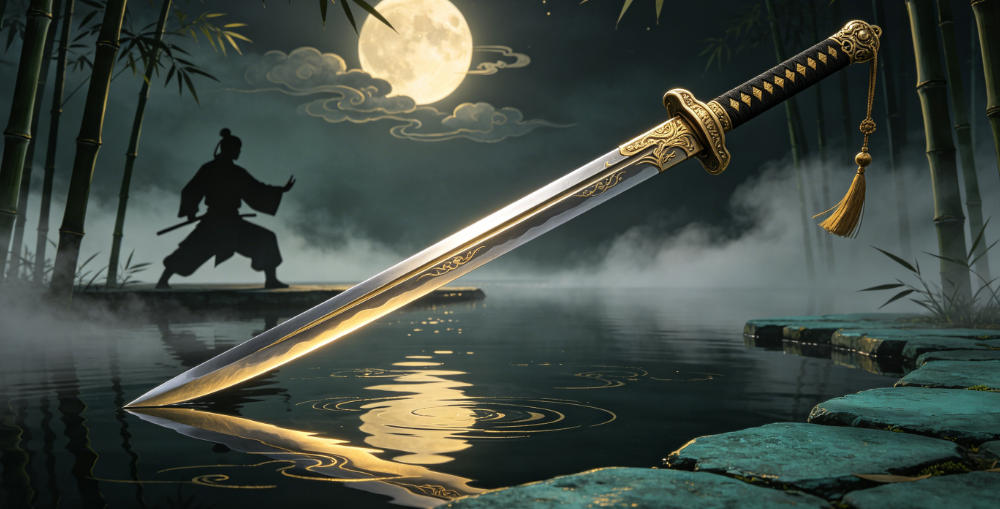
Why Are Chinese Swords Becoming More Popular in the Global Collectible Weapon Market?
With the global spread of Eastern martial arts culture and historical films, Chinese swords and broader Chinese weapons have become a major segment of the international collectible weapons market. From traditional martial arts training swords to film props and high-end collectible craftsmanship pieces, the Chinese weapon system is gaining increasing attention from collectors, martial arts enthusiasts, and cosplay fans worldwide.
Whether it is the elegant flow of a Taiji Jian or the powerful edge of a Tang Dao, Chinese swords embody deep historical heritage and practical combat aesthetics, driving the global rise of Eastern weapon collecting culture.
1. What Are Chinese Swords?
Chinese swords refer to the two core categories of traditional Chinese cold weapons: the Jian (double-edged sword) and the Dao (single-edged saber). The system also includes historical variations, military versions, and modern reproduction collectibles. This classification is not only about weapons, but also a complete structure integrating military engineering, craftsmanship, and cultural symbolism.
Historically, Chinese swords evolved from the Bronze Age and developed continuously from the Warring States period through the Ming and Qing dynasties. Early bronze swords were mainly used by nobility as ceremonial and status symbols. With the rise of iron metallurgy, swords became practical battlefield weapons used by infantry and cavalry.
By the Tang and Ming dynasties, Dao weapons became more combat-oriented, while Jian gradually shifted toward ceremonial use, identity representation, and martial arts training. This created a dual development system: Dao for warfare, Jian for technique and refinement.
Within the broader Chinese weapons system, swords occupy a central role. Their design philosophy focuses not only on structure but also on function and cultural meaning:
-
Lightweight and balance (Jian): Emphasizes precision control and agility, suitable for thrusting and fast reaction techniques
-
Power and practicality (Dao): Forward-weighted design optimized for cutting and battlefield efficiency
-
Martial arts integration and cultural symbolism: Used for training body mechanics, breathing control, and internal energy coordination
-
Dynastic stylistic differences (Han, Tang, Ming, Qing): Each era reflects distinct metallurgy, tactical needs, and aesthetic standards
Culturally, Chinese swords have long transcended their role as weapons. The Jian symbolizes refinement, ritual, and scholarly virtue, while the Dao represents strength and military practicality. This distinction forms the philosophical structure of Chinese weapon culture: civil Jian, martial Dao.

2. Main Classification of Chinese Swords
In modern collecting and market systems, Chinese swords are generally divided into several major categories:
1. Jian (Chinese Double-Edged Sword)
The Jian sword is one of the most iconic Chinese weapons and is often called the 'Gentleman of Weapons'.
Common types include:
-
Taiji Jian: Used in martial arts training and performance
-
Han Jian: Historical combat and ceremonial sword
-
Collector Jian: High-carbon steel or stainless-steel reproductions
Features:
-
Double-edged symmetrical design
-
Excellent balance and control
-
Widely used in martial arts demonstrations
2. Dao (Chinese Single-Edged Saber)
The Chinese Dao focuses on cutting power and battlefield efficiency and is a key military weapon in Chinese history.
Representative types:
-
Tang Dao: One of the most influential Chinese weapons internationally
-
Ming–Qing war sabers: Heavy-duty battlefield weapons
-
Martial arts performance sabers: Designed for stage and training
Features:
-
Single-edge structure with strong cutting force
-
Better suited for combat and power-based fighting styles
-
Frequently seen in films and games
3. Miao Dao (Long Saber)
The Miao Dao is a long two-handed blade combining elements of both sword and saber.
Features:
-
Long-range attack capability
-
Smooth and fluid motion for wide strikes
-
Common in martial arts demonstrations and choreography
4. Butterfly Swords
Butterfly swords are iconic short weapons in Southern Chinese martial arts.
Features:
-
Paired weapon system for dual-wielding
-
High flexibility in close combat
-
Common in Wing Chun systems
3. Why Chinese Weapons Are Popular Globally
In recent years, Chinese weapons have seen rapid global growth due to several key factors:
1. Influence of martial arts and films
Movies like Crouching Tiger, Hidden Dragon, Hero, and Kung Fu brought Chinese swords to global attention.
2. Martial arts and fitness culture
Tai Chi and martial arts training increased international demand for Jian swords.
3. Rising demand for decoration and collection
More users now use Chinese swords for:
-
Home decoration
-
Weapon display collections
-
Photography and cosplay props
4. Integration with gaming and anime culture
Many RPGs and martial arts games strengthen visual recognition of Chinese weapons.
4. Forging Process and Craftsmanship of Chinese Weapons
Modern collectible Chinese swords combine traditional forging techniques with modern metallurgical engineering.
1. Pattern Folding Forging
One of the most iconic traditional techniques.
Key processes:
-
Repeated heating and folding of steel
-
Removal of impurities and air pockets
-
Formation of uniform internal structure
-
Improved toughness and durability
In high-end Chinese weapons, this process also creates natural flowing steel patterns known as 'pattern steel.'
2. Laminated Steel Construction
Modern Chinese swords often use composite steel structures:
-
Hard edge layer: Provides sharpness and cutting ability
-
Soft core layer: Improves impact resistance
-
Transition buffer layer: Reduces vibration
This is similar to modern composite engineering materials, balancing hardness and flexibility.
3. Full Tang Construction
Full tang is essential in high-end collectible and functional Chinese weapons:
-
Steel blade extends through the entire handle
-
Strong structural stability
-
Reduced risk of breakage
-
Improved balance and control
Partial tang structures are more suitable for decorative use only.

5. Heat Treatment Engineering
Heat treatment is the core process determining the performance of Chinese swords.
1. Quenching
Rapid cooling changes steel structure:
-
Increases edge hardness
-
Forms martensitic structure
-
Improves cutting performance
-
Increases brittleness risk if uncontrolled
2. Tempering
Post-quenching stabilization process:
-
Reduces internal stress
-
Improves toughness
-
Balances hardness and flexibility
-
Prevents blade breakage
3. Differential Hardening
Advanced traditional technique:
-
Hard edge, softer spine
-
Improves both sharpness and durability
-
Produces visible blade patterns (hamon-like effect)
6. Why Collect Chinese Swords?
Collecting Chinese swords is more than a hobby—it is cultural preservation:
-
Cultural value: Represents Chinese history and martial heritage
-
Artistic value: Combines craftsmanship and aesthetics
-
Collectible value: Limited editions have appreciation potential
-
Display value: Ideal for decoration and photography
Chinese weapons are increasingly recognized as key representatives of Eastern cold weapon culture in the global market.
7. Where to Buy High-Quality Chinese Swords
When choosing Chinese swords, it is recommended to use professional platforms:
This platform offers a wide range of Chinese weapons, including:
-
Traditional Chinese sword replicas
-
Martial arts training swords and sabers
-
High-end collectible blades
-
Anime and film-inspired custom weapons
Suitable for collectors, martial artists, and cosplay enthusiasts.
Handmade Chinese Sword Fire Dragon Sword Folded steel Blade Finely Polished by Hand Ebony Scabbard

Conclusion
From Jian to Dao, from ancient martial systems to modern collecting culture, Chinese swords are more than weapons—they are the fusion of history, engineering, and art. As global interest in Eastern culture continues to grow, Chinese weapons are becoming a major force in the collectible cold weapons market, shaping modern aesthetics and cultural appreciation worldwide.

