


Anglo-Norman Swords: Medieval Knight Sword Evolution & History Guide
- Posted by COOLKATANA
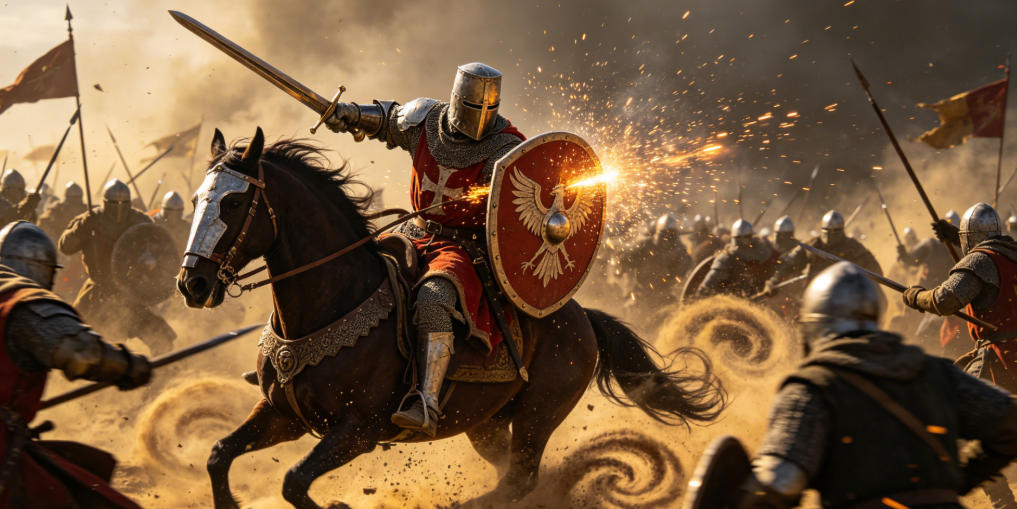
What Are Anglo-Norman Swords and How Did They Influence Medieval European Knight Weapons?
In the medieval European world of edged weapons, Anglo-Norman swords represent a transitional sword type formed during the cultural fusion of England and Normandy between the 11th and 13th centuries. These weapons were not only tools of war, but also powerful symbols of knightly identity, authority, and the evolution of medieval military technology.
Whether in medieval European weapon history research, knightly sword evolution studies, or medieval sword collecting and reproduction markets, the Anglo-Norman sword remains a highly significant keyword, closely linked with 'medieval European sword evolution.'
What Is an Anglo-Norman Sword?
The Anglo-Norman sword generally refers to a transitional knightly sword that emerged after the Norman Conquest of England in 1066. It developed within the cultural and military integration of Norman and Anglo-Saxon traditions and played a crucial role in the evolution toward the classic medieval knightly sword.
Rather than a single standardized model, it represents a gradually evolving sword style, bridging the gap between Viking-era single-handed swords and later European arming swords and longswords.
Its development was driven by multiple influences: Norman cavalry warfare emphasized mounted shock combat and shield coordination; Anglo-Saxon traditions still preserved elements of Viking close-combat sword fighting; and advances in European metallurgy enabled better-balanced blades with improved performance. This cultural and technological fusion made the Anglo-Norman sword more balanced, more adaptable, and better suited for both cavalry combat and mid-range melee engagements.
Structurally, it became longer, lighter, and more refined than earlier Viking swords, with improved thrusting capability while still retaining effective cutting performance, forming a combined thrust-and-cut system. Early crossguard structures also began to appear, improving hand protection and preventing blade sliding, which later influenced Crusader swords and standard knightly weapons.
In combat use, it was ideal for cavalry after a charge and equally effective in infantry shield warfare, making it a true transitional knightly weapon.
From the perspective of 'english meaning sword or edge', the Anglo-Norman sword also reflects linguistic and cultural evolution. 'Sword' represents authority and warfare, while 'edge' emphasizes cutting functionality. The Anglo-Norman sword embodies both meanings—both a practical weapon and a symbol of medieval power—reflecting how English weapon terminology evolved from functional description to cultural symbolism.
In simple terms, the Anglo-Norman sword is one of the most important transitional weapons in European sword history, linking early medieval Viking blades with the fully developed knightly swords of the High Middle Ages.

Historical Background: The Norman Conquest and Weapon Fusion
The development of the Anglo-Norman sword is closely tied to the Norman Conquest of England in 1066.
After the conquest, Norman knightly systems rapidly reshaped English military structures, introducing new sword design trends:
- Longer blades
- More balanced weight distribution
- Improved suitability for mounted combat
- Greater emphasis on thrusting effectiveness
This period marks the early formation of the medieval knightly sword tradition.
Design Features and Combat Logic of Anglo-Norman Swords
1. Transitional Blade Structure
Anglo-Norman swords sit between Viking swords and later arming swords:
- Slightly longer blades while remaining single-handed
- Balanced emphasis on thrusting and cutting
- Designed for shield-based combat
2. Early Crossguard Development
This period saw the emergence of more defined crossguards:
- Prevented opponent blade sliding
- Improved grip control
- Adapted to cavalry shock combat
This design directly influenced later Crusader swords.
3. Knightly Combat Optimization
Anglo-Norman swords were optimized for mounted and infantry combat:
- Stable thrusting during cavalry charges
- Effective shield coordination
- Improved battlefield durability
Place in European Sword Evolution
Within European sword evolution, the Anglo-Norman sword occupies a key transitional stage:
Viking Sword → Anglo-Norman Sword → Arming Sword (Knightly Sword)
Its importance lies in:
- Transition from slashing-focused weapons to thrust-and-cut systems
- Adaptation from infantry to cavalry warfare
- Evolution from early medieval arms to High Medieval knightly culture
Anglo-Norman Sword vs Other Medieval Weapons
vs Viking Swords
- Anglo-Norman swords are longer and better suited for cavalry
- Viking swords focus more on close-range slashing
vs Crusader Swords
- Anglo-Norman swords serve as early prototypes
- Crusader swords are more standardized and refined
vs Longswords
- Anglo-Norman swords remain single-handed weapons
- Longswords introduce two-handed combat systems

Cultural Significance
In medieval European society, these swords represented more than weapons:
- The rise of the knightly class
- The development of feudal warfare systems
- Advances in military engineering and metallurgy
- Symbols of nobility and authority
They also contributed to the cultural concept of the sword as a status symbol.
Modern Value in Collection and Research
Today, the Anglo-Norman sword remains highly relevant in historical study, collecting, and popular culture. As a transitional weapon between Viking blades and knightly swords, it continues to attract interest in modern medieval revival and historical weapon collecting communities.
Historical Research Value
In academic studies, the Anglo-Norman sword is an important material reference for understanding medieval European weapon evolution:
- Analysis of weapon development from Viking swords to knightly swords through blade length, balance, and structure
- Study of military transformation following the Norman Conquest
- Research on the rise of knightly culture and social hierarchy
- Metallurgical advancements in medieval weapon production
It is widely regarded as a key transitional artifact in medieval weapon history.
Collecting and Reproduction Value
In modern collecting markets, Anglo-Norman swords are popular in historical reproduction categories:
- Anglo-Norman sword replicas: historically accurate reproductions focusing on blade proportions and medieval design
- Medieval sword collectibles: decorative and educational pieces for display and study
- Historical reenactment props: used in medieval reenactments, knight events, and museum exhibitions
Collectors often view them as representative of the early knightly sword tradition, giving them strong historical narrative value beyond decoration.
Cultural and Entertainment Influence
In modern media, Anglo-Norman swords influence film, games, and fantasy worldbuilding:
- Medieval-themed game weapon design
- Historical film knight equipment reconstruction
- Fantasy literature and worldbuilding inspiration (knight kingdoms, empires, medieval wars)
They are often used as visual prototypes for early knightly weapons, helping establish authenticity in medieval-inspired settings.
The Anglo-Norman sword thus serves as a bridge between historical reality and modern cultural creation, maintaining strong relevance in academia, entertainment, and collectibles markets.
Conclusion: The Bridging Role of the Anglo-Norman Sword
Anglo-Norman swords represent a crucial node in European sword evolution, linking Viking-era combat blades with fully developed medieval knightly swords.
As a key example of an early medieval knight weapon, it influenced both weapon design and the cultural identity of the knightly class.
From the perspective of 'english meaning sword or edge,' it reflects the dual nature of the sword as both a cutting tool and a symbol of authority, leaving a lasting impact on medieval military history and language evolution.

