


Urumi Flexible Sword Explained: History & Techniques of the Sword Whip
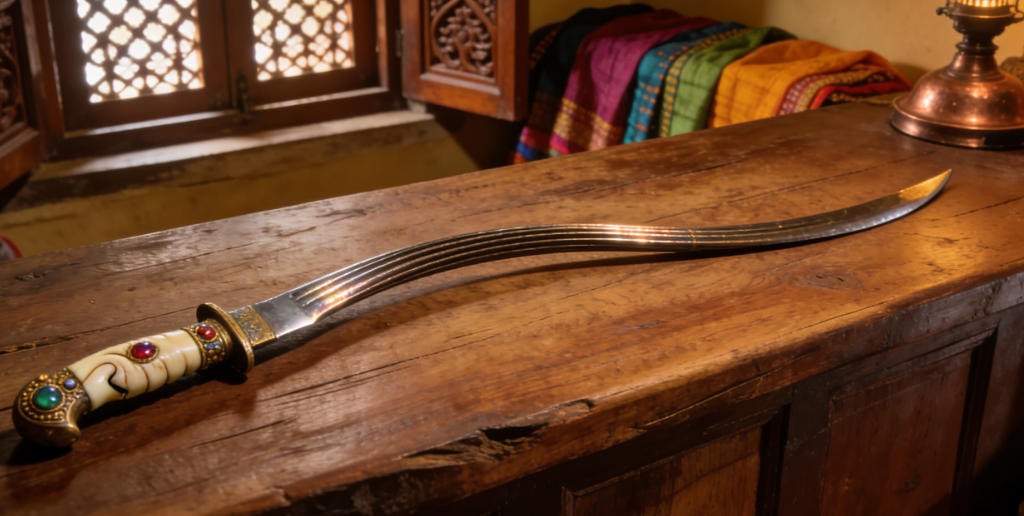
What is a Urumi? History and Techniques of the Southern Indian Sword Whip
In the world of ancient weapons, urumi stands out as an exceptionally unique and legendary weapon. This sword whip, with its incredibly flexible blade and high skill requirement, became one of the most iconic and dangerous weapons in Southern Indian martial arts.
What is Urumi? The Whip-Like Flexible Sword
The urumi originates from the southern Indian states of Kerala and Tamil Nadu and belongs to the category of urumi flexible sword. Unlike traditional swords, its blade is not rigid but made of high-strength, highly flexible metal, allowing it to coil and swing like a whip, greatly extending its striking range. This design gives the urumi both the sharpness of a sword and the flexibility of a whip, which is why it is also called a sword whip. On ancient Southern Indian battlefields, the urumi could be used for one-on-one combat or in crowd control situations, as its spinning blade could strike multiple enemies at once.
Using a urumi flexible sword is no easy task. It demands high levels of skill, speed, body coordination, and judgment. Beginners who lack experience are at risk of self-injury due to blade recoil. Therefore, in Kalaripayattu martial arts training, the urumi is usually taught at the advanced stage, only after mastering other weapons and basic techniques. Skilled practitioners can precisely control the blade’s spinning trajectory and rapidly change attack directions, creating unexpected chained strikes.
Furthermore, the urumi’s flexibility makes it visually stunning in stage performances and martial arts demonstrations. When the blade spins at high speed, it moves like threads of metal, displaying strength, skill, and mastery over one’s body. For this reason, urumi flexible sword is not only a deadly weapon but also a symbol of Southern Indian martial arts culture and the mastery of flexible power.

Origins and Historical Background
The history of the urumi can be traced back to ancient Indian martial arts and is believed to have first appeared in the traditional Kalaripayattu martial system of Southern India. Kalaripayattu is considered one of the oldest martial arts in the world, emphasizing not only weapon skills but also flexibility, speed, and mental focus. Within this system, urumi flexible sword is one of the most difficult weapons to master, typically taught only after apprentices have learned basic weapons such as staffs, short swords, and shields.
On ancient battlefields, the urumi had a distinctive strategic use. It could attack individual enemies while forming a spinning “protective circle” in the midst of multiple attackers, allowing the practitioner to maintain the advantage. Its flexibility and long-range striking ability enabled warriors to quickly neutralize opponents while simultaneously defending themselves. Due to its difficulty, warriors skilled with the urumi were regarded as battlefield elites, highly respected for their technique and courage.
Beyond combat, the urumi held significant cultural and ceremonial value. Masters would demonstrate spinning techniques during festivals and martial arts exhibitions, with the blade moving gracefully through the air, forming elegant arcs and continuous attack patterns that symbolized the perfect combination of strength and flexibility.
Design and Construction Features of Urumi
The urumi’s design is distinctive, combining elements of traditional swords with flexible sword characteristics. Its blade is typically made of high-strength steel, ensuring sharpness while maintaining extreme flexibility, allowing it to spin and whip through the air. This flexible design creates a visually striking “metal dance” effect while enabling multi-angle, multi-directional attacks in combat.
The urumi’s length varies, typically from over one meter to several feet, with some variants even longer for specialized combat or performance purposes. Some urumi feature multiple blades, further increasing their attack range and lethality.
The handle usually includes a guard for grip stability, similar to traditional swords, but the wielding technique aligns more with flexible sword methods. Skilled practitioners use wrist and arm rotations to control the blade’s trajectory precisely. Compared to a traditional sword, the urumi’s attacks are more flexible and unpredictable, resembling a controllable sword whip capable of striking multiple targets in rapid succession.
This intricate design reflects ancient martial artists’ pursuit of power and flexibility and makes the urumi one of the most representative and visually impressive weapons in Southern Indian martial arts. Today, urumi flexible sword continues to be used in martial arts performances, skill demonstrations, and cultural preservation, showcasing the unique combination of martial skill and craftsmanship.
Urumi’s Role in Kalaripayattu
In Kalaripayattu, the urumi is not just a weapon but a symbol of strength, agility, and focus.
- Skill Development Tool: Practicing this flexible sword helps improve spatial awareness, reflexes, and coordination.
- Teaching Order: Urumi is one of the most difficult weapons to learn and is usually taught only after mastering other weapons.
- Mental Discipline: Learning the urumi emphasizes focus, discipline, and mental control.
Compared to traditional swords, urumi flexible sword requires not only strength but also precise body and mind control.
From Battlefield Weapon to Cultural Performance Prop
Over time, the use of urumi in actual combat gradually declined. On ancient Southern Indian battlefields, urumi flexible sword was the weapon of elite warriors, capable of handling multiple opponents at once through its flexible spinning blade. However, with the advent of firearms and changes in warfare tactics, traditional swords became less practical, and the urumi gradually transitioned away from combat use.
Nonetheless, the urumi’s cultural and martial significance has endured. It remains central to cultural displays and martial arts performances in Southern India, featured prominently in traditional festivals, folk performances, and competitions. Skilled martial artists spin the urumi at high speed, creating visually stunning arcs and continuous strike patterns. The flowing motions showcase the practitioner’s control and agility, making the sword whip demonstration both thrilling and aesthetically captivating.
Performing with a urumi flexible sword not only entertains but also embodies the depth of martial training. Practicing it enhances body coordination, hand-eye coordination, reflexes, and mental focus. Today, the urumi serves as an advanced training tool in modern martial arts schools, preserving ancient combat techniques while providing insight into traditional martial philosophy and movement artistry.
Additionally, the urumi is widely used in films and stage performances as a representative flexible sword, presenting a unique combat aesthetic and visual spectacle. Through these cultural demonstrations, the urumi retains its historical value and acts as a symbol of Southern Indian martial arts heritage, allowing audiences to understand the mastery of strength, flexibility, and technique while solidifying the sword whip as an iconic performance weapon.

How to Maintain a Urumi Flexible Sword
Because the urumi’s blade is made of high-strength steel and is extremely thin and flexible, its maintenance requires greater care than ordinary swords. Proper maintenance prolongs the lifespan of urumi flexible sword and ensures safety and performance during practice and performance.
First, regular cleaning is essential. After each training session or performance, the blade should be wiped with a soft cloth or specialized cleaning cloth to remove sweat, dust, and metal residue. This prevents oxidation and rust while keeping the blade smooth and sharp.
Second, oiling the blade is crucial. Apply a thin, non-corrosive metal oil evenly along the blade, especially around the curves, to prevent rust and maintain flexibility, ensuring the urumi performs optimally during use.
Third, proper storage is important. Due to its extreme flexibility, the urumi flexible sword should be gently rolled or stored in a protective case in a dry, well-ventilated environment to prevent moisture exposure or deformation. Long-term storage may include applying a protective coating of oil to ensure the blade remains flexible and safe.
Safety is also paramount during practice and performance. Practitioners should ensure ample open space, avoid collisions with others or hard surfaces, and beginners should train on padded surfaces with protective gear to minimize risks.
For collectors or performers, it is advisable to periodically inspect the blade and handle connection to ensure there are no loose or damaged areas. Proper maintenance not only extends the weapon’s life but also preserves its historical and cultural value as a sword whip, ensuring that each training session or performance is safe and impressive.
Conclusion: Urumi – The Legendary Flexible Sword
From ancient battlefields to modern martial arts stages, the urumi is not only a unique weapon of Southern India but also the pinnacle of sword whip and flexible sword techniques.
It represents the wisdom of ancient warriors, the pursuit of combining strength and flexibility, and the mastery of bodily limits. Whether as a historical weapon or cultural heritage, the urumi remains a fascinating legend.
Explore the deadly elegance of the urumi flexible sword, also known as a sword whip, showcasing its unique design, fluid motion, and traditional martial arts techniques that make the urumi flexible sword one of the most unpredictable and fascinating weapons in Indian combat history.

