


What Is a Bardiche? Medieval European Polearm Axe Explained
- Posted by COOLKATANA
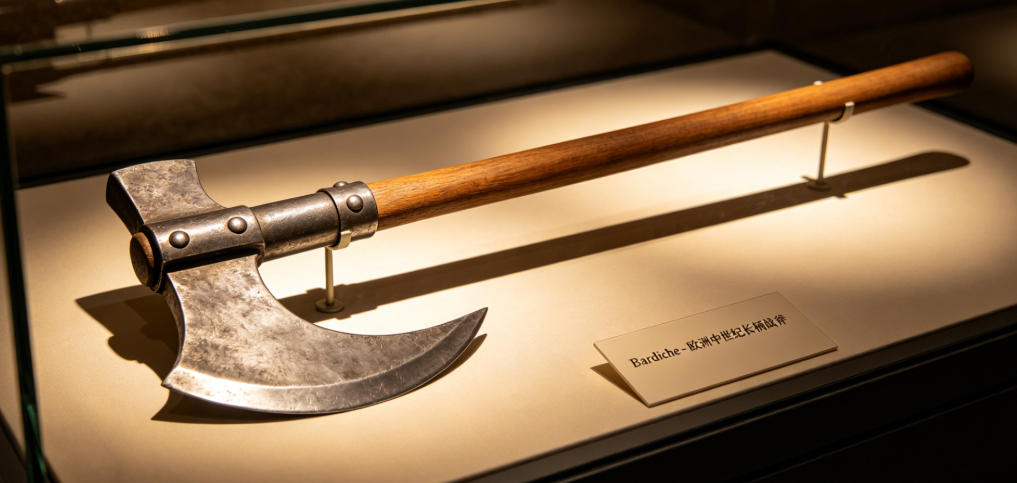
What Is a Bardiche Weapon and How Was It Used in Medieval Warfare?
In the European medieval and Renaissance battlefield, the Bardiche (long-handled battle axe) stands out as one of the most iconic heavy infantry weapons. Renowned for its ultra-long blade, immense chopping power, and ingenious construction, it was widely used by infantry across Eastern Europe, Russia, and Poland. Unlike versatile weapons like spears or halberds, the bardiche focuses on cleaving and armor penetration, serving as a crucial tool for foot soldiers countering heavily armored knights.
With growing interest in medieval history, cold weapon collecting, and its appearance in films and video games, keywords like 'bardiche weapon,' 'medieval bardiche,' and 'European polearm axe' are seeing increasing search volume. Today, the bardiche has become a focal point for enthusiasts of historical European arms.
I. Definition and Key Features of the Bardiche
The Bardiche is a classic long-handled, single-bladed axe that flourished from the 15th to 17th centuries, particularly among Eastern European, Russian, and Slavic infantry. Bridging the design between a battle axe and a polearm, it emphasizes maximum chopping power, weight, and momentum, rather than versatility or agility.
On medieval battlefields, the bardiche served not just as a weapon but as a solution for infantry facing armored knights, designed around one central goal: delivering direct, high-impact strikes capable of breaching armor.
1. Large Blade Design (High-impact Blade)
The most striking feature of the bardiche is its oversized blade, often slightly curved or long and straight.
Key characteristics:
- Blade length usually 50–70 cm
- Ceremonial or parade bardiches could exceed 70 cm
- Blade surface area is large, with weight concentrated at the front
- Generates powerful momentum and a “gravity-driven chopping effect”
This design allows the blade to produce a downward crushing force capable of denting, cracking, or even breaking plate armor and shields. The large cutting surface also increases reach and suppressive power within infantry formations.

2. Dual Rivet Reinforcement (Dual Point Fixing)
Unlike standard axes, the bardiche employs a distinctive dual rivet attachment:
- Blade is fixed at the top of the shaft
- Blade is additionally secured at the bottom with rivets or metal fittings
Advantages include:
- High stability: prevents blade wobble or detachment during powerful swings
- Enhanced impact resistance: withstands collisions with armor or shields
- Durability: reduces structural fatigue during prolonged use
This dual fixing design was a crucial engineering advancement, allowing the bardiche to remain reliable under high-intensity combat conditions.
3. Long Handle (Extended Reach System)
Bardiche handles are typically made from sturdy hardwood, such as oak or ash, and range from 1.5 to 2 meters in length, with ceremonial examples sometimes even longer.
Tactical advantages of a long handle:
- Extended reach: allows strikes before enemies enter close combat range
- Anti-cavalry advantage: effective at intercepting mounted charges
- Leveraging power: amplifies chopping momentum
- Formation effectiveness: enables safe, coordinated attacks in tight infantry lines
On the battlefield, bardiches were often deployed in second or third ranks, allowing high-damage strikes from a safe distance.
4. Armor-Piercing Capability
The primary tactical value of the bardiche lies in its armor-piercing potential:
- Can dent or deform plate armor
- May compromise chainmail links
- Can smash wooden shields
- Capable of halting or unseating charging horses
While not designed for precise thrusts, each swing delivers overwhelming force, making it a quintessential heavy striking weapon.
5. Tactical Role: Pure Chopping Weapon
Compared to contemporary polearms, the bardiche’s role was clear:
- Lacks multifunctionality (unlike the halberd)
- Not designed for long-range thrusting (unlike the spear)
- Does not rely on complex tactical maneuvers
Instead, it focuses on:
Maximizing damage per swing
Typical battlefield uses:
- Direct attacks on defensive lines
- Countering cavalry charges
- Breaking shield formations
- Close-quarters combat in fortifications
6. Differences From Halberds and Spears
Although often mentioned alongside other polearms, the bardiche differs fundamentally:
- Bardiche: single-purpose chopping, heavy armor-breaking
- Halberd: axe + spear + hook, multi-role weapon
- Spear: thrusting-focused, formation-oriented
The bardiche represents a heavy, high-impact weapon, rather than a versatile combat system.
Its large blade, dual rivet structure, and long handle reflect a key trend in medieval European warfare: weapons evolved to meet the challenge of increasingly armored battlefields. The bardiche became an indispensable tool for 15th–17th century Eastern European infantry.
II. Bardiche History and Development
1. Origins and Early Evolution
The bardiche originated in Eastern Europe and Slavic regions, evolving from hand axes and agricultural tools. As heavy cavalry and armored infantry rose in prominence, these axes transformed into long-handled bardiches for combat effectiveness.
2. Medieval Maturity (14th–15th Century)
By the 15th century, as knightly armor became widespread, ordinary axes struggled to penetrate defenses. The bardiche’s long handle and large blade became a staple weapon for infantry and city defense, capable of delivering kinetic force directly against armored opponents.
3. Renaissance Peak (16th–17th Century)
Bardiches reached their zenith in Eastern European armies, particularly in Russia and Poland. Blades were wider and heavier, handles stronger, and they became essential for formation fighting and siege defense. Historical accounts describe the bardiche as 'the infantry’s answer to armored knights', symbolizing the rise of foot soldier power.
4. Firearms Era and Decline
With the advent of firearms, cold weapons gradually lost battlefield relevance. Bardiches transitioned to ceremonial, guard, and collector roles, maintaining symbolic and cultural importance.

III. Bardiche Structure and Design Features
1. Blade
The hallmark feature is the ultra-long, curved or straight blade, designed for heavy chopping with significant momentum.
2. Dual Rivet Attachment
Secures the blade top and bottom to the shaft, ensuring:
- Stability
- Durability
- Safety
This is a defining characteristic of bardiches compared to standard battle axes.
3. Long Handle
Handles of 1.5–2 meters provide:
- Increased attack range
- Leveraged force for more powerful swings
- Safety in formation fighting and anti-cavalry action
4. Materials and Craftsmanship
Traditionally:
- Blade: high-carbon steel, heat-treated
- Handle: oak or ash, strong and durable
- Rivets: iron, reinforcing blade-to-shaft connection
Premium bardiches were hand-finished and balanced for functional or display use.
IV. Tactical Uses
1. Anti-Cavalry
Blade weight and design made it ideal for breaking through knightly armor and shields, sometimes unseating mounted opponents.
2. Formation Fighting
Used in dense infantry formations, creating “axe walls” combined with shields or spears to resist cavalry and infantry attacks.
3. Siege and Guard Duty
Effective in narrow spaces on walls or gates, maximizing chopping potential.
4. Close-Combat Breaching
Momentum and blade mass allowed infantry to break enemy shield walls, creating openings for advancement.
V. Comparison With Other Polearms
| Weapon | Characteristics | Role |
|---|---|---|
| Bardiche | Extra-long single blade axe | Chopping & armor penetration |
| Halberd | Axe + spear + hook | Multi-functional combat |
| Spear | Long thrusting polearm | Formation control & reach |
The bardiche emphasizes pure chopping and destructive power over versatility.
VI. Bardiche in Modern Culture and Collecting
1. Collecting and Replicas
Modern enthusiasts pursue:
- Historical replicas: hand-crafted to original designs, emphasizing craftsmanship and authenticity
- Functional performance versions: high-carbon steel blades, reinforced shafts, suitable for demonstrations or reenactments
2. Film, Game, and Fantasy Influence
Appears in medieval films, fantasy RPGs, anime, and tabletop RPGs as a symbol of Eastern European cold weapons.
Popular search terms:
- medieval bardiche weapon
- fantasy polearm axe
- authentic bardiche replica
- European polearm
- historical battle axe
VII. Cultural and Symbolic Significance
Beyond being a weapon, the bardiche represents:
- Military symbol: infantry countering knightly dominance
- Cultural emblem: reflects Slavic martial tradition
- Historical value: prized by collectors and museums
- Media icon: visual shorthand for heavy force and medieval warfare aesthetics
VIII. Why the Bardiche Remains Popular Today
- Distinctive visual impact: large blade and long handle
- Strong medieval battlefield presence: symbolizes infantry power and bravery
- Suitable for collection, display, film props, and gaming
- Closely tied to keywords like bardiche weapon, medieval bardiche, European polearm axe, driving search interest
Whether for historical research, collecting, cultural interest, or media and gaming,

