


The Legend of the Katana and Bo-hi Craftsmanship: History, Function
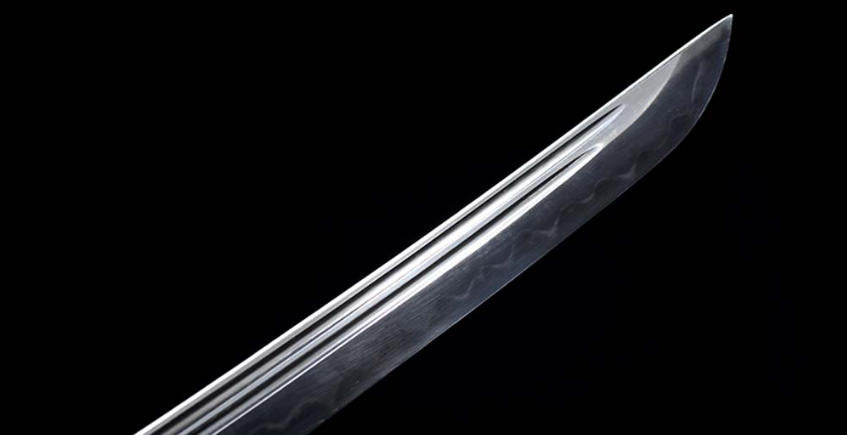
Why do handmade Japanese Katana use Bo-hi, and how does it affect balance and power?
Throughout Japan’s long and storied history, the katana (Samurai Sword) has stood as far more than a mere weapon — it is a profound symbol of spirit, artistry, and honor. Among its many intricate features, the Bo-hi (Fuller or Blood Groove) stands out as the perfect blend of form and function, merging the Katana’s physical balance with its spiritual essence. This article explores the Katana and Bo-hi craftsmanship across history, technique, battle, art, and culture — revealing the true meaning behind this thousand-year legacy.
The Origin and Spirit of the Katana: From Battlefield to Cultural Icon
The Katana (Samurai Sword) traces its roots back to Japan’s Heian Period (10th century). During this era, Japan was governed by noble clans and regional powers. Blades were initially symbols of aristocratic status rather than tools of warfare. Early Japanese swords were known as Tachi, long and deeply curved blades designed for mounted combat, allowing warriors to strike efficiently from horseback.
As Japan entered the Kamakura Period, the rise of the samurai class transformed the art of warfare. Combat shifted from mounted archery to close-quarters ground fighting. Swordsmiths began to refine the design of the Tachi, creating a weapon better suited for quick-draw slashes — thus, the Katana was born.
Compared to the Tachi, the Katana was slightly shorter, had a gentler curve, and was worn edge-up, allowing for faster drawing techniques such as Iaido.
From this point forward, the Katana became more than a blade — it became the embodiment of the samurai’s identity and soul.
The phrase “The sword is the soul of the samurai” perfectly captures this belief.
Throughout Japan’s feudal history, the Katana represented more than warfare. It symbolized the Bushido code — loyalty, courage, honor, self-discipline, and benevolence.
On the battlefield, it served as a warrior’s protector; in times of peace, it was a vessel of spirit and meditation.
During the Sengoku Period, legendary blades were forged amid constant warfare. Masters such as Masamune, Kotetsu, and Muramasa created swords revered for their balance of lethal precision and artistic perfection.
By the Edo Period, as peace returned, the Katana evolved from a battlefield weapon to a cultural and artistic symbol. Swordsmiths began emphasizing beauty — perfecting Hamon (temper lines), graceful curves, and symmetry. The maturation of folded steel forging allowed for finer grain patterns and smoother lines, elevating the Katana into a true art form.
In the modern era, a hand-forged Katana stands as a bridge between history and artistry. Collectors, martial artists, and enthusiasts worldwide cherish these blades not merely as weapons, but as manifestations of dedication, discipline, and craftsmanship.
Today, the Katana transcends borders as one of the most iconic representations of Japanese culture.
From historical epics like Seven Samurai to anime such as Rurouni Kenshin, BLEACH, and Demon Slayer, the Katana continues to embody Eastern aesthetics and the warrior spirit.
For collectors, a true handmade Katana is not just forged steel — it is a tangible piece of history and heritage.
When one admires the blade’s curvature and Hamon, they see not just craftsmanship, but the timeless reflection of a warrior’s soul.

The Birth of Bo-hi: A Dual Revolution of Structure and Aesthetics
1. What Is a Bo-hi?
The Bo-hi (Fuller or Blood Groove) is one of the most distinctive and refined features in Katana craftsmanship. It refers to a long, narrow groove carved along one or both sides of the blade. While often misunderstood as a channel for blood, the Bo-hi actually embodies the harmony of structure, physics, and beauty in traditional Japanese sword design.
Far from a mere decoration, the Bo-hi serves multiple functional and artistic purposes:
-
Weight Reduction – By removing steel, the blade becomes lighter and easier to wield, enhancing agility and speed.
-
Improved Balance – Shifting the center of gravity closer to the Tsuka (handle) allows for smoother handling and faster response.
-
Auditory Feedback – When swung, the blade produces a distinctive whooshing sound known as Tachikaze, helping practitioners gauge their cutting angle and technique.
-
Aesthetic Appeal – The flowing groove enhances the blade’s visual depth and elegance, embodying the minimalist beauty of Japanese craftsmanship.
In hand-forged Katanas, carving the Bo-hi is a delicate process that requires masterful precision. A single mistake can ruin the entire blade. Therefore, a Katana with a beautifully formed Bo-hi signifies exceptional skill and traditional mastery.
2. The True Functions of Bo-hi
Reducing Weight, Enhancing Maneuverability
The most practical role of the Bo-hi is lightweight optimization. By removing excess material, the sword remains strong yet nimble — perfect for quick-draw techniques and continuous strikes.
In martial arts, Bo-hi-equipped blades are often referred to as Lightweight Katanas, popular among practitioners of Iaido and Kenjutsu who value speed and control.
The Resonance of 'Tachikaze' — The Sound of Precision
When swung correctly, a Katana with Bo-hi emits a sharp, cutting sound known as Tachikaze ('the sword wind').
This sound isn’t just satisfying — it provides feedback on form and technique. A clear Tachikaze indicates the correct swing angle and motion, making Bo-hi blades indispensable in training and performance swordsmanship.
Perfect Balance for Combat Agility
Beyond weight, the Bo-hi affects the balance (Koshi) of the blade.
By carefully adjusting the groove’s length and depth, swordsmiths can shift the center of mass closer to the hilt, achieving fluidity in motion. This balance is a hallmark of traditional Katana geometry — precision born from centuries of refinement.
A Symbol of Art and Spirit
Under shifting light, the Bo-hi’s lines create a sense of rhythm and vitality along the blade.
It embodies the samurai ideal of 'strength and grace in harmony.'
In swordsmithing philosophy, the Bo-hi represents the 'breath of steel' — it allows the sword to 'breathe,' turning cold metal into something alive and resonant.
3. Historical Bo-hi Craftsmanship
As early as the Kamakura Period (1185–1333), master swordsmiths such as Masamune and Hasebe Kunishige had already begun applying Bo-hi craftsmanship to renowned swords. This was the pinnacle of Japanese sword artistry, where swordsmiths pursued not only sharpness and durability but also infused every groove, quenching, and polish with spirit and belief.
In ancient times, Bo-hi creation relied entirely on handwork. Swordsmiths used a tool called “hi-nomi” (chisel) to precisely carve grooves along the blade, followed by multiple rounds of polishing, heat treatment, and refinement, ensuring the groove seamlessly integrated with the blade.
This “hand-carved Bo-hi” process was extremely time-consuming, and even the slightest deviation in angle or pressure could ruin the entire sword. Historical records indicate that only the most experienced swordsmiths dared carve Bo-hi on high-grade battle blades, as it demanded not just skill but inner calm and focus.
Bo-hi is more than just a structural feature—it symbolizes the Takumi Spirit, representing devotion to perfection, respect for tradition, and reverence for the samurai code.
By the Edo Period, with the advent of peace, Bo-hi gradually became a hallmark of artistry and aesthetic expression. Shifting from functional necessity to visual elegance, Bo-hi designs diversified into single groove (Shinogi-bo-hi), double groove (Futasuji-hi), half groove (Koshi-hi), and others, each reflecting the philosophy and aesthetic of different schools.
Today, modern swordsmiths continue to use traditional handcrafting methods for Bo-hi, but with more refined tools and advanced materials. In high-end hand-forged Japanese katana, Bo-hi remains a key benchmark of a swordsmith’s skill and artistic sensibility.

Japanese Sword Craftsmanship: A Tradition of Meticulous Artistry
In the world of Japanese swords, every true hand-forged katana is a work of art born from time and craftsmanship.
Take, for example, the Handmade Japanese Samurai Katana, T10 Steel Black Blade Double Narrow Bo-hi Purple Saya, which perfectly combines traditional techniques with modern aesthetics.
A real katana undergoes dozens of complex processes, each embodying the swordsmith’s expertise and spirit:
1. Premium T10 Steel—Perfect Balance of Hardness and Sharpness
This katana is forged from high-quality T10 high-carbon tool steel (T10 Steel), renowned for its hardness and wear resistance, making it a favorite among modern swordsmiths.
During traditional forging, the steel is heated to high temperatures and repeatedly hammered and folded to remove impurities and evenly distribute carbon. After repeated forging, the blade develops distinct layered steel patterns, achieving a true balance of hard cutting edge and resilient spine—a perfect embodiment of 'strength and flexibility combined.'
2. Repeated Folding—The Soul of Layered Steel Patterns
Japanese swords are unique because of their folded steel process. Each fold signifies refinement, and each strike carries the craftsman’s pursuit of perfection.
Through repeated folding, the blade forms hundreds of metal layers, enhancing toughness while creating the intricate steel patterns (Hada). When light passes over the blade, the flowing waves resemble rippling water—elegant yet powerful, expressing the artistic soul of the katana.
3. Clay Quenching (Yaki-ire)—The Graceful Hamon
During quenching, swordsmiths apply clay to the blade to create differential cooling rates between the edge and the spine, resulting in a natural wave pattern (Hamon).
This Hamon is not only a mark of craftsmanship but also a symbol of the sword’s spirit. After clay quenching, the T10 steel edge becomes extremely hard, able to cut bamboo, vines, or tatami mats effortlessly, while the spine remains flexible, preventing breakage. This 'hard edge, soft spine' principle is one of the secrets behind the katana’s centuries-long reputation as the world’s finest sword.
4. Double Narrow Bo-hi—Perfect Fusion of Lightness and Power
This katana features a double narrow Bo-hi design, an evolution of traditional Bo-hi craftsmanship.
The swordsmith manually carves the grooves to reduce weight while maintaining strength, allowing for faster and more stable strikes. When swung, the air passes through the grooves, producing a crisp 'whoosh' (Tachikaze)—both practical and imposing.
The double groove enhances balance and maneuverability, while giving the blade a strong visual flow, reflecting eastern aesthetics of strength and elegance.
5. Hand Polishing—Mirror-Like Shine and Black Blade Elegance
In the final stage, swordsmiths use multiple sharpening stones for hand polishing, revealing the natural luster of T10 steel.
The black blade receives special treatment to display a deep, imposing hue reminiscent of moonlight on a night sky. Combined with a purple saya and traditional woven handle wrap (Tsuka-maki), the katana exudes mysterious nobility, making it highly valuable for both collection and display.
Handmade Japanese Samurai Katana, T10 Steel Black Blade Double Narrow Bo-hi Purple Saya

The Ultimate Meaning of Handmade Katana: Heritage and Spirit
A genuine handmade Japanese katana is not merely a weapon; it is a symbol of cultural heritage and spirit.
From ancient battlefields to modern collections, from the Bushido code to Eastern aesthetics, each sword carries centuries of craftsmanship wisdom and historical memory.
The T10 Steel Black Blade Double Narrow Bo-hi Purple Saya Katana represents not just a weapon, but a redefinition of craftsmanship, spirit, and beauty, allowing modern enthusiasts to touch the enduring soul of the katana while keeping this legendary art alive today.
Balancing Bo-hi Craftsmanship with Practical Performance
Traditional katana pursue 'strength and flexibility combined', and Bo-hi craftsmanship perfectly embodies this balance:
-
Lightweight blade enables faster strikes;
-
Groove channels air, producing a crisp sound upon draw;
-
Precision steel thickness ensures sufficient strength and bend resistance.
Modern battle-ready katana continue to adopt this ancient Bo-hi design, demonstrating exceptional control in kendo, Iaido, and Tameshigiri (test cutting).
Collectible and Aesthetic Value: Flowing Lines, Eternal Spirit
For collectors, a folded steel katana with Bo-hi represents not only power and history but also a high level of aesthetic appreciation.
The grooves and Hamon interplay under light, flowing like water. Whether displayed on a shelf or paired with traditional attire and armor, the katana radiates the essence of Japanese sword culture.
This is why more and more enthusiasts seek 'real katana for sale' and 'handmade Bo-hi katana'.
Modern Heritage: Revival of Handcrafted Bo-hi
Modern swordsmiths preserve traditional methods while using modern tools to achieve more precise and balanced Bo-hi carving.
However, true masterpieces still rely on pure hand polishing and traditional heat treatment to maintain the soul of ancient Japanese swords. Brands like COOLKATANA uphold this philosophy—every blade is handcrafted by experienced artisans, with naturally flowing Bo-hi, perfect balance, and both collectible and practical value.
Conclusion: Bo-hi—More Than a Groove, the Mark of the Samurai Soul
From battlefields centuries ago to modern display cases, Bo-hi craftsmanship remains an indispensable part of the katana.
It not only makes the sword lighter and more agile but also symbolizes the ultimate pursuit of form and spirit, strength and beauty in Japanese sword culture.
Whether you are a samurai sword collector, anime enthusiast, or a devotee of Japanese traditional craftsmanship and Bushido spirit, a finely crafted Bo-hi katana is a treasured work of art.

