


Bident: Hades’ Two-Pronged Weapon and Its History in Ancient Warfare
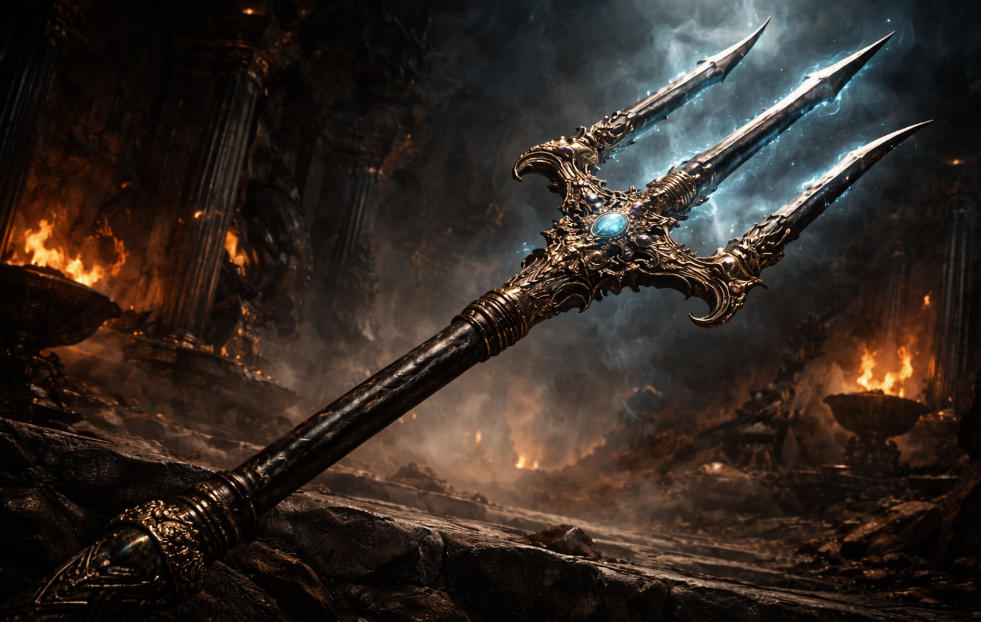
What Is the Bident and Why Was It Hades’ Symbolic Weapon in Greek Myth?
In the brilliant currents of Greek mythology and the history of melee weapons, the trident is well-known due to the fame of Poseidon, the god of the sea. However, in the shadowy realms of the underworld and on certain ancient battlefields, another unique long-handled weapon exudes an equally fearsome aura—this is the bident. As a weapon featuring two parallel prongs, the bident is not only a symbol of power but also a testament to ancient design ingenuity.
Today, we will explore the origin of the bident, its symbolic significance in Greek mythology, and its evolution in both ancient warfare and modern popular culture.
What is a bident used for?
A bident is a type of pole weapon with two prongs, visually similar to a trident but featuring only two points. Throughout history and mythology, it has served several practical and symbolic purposes:
1. Combat Uses
-
Hooking and Parrying: The twin-pronged design allows the user to hook an opponent’s weapon or shield, as well as to stab or deflect incoming attacks.
-
Reach Advantage: Typically mounted on a long shaft, the bident enables fighters to maintain distance, making it effective against both infantry and cavalry.
-
Battlefield Control: Compared to a single-point spear, the forked tips increase the effective contact area, making it easier to restrain, trap, or pressure opponents in close combat.
2. Mythological and Symbolic Roles
-
Symbol of the Underworld and Divine Authority: In Greek and Roman mythology, the bident is closely associated with Hades, god of the Underworld, symbolizing his dominion and sovereign power over the realm of the dead.
-
Ritual and Ceremonial Use: In some cultures, the bident was not primarily intended for warfare, but instead served as a ritual object or emblem of authority and status.
3. Modern Uses
-
Performance and Decoration: Today, bidents are often seen in historical reenactments, stage productions, and martial arts demonstrations, valued for their dramatic visual impact.
-
Weapon Collecting: Due to their distinctive form and strong mythological associations, bidents are popular as collectible items representing ancient weaponry and symbolic power.
The Mystery of the Bident: Exploring Hades’ Enigmatic Weapon and Its Evolution in the History of Cold Arms
In the brilliant continuum of Greek mythology and the history of cold weapons, the trident is widely recognized thanks to the fame of Poseidon, god of the sea. Yet within the shadowed depths of the Underworld and on certain ancient battlefields, another unusual polearm inspired equal awe and fear: the bident.
Characterized by its two parallel prongs, the bident was far more than a mere weapon. It functioned as a potent symbol of authority and an embodiment of ancient martial ingenuity. Whether as a tool of combat, a ritual emblem, or a divine attribute, the bident stands as a fascinating intersection of mythology, power, and weapon design.

The Embodiment of Hades’ Power: The Bident’s Sacred Meaning
When the bident is mentioned, the first image that comes to mind is often Hades, the Greek god of the underworld. In Greek mythology, the number of prongs on a weapon often represents the scope of a deity’s authority. Poseidon’s trident symbolizes the sea, earthquakes, and storms, while Hades’ bident symbolizes absolute dominion over the underworld, representing the sealing and opening of the realm of the dead.
Its two-pronged design is visually distinctive, symbolizing the boundary between life and death. In many ancient sculptures and vase paintings, Hades wields the bident not only to open paths into the underworld but also as a staff for judging souls. For those studying symbolic weapons, the dual prongs of the bident represent dualism, reflecting the Greek understanding of the afterlife: souls entering the underworld face two divergent paths, either to Tartarus (a place of torment) or to Elysium (the hero’s paradise).
The shape of the bident perfectly embodies this binary judgment. In Roman mythology, Pluto continues this imagery, cementing the two-pronged fork as one of the most intimidating symbols of divine authority in classical antiquity.
Combat Performance: A Multifunctional Tactical Weapon
While divine in mythology, the bident also had practical uses in the evolution of cold weapons. Compared to a standard spear, the bident’s special structure offered unique tactical advantages in close combat and formation warfare, making it an unusual but effective weapon.
1. Exceptional Defense and Weapon Control
The most prominent tactical advantage of the bident lies in the U- or V-shaped gap between its prongs. In intense melee combat, this design functions like a “blade trap,” allowing the wielder to catch enemy swords, axes, or polearms. By rotating the handle, skilled fighters could disarm opponents using leverage. In ancient gladiatorial games, the bident was sometimes used as a special weapon to counter opponents with shields and short swords, restricting their movement and creating openings for decisive strikes.
2. Enhanced Lethality: Penetration and Hunting
From a physics standpoint, the bident concentrates pressure more than a trident, making it more effective against leather armor or simple bronze armor. Before being fully adopted as a military weapon, the bident was used by aristocrats to hunt large game, such as wild boars. The two prongs could inflict double wounds and prevent struggling animals from charging the hunter. This stability later carried over to battlefield use, where the bident proved effective against cavalry, its dual prongs helping to anchor against horses or shields.
3. Capturing and Restraining
Some variations of the bident evolved into auxiliary capture weapons. By adding barbs or spring mechanisms, soldiers could hook an enemy’s neck or limbs to unseat or capture them. During sieges, extended bident versions were used to block ladders, preventing attackers from climbing—offering greater stability than single-pronged spears.
From Farm to Battlefield: Agricultural Origins and Civilian Armaments
Like many famous weapons, the bident has humble, practical origins. It is closely related to the pitchfork used on farms. During peasant uprisings or sudden self-defense situations in ancient Europe and the Mediterranean, farmers who couldn’t afford expensive swords would reinforce their pitchforks.
By replacing the wooden handle with durable ash and forging iron tips, ordinary farm tools became deadly battlefield weapons. This transformation demonstrates a common pattern in ancient weapon development: the most effective tools often emerge from everyday implements. Such a weapon, born of everyday life, left a vivid mark in peasant revolts, symbolizing the fight against oppression.

Bident vs. Trident: Why It Was Relatively Rare
Among enthusiasts, the difference between a bident and a trident is a popular topic. While both are long-handled thrusting weapons, their functional focus differs. The trident, with more prongs, has a wider coverage area, making it suitable for fishing in water or sweeping attacks in chaotic battles. The bident’s design, however, favors vertical penetration and precise control.
In formal military formations, the bident was less common than the spear due to its complex manufacturing requirements and occasional difficulty withdrawing its two prongs after penetration. Nevertheless, as a ceremonial weapon or secondary armament for special troops, it held unmatched psychological and cultural impact.
Roman Era Evolution and Gladiatorial Culture
In ancient Rome, the bident’s image expanded further. While the famous gladiator type “Retiarius” usually wielded a trident, in certain small arenas, the two-pronged fork symbolizing the underworld messenger was carried by special performers. This weapon was not only lethal but also enhanced theatricality, conveying a sense of deathly pressure to the audience.
Rebirth in Modern Popular Culture
With the rise of fantasy genres, the bident has seen a modern resurgence. In the popular roguelike game Hades, the protagonist’s underworld weapon introduces players to the elegance and lethality of the bident. Similarly, in games like Elden Ring or the God of War series, the bident is often imbued with dark or soul-based powers, continuing its millennia-old association with the underworld.
Conclusion: A Weapon Connecting Myth and Reality
The bident is not only the emblem of Hades in Greek mythology but also a distinct branch in human weapon evolution. It combines the practicality of farm tools, the mystique of mythological symbols, and unique battlefield utility.
For collectors or history enthusiasts, studying the bident’s evolution offers insight into how ancient civilizations merged nature, divine authority, and combat skill. Whether displayed in a museum or wielded in a modern virtual arena, this “two-pronged blade” retains its awe-inspiring charm.
If you are interested in ancient polearms or Greek mythological weapons, understanding the bident’s design logic will open a gateway to a fascinating ancient fantasy world.
The two pronged spear showcases ancient combat ingenuity, while the legendary Hades sword Greek mythology adds a mythic dimension to this fearsome weapon.

