


Japanese Samurai Armor (Yoroi): Battlefield Survival to Bushido Symbol
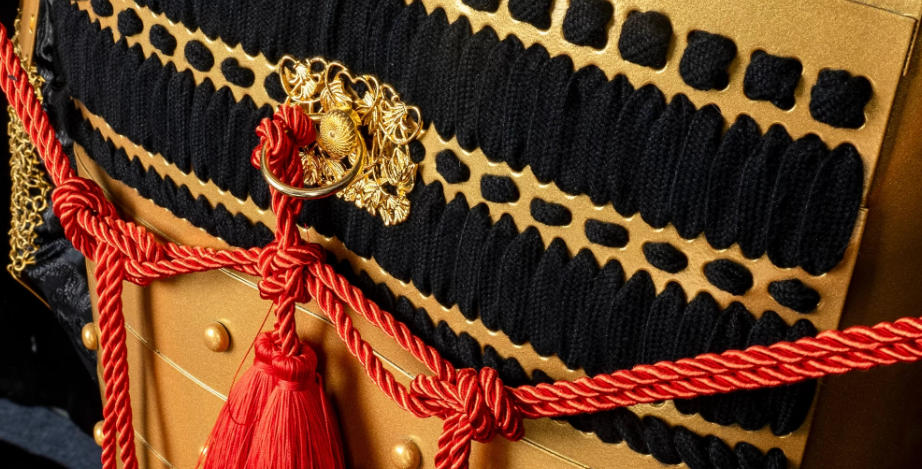
What is Japanese Samurai Armor (Yoroi) and Why Does It Still Captivate Collectors Today?
Before Japan entered the turbulent Sengoku period, a young samurai stepped onto the battlefield for the first time. He did not know that this battle would not only determine his survival but also witness the gradual formation of what would later be known as Japanese Samurai Armor (Yoroi).
At that time, the battlefield had no order—only arrows, spears, and chaotic charges. Survival became the only goal for every samurai.
What is a yoroi in Japanese?
I. The First 'Yoroi' on the Battlefield: Not Glory, but Survival
It is said that when this young warrior first wore armor, it did not resemble the elegant and sophisticated Samurai Armor we know today. Instead, it looked more like a pieced-together survival device—iron plates, hardened leather, hemp cords, and layers of fabric, hand-fastened one by one. Every connection was not for beauty, but to gain a better chance of surviving the battlefield where swords and arrows flew.
This armor was called Yoroi (鎧). In that era of frequent warfare, the word carried no romantic meaning; it was a practical response to survival:
- Survive
- Avoid being pierced by arrows
- Endure longer in chaotic close combat
- Remain standing when comrades fell
It was heavy, cumbersome, and even produced metallic friction sounds while running or riding. The bindings at the joints had to be repeatedly adjusted, or every sword swing would strain the body. But on the battlefield, these 'inconveniences' were secondary to survival.
When he first charged on horseback, the enemy archers had already formed their line. As the arrow storm fell, the air tore, and the iron plates were struck in succession, producing sharp, rapid metallic 'clang' sounds. The impact traveled along the armor, and he could almost feel the weight of each arrow, yet the armor held.

He survived.
Beside him, other warriors were not so fortunate—some lacked full protection, some were pierced through gaps, others were thrown from their horses into mud and blood. The battlefield showed no mercy; life and death were often separated by only a layer of armor.
At that moment, he truly understood the meaning of Yoroi—it was not a symbol of status, nor a decoration of honor, but an extremely practical boundary: on one side was the living body, on the other was rapidly cooling death.
From then on, every time he adjusted his armor, he no longer saw it as equipment, but as the distance that still existed between himself and death.
II. The Changing Samurai World: Armor Begins to Convey Identity
As warfare expanded from local conflicts to large-scale battles, the samurai class gradually formed and grew. During this process, armor underwent subtle but profound changes: it was no longer just protective equipment, but began to carry 'identity', 'belonging', and even 'political language'.
Early Yoroi (鎧) logic focused on survival—deflect arrows, reduce damage, extend combat capability. But when the battlefield turned into formations of thousands, 'who you are' became just as important as 'whether you survive'. Armor became a visual language identifiable from a distance.
Different clans developed highly personalized designs for quick recognition:
- Black lacquer armor symbolized composure, discipline, and authority
- Deep red and vermilion represented courage and aggression, also showing battlefield dominance
- Gold decoration indicated wealth, power, and resources
- Family crests (Mon) were prominently displayed on chest armor, flags, and helmet crests, becoming a 'mobile clan symbol'
During this transformation, the Kabuto (兜) evolved most visibly. The once practical head protection gradually became an exaggerated artistic expression: large crests, animal motifs, mythological symbols, and intimidating designs. It not only protected the head but also psychologically dominated opponents.
Meanwhile, the Dō (胴) chest armor became more refined. Plate arrangements pursued symmetry and rhythm, lacquer work grew more delicate, and some included metal inlays and intricate patterns. Armor was no longer just pieced protection, but a combination of craft, aesthetics, and power display.
On the battlefield, an experienced soldier no longer needed to see faces. Just by seeing the armor's colors, patterns, and the shape of the Kabuto, one could identify:
- Which clan the enemy belonged to
- Which commander’s unit it was
- Even the general combat style and tactics
Thus, the battlefield became a 'visual political map'. Armor not only protected the body, but silently declared stance: who you stand with, whose will you inherit, whom you fight for.
From this moment, armor completed its second evolution: from a survival tool to a statement of identity itself.

III. The Sengoku Era Turning Point: Yoroi Becomes a True War System
During the Sengoku period, Japan entered a prolonged, continuous, high-intensity state of warfare. Unlike early mounted noble duels, battles became mass infantry confrontations.
A critical issue emerged: traditional heavy armor was no longer suitable for the new pace of war.
While Yoroi (鎧) offered strong protection, it was heavy and complex, making rapid movement, turns, and dense melee difficult. The battlefield required not only 'survival' but 'sustained mobility and engagement.'
Thus, armor underwent complete structural reconstruction.
The first innovation was Dō-Maru (胴丸):
- Lighter
- Tighter and more body-fitting
- Suited for prolonged infantry combat
- Allowed larger movement ranges (running, turning, close combat)
This structural change implied a shift in combat style: samurai no longer relied solely on mounted charges but engaged in frequent, chaotic ground combat.
As warfare intensified further, with the introduction of firearms (tanegashima) and more complex tactics, armor evolved into Tōsei Gusoku (当世具足).
It was no longer a single 'protective equipment' but a highly modular war system:
- Dō (chest armor) reinforced against spears and firearms
- Shoulder and skirt armor redesigned for mobility and coverage
- Kabuto (helmet) strengthened and marked for identification
- Mengu (face armor) provided protection and psychological intimidation
- Side and back areas improved for arrow and flanking attacks
At this stage, Japanese Samurai Armor was no longer just a suit of armor, but a battle platform designed to solve multiple survival challenges:
- Surviving arrow storms and gunfire
- Maintaining mobility in melee chaos
- Being identifiable within formations
- Psychologically dominating enemies
In short, armor evolved from a 'body shell' to a 'war system support structure.'
On the battlefield, a samurai's value depended not just on swordsmanship, but on his ability to operate continuously within this system—move, coordinate, charge, retreat, and re-engage.
From Yoroi → Dō-Maru → Tōsei Gusoku, the evolution of armor mirrors the evolution of Japanese warfare itself.
It transformed from 'a samurai’s equipment' into 'the exoskeleton of war.'
IV. A Samurai's Armor: From Battlefield to Legend
In the late Sengoku period, a daimyo stood at the battlefield edge, watching his army.
His armor was black as night, metal glinting in the sun. The helmet crest rose like a sharp moon blade.
At that moment, armor was no longer protection—it was presence.
This design philosophy influenced later styles, such as:
- Crescent Moon Kabuto
- Black-and-gold contrasts
- Strong visual intimidation design
Thanks to this aesthetic, modern Samurai Armor Replica remains highly popular.
V. The True Meaning of Yoroi: Not Armor, but Identity
After the samurai era ended, Yoroi disappeared from battle.
But it did not vanish—it transitioned into new realms:
- Museum displays
- Private collections
- Cosplay stages
- Cultural exhibitions
People no longer ask, 'Can it stop arrows?' Instead, they ask:
👉 'Who did it belong to?'
👉 'What story does it tell?'
At this stage, Samurai Armor became culture.
VI. Why Japanese Samurai Armor Is Still Highly Sought After
Today, terms like 'Japanese Samurai Armor For Sale', 'Samurai Armor Replica', 'Yoroi Armor' remain popular search queries.
The reasons are simple:
- It connects to real history
- It has striking visual aesthetics
- It represents the Samurai Spirit (Bushido)
- It is a cultural reference for games, anime, and films
- It becomes an art piece for collection and decoration
In modern design, black-and-gold Samurai Armor symbolizes power.
Handmade Life Sized Golden Japanese Samurai Armor Yoroi And Custom Fit

Conclusion: Yoroi from Battlefield to Art
Yoroi was originally meant to keep one alive.
Centuries later, it has become:
- A witness to history
- A symbol of Samurai Spirit
- An icon of Japanese culture
- A collectible art piece
When we see a set of Japanese Samurai Armor (Yoroi) today, we see more than metal and leather—we see a living piece of Sengoku history.
-
Posted in
Samurai Armor

:%20Battlefield%20Survival%20to%20Bushido%20Symbol)