


Katana, Wakizashi & Tanto: Understanding the Samurai’s Three Swords
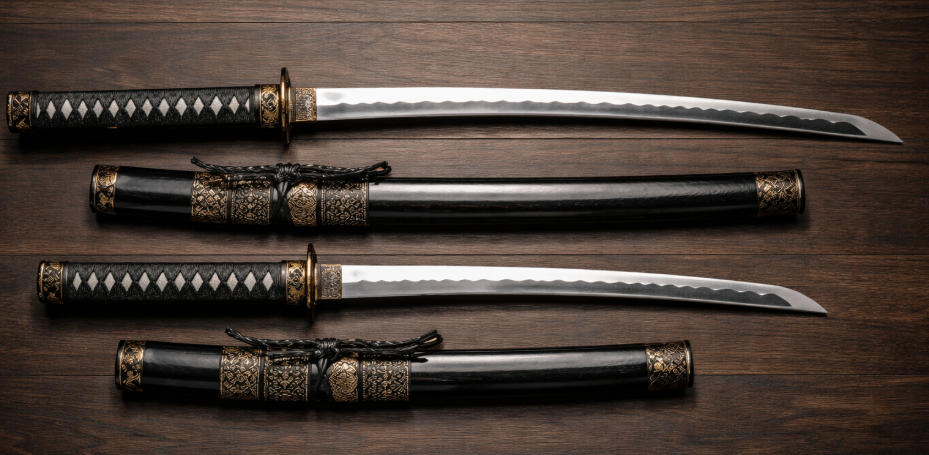
Did Samurai Really Carry Three Swords—Katana, Wakizashi, and Tanto?
Do Japanese samurai carry only one sword? Not at all! Let’s dive into the three core weapons every samurai traditionally carried: the katana (long sword) representing their soul, the Wakizashi (short sword) for indoor self-defense, and the Tanto (dagger) as a last-resort weapon. These three blades served different purposes on the battlefield, in duels, and even in ritual suicide, and each holds unique collectible value.
In Hollywood films and anime, we often imagine samurai wielding a single, sharp long sword to cut down enemies in sweeping motions. This iconic long sword is the world-famous Katana.
However, if you traveled back to the Edo period of Japan, you would see that samurai rarely carried only one sword. To face situations ranging from battlefield combat to indoor assassinations, a proper samurai was typically skilled in handling three swords of different lengths and functions.
Today, CoolKatana will break down the 'samurai three-piece set': Katana, Wakizashi, and Tanto.
1. Katana: The Soul of the Samurai and Battlefield Dominator
This is the sword most people are familiar with and is often synonymous with Nihonto (Japanese swords).
After the Muromachi period, the Uchigatana (Katana) gradually replaced the Tachi as the standard samurai sword.
-
Specifications: Blade length usually exceeds 60 cm (23.6 inches). It is worn edge-up on the left side of the waist to enable quick draw techniques (Iaido).
-
Purpose: It is the primary weapon for mid- to long-range combat. On open battlefields or during street duels, the Katana’s length and curvature deliver powerful slashing force.
-
Status: Known as the 'soul of the samurai', only samurai were allowed to wear it publicly during the Edo period. It symbolized identity, honor, and authority.
Collector’s Tip: If you’re buying your first Japanese sword, a full-tang, high-carbon steel Katana is the ideal starting point. It’s suitable for cutting practice (Tameshigiri) and serves as a powerful display piece.
Hand Forged Japanese Samurai Katana Sword Damascus Folded Steel Reddish Black Blade Brass Dragon Tsuba

2. Wakizashi: Guardian of Honor and Indoor Weapon
The Wakizashi is shorter than the Katana but longer than the Tanto. Often paired with the Katana, the two are collectively known as Daisho ('big and small').
-
Specifications: Blade length usually ranges from 30 cm to 60 cm.
-
Uses:
-
Indoor Combat (CQC): In narrow houses, corridors, or castle interiors, the long Katana can be unwieldy. The shorter, more maneuverable Wakizashi becomes a lethal tool.
-
Backup Weapon: If the primary sword (Katana) breaks or dulls during combat, the Wakizashi serves as the last line of defense.
-
Symbol of Honor: By etiquette, samurai would leave their Katana behind when visiting someone’s home to show peace, but the Wakizashi could remain at the waist. It is the samurai’s last dignity and talisman.
-
-
Two-Sword Style: Legendary swordsman Miyamoto Musashi developed the Niten Ichi-ryu style, fighting with a Katana in one hand and a Wakizashi in the other.

3. Tanto: Last Resort and Ceremonial Blade
The Tanto is the shortest of the three, resembling a dagger but retaining Japanese sword-making craftsmanship such as hamon (temper line).
-
Specifications: Blade length usually less than 30 cm (12 inches).
-
Uses:
-
Armor-Piercing and Grappling: In close combat or when targeting gaps in enemy armor, the Tanto is highly effective.
-
Female Self-Defense: Samurai women often carried a Tanto (called a kaiken) for protection.
-
Seppuku (Ritual Suicide): Its most solemn use was in ritual suicide, where samurai would use it to restore honor or follow their lord.
-
-
Artistic Value: Its smaller size makes the Tanto an ideal canvas for artisan craftsmanship, featuring exquisite koshirae (sword mounts) and carvings—perfect as a decorative collector’s item.

Katana vs. Tachi — Understanding the Difference
Many beginners confuse the Katana with the older Tachi, though they are fundamentally different:
-
Revolution in Wearing Style:
-
Tachi (Heian/Kamakura periods) was designed for mounted archery. To prevent cutting the horse, it was worn edge-down.
-
Katana (Muromachi period onward) was designed for infantry and quick draw, worn edge-up at the waist.
-
-
Quick Identification: On display, if the sword rests edge-up, it’s a Katana; if edge-down, it’s likely a Tachi.
Display Etiquette — Should the Handle Face Left or Right?
For collectors, proper display of these three “sacred swords” carries significant meaning:
-
Handle to the Left: Standard peaceful display. Most people are right-handed, so the sword cannot be drawn quickly, symbolizing trust and friendliness.
-
Handle to the Right: Indicates combat readiness or potential hostility toward visitors.
-
Edge-Up: Regardless of Katana, Wakizashi, or Tanto, blades should face up on the stand. This preserves the saya (scabbard) and prevents the blade from cutting into the interior.
Wakizashi and 'Kirisute Gomen' — The Special Right
The Wakizashi’s importance also relates to a harsh Edo-period law — Kirisute Gomen.
Though rarely used, it allowed samurai to slay disrespectful commoners without legal repercussions. In sudden street confrontations, there wasn’t always time to draw a long sword, so the Wakizashi became the direct tool for enforcing this privilege. Hence, it earned the title 'Blade of Honor', protecting not only life but the inviolable dignity of the samurai class.
Summary: Why Collect the Daisho Set?
Historically, owning a matching Daisho—Katana and Wakizashi of unified style—was a symbol of status.
For modern cold weapon collectors, a single Katana is impressive, but pairing it with a matching Wakizashi or Tanto preserves the integrity of Bushido spirit and creates a visually striking dual-sword display.
Whether you are seeking a tool for Iaido practice or a handcrafted museum-quality samurai sword set for display, CoolKatana offers exquisite reproductions that honor history and craftsmanship.
Structure and symbolism of the samurai’s weapon set, known as the 3 samurai swords, and clarify common questions like is the sword of fire a katana or a wakizashi, highlighting how each blade type served a distinct role in the warrior’s code, from battlefield combat to ceremonial duty.

