


Sai Weapon Explained: Okinawan Sais Weapon History, Techniques & Uses
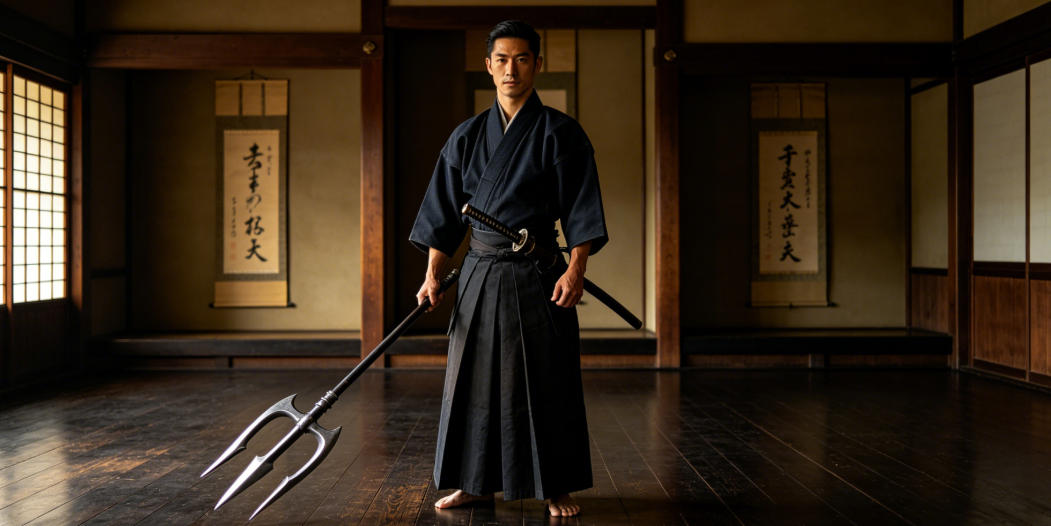
What Is the Sai Weapon and How Does It Work in Okinawan Martial Arts?
In the Okinawan martial arts system of Japan, the sai weapon (Okinawan: sai / trident iron baton) is one of the most recognizable traditional weapons. Known for its unique three-pronged structure, strong defensive capability, and highly technical control-based combat style, it is one of the most iconic close-range weapons in Okinawan Kobudo.
With the global spread of martial arts culture and rising search interest in terms like 'sais weapon' and 'psi weapon', more people are rediscovering this ancient weapon built around the philosophy of control rather than destruction.
What Is a Sai Weapon (Sais Weapon)?
The sais weapon is a traditional Okinawan close-combat weapon typically forged from metal. Its design resembles a short baton combined with a trident-like structure, making it highly effective in close-range fighting, defensive blocking, and weapon control techniques.
In the Kobudo martial arts system, the sai is not just a weapon—it is a fighting tool built around control, timing, and counter-technique. Unlike swords or spears, it does not focus on raw cutting power. Instead, it uses structural advantages to restrict an opponent’s movement and create openings for counterattacks.

Basic Structure of the Sai Weapon
A standard sais weapon is composed of three main parts, each with a specific tactical purpose:
-
Main Prong (Central Blade)
The central spike is the primary striking point, used for thrusting, pressure attacks, and direct offense. In combat, it can also block forward attacks and control engagement distance. -
Side Prongs (Forked Guards)
The two side prongs are the most distinctive feature of the sai. They are used for blocking, trapping, and catching weapons such as swords or sticks. Skilled practitioners can even control or redirect an opponent’s weapon using this structure. -
Handle (Grip)
The handle is designed for fast rotation and directional changes. It allows the user to switch between offense and defense quickly through wrist control and precise motion.
Combat Philosophy: Control Over Damage
Unlike swords or long weapons, the core principle of the sais weapon is not maximizing damage—it is controlling combat flow and restricting the opponent.
Its combat logic focuses on:
- Catching attacks instead of clashing forcefully
- Trapping weapons using the forked structure
- Disrupting the opponent’s rhythm and timing
- Creating openings for precise counterattacks
In this sense, the sai is more of a tactical control weapon rather than a pure offensive tool.
Tactical Value: The Philosophy of Weak vs Strong
In real combat theory, the sai’s greatest strength lies in using structure and technique to counter longer and stronger weapons. Against swords or staffs, it can quickly neutralize attacks through trapping and control.
As a result, the sais weapon is known for:
- High close-range control capability
- Strong defensive interception
- Fast counterattack potential
- Heavy reliance on skill rather than brute strength
This makes it a perfect example of a 'technique over strength' weapon philosophy.
Historical Origins: From Farming Tool to Martial Weapon
The most widely accepted origin theory of the sais weapon is that it evolved from simple Okinawan civilian tools used for self-defense.
Historically, due to weapon restriction laws, common people were not allowed to carry swords. As a result, everyday tools were adapted into defensive weapons.
Over time, the sai evolved into:
- Self-defense tools
- Local policing weapons
- Kobudo training weapons
In traditional Okinawan martial arts, the sai became especially important for countering swords and long staffs.
Combat Style: Control Over Destruction
In practical martial application, the sais weapon is defined by control rather than aggression.
Its main techniques include:
1. Blocking & Deflection
Using the forked structure to catch and redirect incoming attacks.
2. Weapon Trapping
Clamping an opponent’s weapon between the prongs to temporarily neutralize it.
3. Counter Thrusting
Striking quickly after a successful block or trap.
4. Close-Range Control
Restricting the opponent’s movement in tight combat space.
This cycle of block → control → counterattack makes the sai a highly tactical weapon system.

Dual Sai Combat System
In traditional Okinawan martial arts, sai are often used in pairs (dual sai), forming a complete offensive and defensive system.
Advantages include:
- Simultaneous attack and defense from both hands
- Wider blocking coverage
- Stronger weapon suppression capability
- Continuous counterattack flow
This style requires high coordination and rhythm control, making it an advanced martial arts discipline.
PSI Weapon: A Modern Conceptual Comparison
In modern martial arts discussions and pop culture, the term psi weapon is often used to describe 'mental control weapons' or energy-based combat concepts.
Although not a historical weapon, in conceptual terms it shares similarities with the sai:
- Focus on control rather than destruction
- Using opponent’s movement against them
- Dependence on timing, awareness, and reflexes
In discussions like 'psi weapon vs sais weapon,' the sai is often seen as a real-world example of a control-based combat philosophy.
Strengths and Limitations of the Sai Weapon
Strengths:
- Extremely strong defensive capability (especially against swords)
- Non-lethal control potential
- High technical depth and versatility
- Effective in close-range combat environments
Limitations:
- Weak against long-range weapons (like spears)
- Requires extensive training to master
- Demands high coordination and reaction speed
Sai in Modern Culture
As martial arts spread globally, the sais weapon has appeared in various modern media:
- Martial arts action films
- Anime character weapon designs
- Video game defensive weapon systems
- Martial arts demonstrations and exhibitions
It has also become a popular search topic under 'martial arts weapons,' 'ninja weapons,' and 'traditional Okinawan weapons.'
Why Is the Sai Weapon Still Popular Today?
The sais weapon continues to attract attention because it represents more than just a weapon—it represents a philosophy:
- Technique over brute force
- Control over destruction
- Timing over aggression
This philosophy of 'winning through control' keeps the sai relevant in both martial arts study and modern pop culture.
Conclusion
The sai weapon (Okinawan trident weapon) is not only a historical self-defense tool but also a highly technical combat system.
Whether studied in traditional martial arts or modern interpretations, it represents a unique principle:
👉 Replace destruction with control, and overcome strength with technique.
And in the comparison between 'sais weapon' and 'psi weapon,' we can also see an interesting bridge between traditional martial arts and modern conceptual combat systems.

