


Sekigahara Battle Explained: History, Samurai & Japan’s Turning Point
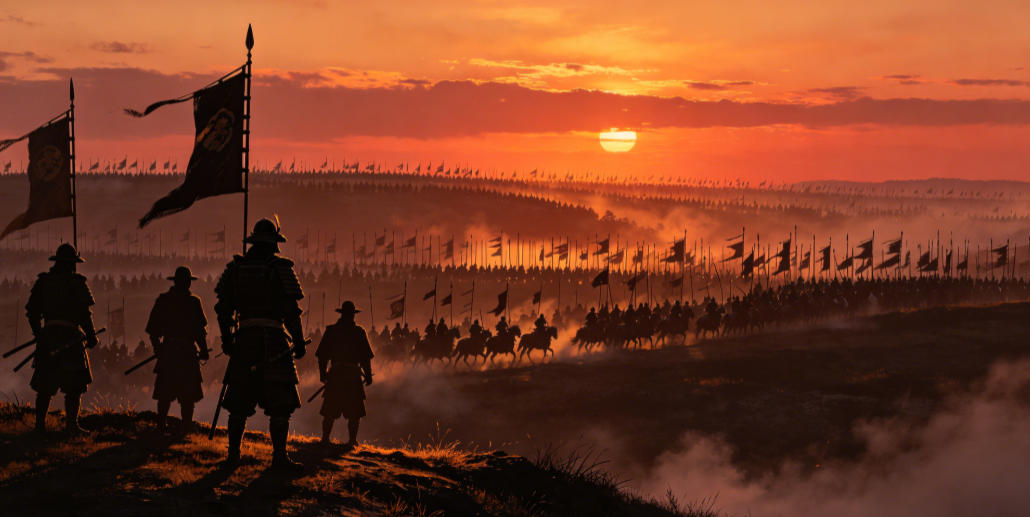
What Was the Battle of Sekigahara? The Samurai War That Changed Japan Forever
Throughout Japanese history, many battles have changed the direction of the nation, but Sekigahara(Battle of Sekigahara) remains one of the most important conflicts ever fought. Taking place in 1600, this legendary battle is often described by historians as the battle that determined the future of Japan. It not only brought an end to the long and turbulent Warring States Period, but also laid the foundation for more than 260 years of peace during the Edo Period.
For those interested in Japanese history, samurai history, and Japanese sword culture, The Battle of Sekigahara was more than a military conflict. It was a historical event shaped by loyalty, ambition, strategy, and the values of the samurai.
From the political rivalry between Tokugawa Ieyasu and Ishida Mitsunari, to the fierce confrontation between the Eastern and Western Armies, and finally the transformation of Japan’s political system after the war, the Sekigahara Battle represents both the final glory and the brutal reality of the Japanese Warring States era.
This article explores the history of Sekigahara, the armies involved, the battle process, its strategic importance, and its lasting influence on Japanese samurai culture and history.
What Was the Battle of Sekigahara?
The Battle of Sekigahara took place on October 21, 1600, in the Sekigahara region of present-day Gifu Prefecture, Japan.
The conflict was mainly fought between two powerful alliances:
- Eastern Army
- Western Army
The Eastern Army was led by Tokugawa Ieyasu, who would later establish the Tokugawa Shogunate. The Western Army consisted mainly of generals loyal to the Toyotomi family, with Ishida Mitsunari serving as one of its key leaders.
The battle involved more than 100,000 warriors and became one of the largest battles in Japanese history.
In the end, Tokugawa Ieyasu and the Eastern Army achieved a decisive victory. This victory completely changed Japan’s political structure and officially opened the way for the beginning of the Edo Period.

The Historical Background of Sekigahara Battle
To understand Sekigahara, it is important to first understand the complicated political situation at the end of Japan’s Warring States Period.
During the 16th century, Japan was divided among powerful feudal lords known as daimyo, who constantly fought for territory, influence, and control. Through the efforts of leaders such as Oda Nobunaga and Toyotomi Hideyoshi, Japan gradually moved toward unification.
However, after Toyotomi Hideyoshi’s death in 1598, a new struggle for power began.
Because Hideyoshi’s heir, Toyotomi Hideyori, was still young, the government was managed by a group of powerful elders and administrators. Among them, Tokugawa Ieyasu gradually became the strongest political and military figure.
His growing influence created opposition among Toyotomi supporters, especially those who followed Ishida Mitsunari.
The conflict between these two sides centered around:
- Political control of Japan
- The future of the Toyotomi family
- Alliances between powerful daimyo
Eventually, these tensions led to the outbreak of the Battle of Sekigahara.
Eastern Army vs Western Army: The Two Sides of Sekigahara
One of the defining features of the Sekigahara Battle was the formation of two major alliances among Japan’s powerful daimyo.
Eastern Army
The Eastern Army mainly supported:
Tokugawa Ieyasu
Important commanders included:
- Fukushima Masanori
- Kuroda Nagamasa
- Ii Naomasa
Advantages of the Eastern Army included:
- Experienced military leaders
- Strong organization
- Tokugawa Ieyasu’s powerful political influence
Western Army
The Western Army mainly supported:
Ishida Mitsunari
Major members included:
- Mori Clan
- Ukita Hideie
- Konishi Yukinaga
Although the Western Army had a large number of soldiers, its alliance was unstable.
Major weaknesses included:
- Some daimyo lacked true loyalty
- Complicated command structure
- Internal conflicts between different factions
These problems became important reasons for the Western Army’s eventual defeat.
The Battle of Sekigahara: The Day That Changed Japan
On the morning of October 21, 1600, the two armies clashed on the plains of Sekigahara.
The battlefield had unique geographical conditions:
- Surrounded by mountains
- Covered by heavy morning fog
- Limited movement routes
The armies quickly became engaged in fierce combat.
At the beginning of the battle, the Western Army gained some advantages because of its defensive positions. However, the outcome was not decided only by military strength—it was heavily influenced by political alliances and loyalty.
One of the most important figures was:
Kobayakawa Hideaki
Originally a member of the Western Army, he made the crucial decision to switch sides and support Tokugawa Ieyasu during the battle.
This betrayal completely changed the situation.
When Kobayakawa’s forces attacked the Western Army’s flank, other commanders began to lose confidence, and the Western Army’s formation collapsed.
Eventually, Tokugawa Ieyasu achieved a decisive victory.
Tokugawa Ieyasu and the Rise of the Tokugawa Shogunate
After Sekigahara, Japan entered a completely new historical era.
In 1603, Tokugawa Ieyasu officially became Shogun and established the:
Tokugawa Shogunate
Japan then entered the long-lasting:
Edo Period
The Tokugawa government created a stable political system through strict social structures, diplomatic policies, and careful control over daimyo.
The victory at Sekigahara allowed the Tokugawa family to become the dominant ruling power in Japan and greatly influenced the country’s political, economic, and cultural development.

The Importance of Sekigahara in Samurai History
For samurai culture, the Sekigahara Battle holds a special place in history.
This battle represented:
The End of the Warring States Period
The Battle of Sekigahara ended more than a century of continuous warfare in Japan.
Before the battle:
- Samurai constantly fought
- Daimyo competed for territory
- Political power frequently changed hands
After the battle:
- Society became more stable
- The samurai class became institutionalized
- Traditional culture developed rapidly
The Development of Samurai Culture
Although warfare decreased during the Edo Period, samurai culture continued to develop.
Instead of focusing only on battlefield skills, the samurai ideal gradually transformed into values such as:
- Bushido
- Loyalty
- Honor
- Self-discipline
Many ideas associated with Japanese samurai values today were shaped during this period.
Sekigahara and Japanese Sword Culture
As one of the most famous samurai battles in Japanese history, Sekigahara is closely connected with Japanese sword culture.
During the Warring States era, Japanese swords were not only weapons but also important symbols of samurai identity.
Warriors who participated in the Battle of Sekigahara commonly carried:
- Katana
- Wakizashi
- Tachi
Famous sword-making traditions from this period included:
- Mino school swords
- Bizen swords
- Yamato swords
These blades were highly valued by samurai warriors.
Today, many history enthusiasts explore the culture of the Sekigahara Battle period through Japanese sword collections, samurai armor, and historical artifacts.
Why Is the Battle of Sekigahara Still Remembered Today?
More than 400 years later, Sekigahara remains one of the most studied and famous battles in Japanese history.
The reason is simple:
It did not merely decide the winner of one battle—it changed the future direction of an entire nation.
The battle determined:
- Who would rule Japan
- The future of the samurai class
- The establishment of the Edo Period
- The development of Japanese traditional culture
Today, the Sekigahara battlefield has become an important historical site in Japan, attracting history enthusiasts, researchers, and visitors interested in Japanese culture.
Conclusion: Sekigahara Battle and Its Legacy
The Battle of Sekigahara was not just a military conflict; it was a turning point that transformed Japanese history.
From Tokugawa Ieyasu’s strategic planning, to Ishida Mitsunari’s political ambitions, and the fierce struggle between the Eastern and Western Armies, the battle represented the final chapter of the Warring States era.
Sekigahara marked the end of one historical period and opened more than two centuries of peace under the Tokugawa Shogunate.
For modern audiences, learning about the Battle of Sekigahara is not only about understanding a war. It is also about exploring the origins of Japanese samurai culture, political history, and traditional values.
It reminds us:
A single battle can change the destiny of an entire nation.

