


Sting Sword Explained: History, Lore & Legacy in LOTR Universe
- Posted by COOLKATANA
What Is Sting Sword in The Lord of the Rings and Why Is It So Important?
What Is Sting Sword and Why Is It So Important in Middle-earth?
Sting sword is one of the most iconic Elven weapons in Tolkien’s legendarium, appearing in both The Hobbit and The Lord of the Rings (LOTR). It is classified as an Elvish short sword, lightweight and finely crafted. While it is considered a small blade for Elves, it becomes a life-changing weapon for Hobbits, perfectly suited to their size and journey.
In modern search trends, it is frequently associated with high-volume keywords such as sting lord of the rings, sting lotr, bilbo sting sword, frodo sting sword, elven dagger sting, and LOTR glowing sword, making it one of the most recognizable fantasy weapons in global pop culture.
In the lore, Sting is not an ordinary weapon but an ancient Elven relic. It was originally forged in the First Age in the legendary Elven city of Gondolin, a hidden kingdom that represents the peak of Elven civilization. The master smiths of Gondolin created weapons of extraordinary craftsmanship, combining beauty, durability, and symbolic meaning.
Sting was considered part of this noble Elven armory tradition before being lost during the fall of Gondolin. In the Third Age, it was discovered in a troll hoard and remained forgotten until Bilbo Baggins found it during his adventure. This moment transforms Sting from a lost artifact into a weapon of destiny.
Thus, Sting is far more than a simple Elven short sword—it is a historical relic spanning multiple ages of Middle-earth, connecting the Elven golden age, the Third Age adventures, and the central narrative of The Hobbit and The Lord of the Rings.

The Origin of Sting: The Legendary Forging of Gondolin
Sting sword originates from one of the most legendary Elven cities in Tolkien’s world—Gondolin. Hidden among mountains, Gondolin represents the height of Elven craftsmanship and culture during the First Age.
In fantasy SEO and pop culture searches, Sting is often linked with terms like sting lord of the rings, sting lotr, bilbo sting sword, elven sword sting, and hobbit glowing sword, reinforcing its global recognition as a legendary Elven weapon.
Gondolin: The Peak of Elven Craftsmanship
Gondolin was not just a city but a symbol of Elven artistry and engineering excellence. Weapons forged there shared several defining traits:
- Crafted by highly skilled Elven smiths
- Made using rare metals and refined steel concepts
- Balanced lightweight design with extreme sharpness
- Combined combat efficiency with artistic elegance
Sting was born under these elite forging traditions, giving it noble weapon status from the very beginning.
Connection to Legendary Elven Weapons
Sting is part of a broader weapon lineage from Gondolin, including:
- Glamdring (Gandalf’s sword) — wielded by Gandalf the Maia
- Orcrist (Thorin’s sword) — also known as Goblin-cleaver
- Other unnamed noble Elven blades
These weapons reflect the consistency of Gondolin’s forging philosophy: lightweight structure, extreme sharpness, and symbolic enchantment-like presence.
Within this system, Sting may be smaller in size, but it remains a high-quality Elven weapon rather than a simple dagger.
Loss and the Fall of Gondolin
During the destruction of Gondolin in the First Age:
- The city was destroyed in war
- Many Elven weapons were lost or scattered
- Sting was buried among ruins and forgotten relics
This marked the beginning of its long period of disappearance.
The Troll Hoard and Centuries of Darkness
Between the Second and Third Ages, Sting was discovered by trolls and stored in a dark cave:
- Kept as a trophy among stolen treasures
- Left unused for centuries in complete darkness
- Eventually abandoned and forgotten
- Rediscovered during the events of The Hobbit
This stage transformed Sting into a 'sleeping legend,' awaiting its destined owner.
The Epic Structure: Lost, Sleeping, and Rediscovered
The origin of Sting follows a powerful narrative pattern:
- Glorious Creation — forged in Gondolin at its peak
- War and Loss — lost during the First Age destruction
- Long Slumber — hidden in darkness for centuries
- Rediscovery — found by Bilbo during his adventure
This structure gives Sting a mythic storytelling depth, making it more than a weapon—it becomes a living historical artifact across ages.
Why Sting’s Origin Defines Its Legendary Status
This complete lifecycle is why sting sword holds such importance in the LOTR universe:
- It witnessed the rise and fall of Elven civilization
- It bridges the First Age and Third Age
- It transforms from a war relic into a hero’s blade
- It becomes a key tool in Hobbit destiny
Therefore, in both sting lord of the rings and sting lotr contexts, Sting represents not just a weapon, but a legend reborn through fate.
Bilbo and Sting: A Sword That Changed Destiny
In The Hobbit, Sting’s destiny takes its first major turn.
Gandalf and the Dwarves discover the blade in a troll cave and give it to Bilbo Baggins. Initially reluctant to fight, Bilbo gradually learns to use the sword as he grows through his journey.
Key developments include:
- First real combat in Mirkwood
- Crucial battles against giant spiders
- Naming the sword 'Sting' after its effectiveness
From that moment, Sting becomes a symbol of Bilbo’s courage and transformation.
Sting in The Lord of the Rings: The Passing of the Blade
In The Lord of the Rings, Sting undergoes its most important transition:
Bilbo → Frodo
When Bilbo leaves the Shire, he passes Sting—along with Mithril armor—to Frodo. This moment represents:
- The continuation of adventure spirit
- The transfer of responsibility
- A turning point in Middle-earth’s fate
From then on, Sting becomes Frodo’s primary defensive weapon during the quest to destroy the One Ring.
Sting’s Magical Property: The Blue Warning Light
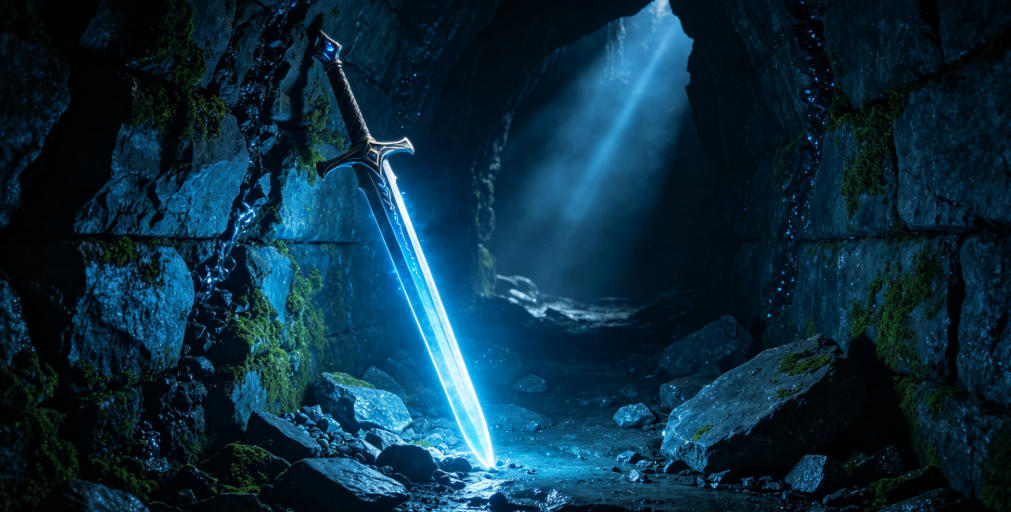
One of Sting’s most famous abilities is its glowing feature:
It emits a blue light when Orcs or Goblins are nearby
This ability plays a critical role in several iconic moments:
- Deep tunnels of Moria
- Warning before Orc attacks
- Survival guidance in Mordor’s darkness
This makes 'sting sword glow blue' one of the most searched fantasy weapon phrases worldwide.

The Symbolism of Sting: More Than a Weapon
Within the LOTR universe, Sting sword is far more than a blade—it is a symbolic artifact representing hope, growth, and destiny.
1. Light vs Darkness
Its blue glow symbolizes hope in absolute darkness.
- In Moria, it becomes a beacon of survival
- Against Orcs, it represents the presence of evil
- It reinforces Tolkien’s core theme of moral conflict
Thus, sting lord of the rings is often remembered as a 'light in darkness' weapon.
2. The Heroism of the Small
Sting is closely tied to Hobbit identity:
- Bilbo evolves from an ordinary Hobbit into a brave adventurer
- Frodo takes on the burden of the One Ring
- The sword represents courage beyond physical strength
This is why bilbo sting sword and frodo sting sword remain iconic references in Tolkien fandom.
3. Legacy and Destiny
Sting’s greatest meaning lies in inheritance:
- Bilbo represents accidental heroism
- Frodo represents chosen sacrifice
- Sting connects both journeys into one narrative arc
This emotional continuity makes it one of the most meaningful weapons in LOTR.
Sting in Modern Culture and Its Global Influence
Today, 'sting sword,' 'sting lord of the rings,' and 'sting lotr' remain highly searched terms, making Sting one of the most influential fantasy weapons in global media.
Its impact includes:
- 🎬 Film prop replicas and cinematic recreations
- 🛡️ High-end collectible sword models
- 🎭 Cosplay and live-action roleplay equipment
- 🎮 Inspiration for fantasy video game weapon design
In collector markets, Sting is often considered an “entry-level legendary sword” due to its:
- Strong cinematic recognition
- Clear lore background
- Iconic blue-glow identity
- High visual and cultural value
Conclusion: Why Sting Became a Legend
Sting sword is not just a weapon defined by appearance or magical traits—it is a narrative symbol of growth, courage, and legacy that runs throughout The Hobbit and The Lord of the Rings.
From the Elven forge of Gondolin, to Bilbo’s discovery, and finally to Frodo’s journey into Mordor, Sting remains a constant embodiment of hope.
It is more than a sword—it is a legend across ages, a light that never fades in the darkness of Middle-earth.

