


Tokugawa Clan Black Samurai Armor: History, Meaning & Legacy
What Makes Tokugawa Clan Black Samurai Armor a Symbol of Samurai Honor and Edo History?
Throughout Japanese history, the Tokugawa Clan has been one of the most influential samurai families. As the founders of the last long-lasting ruling government of feudal Japan, the Tokugawa family not only ended centuries of conflict during the Sengoku era but also established the Tokugawa Shogunate and ushered in the prosperous and stable Edo Period, which lasted for approximately 260 years.
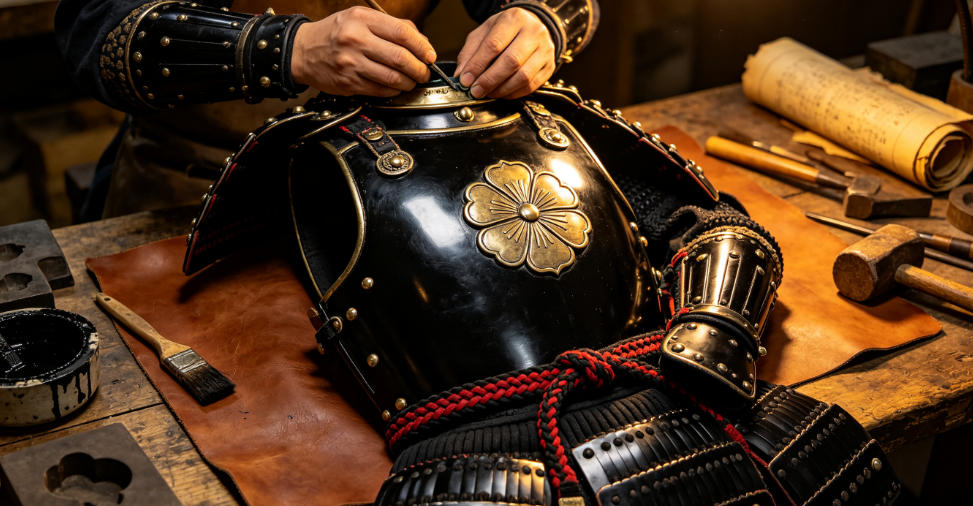
During this historical era, Japanese Samurai Armor was no longer simply a piece of battlefield protection. Instead, it gradually became a symbol of samurai identity, family honor, social status, and spiritual beliefs. Among all forms of traditional armor, the Tokugawa Clan Black Samurai Armor stands out with its powerful black lacquer finish, refined craftsmanship, traditional structure, and the iconic Mitsuba Aoi Crest, which represented the authority and legacy of the Tokugawa family.
Today, this type of Black Samurai Armor continues to attract attention from historians, collectors, samurai culture enthusiasts, and admirers of traditional Japanese art.
The Historical Connection Between the Tokugawa Clan and Japanese Samurai Armor
The Sengoku Period was one of the most glorious yet turbulent eras for the samurai class. For more than a century, powerful Japanese feudal lords known as Daimyo and various samurai clans fought fiercely for territory, political influence, and control over Japan. For warriors of this period, Samurai Armor was not only essential battlefield equipment but also a representation of personal bravery, family heritage, and social identity.
A carefully crafted set of Japanese Samurai Armor reflected the warrior’s clan, rank, and military status. Elements such as family crests (Mon), helmet designs (Kabuto), and decorative details often represented the traditions, values, and spiritual beliefs of the samurai family behind the armor. Therefore, samurai armor was never created solely for defense; it also carried the ideals of honor, loyalty, and responsibility that defined Japanese warrior culture.
Among all Japanese warrior families, the Tokugawa Clan remains one of the most historically significant. Tokugawa Ieyasu gradually rose to power during the late Sengoku Period through exceptional military strategy, political intelligence, and years of carefully building influence.
The Battle of Sekigahara in 1600 became a major turning point in Japanese history. Tokugawa Ieyasu led the Eastern Army to a decisive victory, eventually establishing the Tokugawa Shogunate in 1603 and becoming the supreme ruler of Japan. From that moment, Japan entered the Edo Period, a time of peace and stability that lasted for nearly 260 years.
With the establishment of the Tokugawa Shogunate, Japanese society gradually moved away from constant warfare and entered an era of structured governance. The role of the samurai also changed dramatically. They were no longer only professional warriors fighting on battlefields but became an important ruling class responsible for maintaining social order, enforcing government policies, and managing regional affairs.
This transformation deeply influenced the development of Samurai Armor.
During the Sengoku Period, samurai armor mainly focused on:
Battlefield protection
Mobility during combat
Defense against swords and arrows
However, after entering the Edo Period, large-scale warfare became less common. As a result, samurai armor gradually transformed from practical battlefield equipment into:
A symbol of family identity
A representation of samurai values
A masterpiece of traditional craftsmanship
A historical collectible
Therefore, Japanese Samurai Armor during the Edo Period placed greater emphasis on aesthetics, detailed craftsmanship, and symbolic meaning. Armor makers invested more effort into lacquer techniques, metal engraving, decorative patterns, and clan symbols, transforming armor into not only protective equipment but also an important artistic representation of samurai status.
In particular, the Black Samurai Armor associated with the Tokugawa family perfectly reflected the stability, discipline, and authority valued by Edo Period samurai culture.
The deep black lacquer finish represented dignity, strength, and prestige in traditional Japanese craftsmanship. The dark armor style commonly associated with the Tokugawa family matched the shogunate’s ideals of order and control. Compared with the colorful and highly decorative armor designs of the Sengoku era, Tokugawa-era black armor expressed a more restrained and disciplined samurai spirit.
In addition, the Mitsuba Aoi Crest displayed on Tokugawa armor became a powerful symbol of identity and authority. This family crest represented the Tokugawa bloodline, political status, and the samurai’s dedication to protecting their lord and preserving family honor.
Therefore, the Tokugawa Clan Black Samurai Armor is not merely a traditional piece of protective equipment; it is a reflection of Japanese history. It combines:
The political influence of the Tokugawa Shogunate
Samurai culture of the Edo Period
Traditional Japanese armor craftsmanship
The philosophy of Bushido
Centuries of Japanese historical aesthetics
Today, black samurai armor related to the Tokugawa legacy continues to attract collectors around the world. Whether displayed as part of a Samurai Armor Collection, used as a historical exhibition piece, or preserved as a Handmade Samurai Armor Replica by Japanese culture enthusiasts, it represents one of the most fascinating aspects of the samurai era.
The relationship between the Tokugawa Clan and Japanese Samurai Armor records a history of war, peace, honor, and responsibility while showcasing the enduring spirit and values of Japan’s legendary warrior class.

The Symbolic Meaning of Black Samurai Armor
In traditional Japanese culture, colors often carried deep symbolic meanings.
Black Samurai Armor was commonly created using traditional Japanese lacquer techniques, with its dark lacquer surface expressing a sense of dignity, strength, and authority.
In samurai culture, black represented:
Power and status
Calmness and wisdom
Loyalty and discipline
Determination and strength
Compared with the colorful and highly decorative samurai armor of the Sengoku Period, Tokugawa-era black armor focused more on simplicity, elegance, and solemnity. This design philosophy reflected the Edo Period samurai’s pursuit of order, self-control, and spiritual cultivation.
For Tokugawa warriors, true strength did not come only from weapons and armor. Instead, real power came from inner discipline, responsibility, and the ability to uphold one’s duties and beliefs.
The Black Samurai Armor therefore became more than protective equipment. It represented the mindset of the samurai — a balance between physical strength, mental discipline, and unwavering loyalty.
The Historical Symbolism of the Mitsuba Aoi Crest
The most recognizable symbol of the Tokugawa family is the Mitsuba Aoi Crest.
This famous three-leaf hollyhock emblem was commonly displayed on:
Samurai helmet Kabuto
Chest armor Do
Armor decorations
Family ceremonial items
The Mitsuba Aoi Crest became one of the most recognizable family symbols in Japanese history. It represented the identity, authority, and political power of the Tokugawa family.
During the Tokugawa Shogunate, the presence of the three-leaf crest indicated a close connection with the highest level of samurai society and the ruling government.
Therefore, Tokugawa Samurai Armor featuring the Mitsuba Aoi Crest was not simply a suit of armor. It represented family honor, historical status, loyalty, and the legacy of one of Japan’s most powerful warrior clans.
The crest transformed the armor into a cultural symbol, connecting the physical craftsmanship of Japanese armor with the political and spiritual world of the samurai.
The Development of Japanese Samurai Armor
From Battlefield Equipment to Historical Artwork
Traditional Yoroi(Japanese Armor) developed over hundreds of years and became one of the most unique forms of protective equipment in world history.
Unlike ordinary armor systems, Japanese Samurai Armor combined practical defense with artistic expression. Every component, from the helmet to the smallest decorative element, reflected the craftsmanship, social identity, and philosophy of the warrior who wore it.
A complete set of Samurai Armor usually includes several important parts.
Kabuto: The Samurai Helmet
The Kabuto is one of the most iconic elements of Japanese samurai armor.
Beyond protecting the warrior’s head, the Kabuto also served as a symbol of identity, rank, and personal reputation.
Many high-ranking samurai helmets featured:
Kuwagata horn decorations
Metal engravings
Family crests
Unique artistic designs
Different samurai clans used helmet decorations to display their heritage, achievements, and social position.
Some Kabuto designs were created to intimidate enemies on the battlefield, while others emphasized elegance and family tradition. This combination of functionality and artistry made the Japanese samurai helmet one of the most recognizable symbols of warrior culture.
Do: The Chest Armor
The Do was the central protective component of traditional Japanese armor.
Traditional construction methods often combined:
Iron plates
Leather materials
Japanese lacquer techniques
Decorative cord connections
The structure of the Do provided strong protection while allowing warriors to maintain flexibility during combat.
Japanese armor craftsmen carefully balanced durability, mobility, and visual beauty. This unique approach made Samurai Armor different from many other historical armor systems around the world.
The lacquered surface not only protected the armor materials from damage but also created a distinctive appearance that represented the wearer’s clan and personal style.

Kusazuri: The Skirt Armor
The Kusazuri was designed to protect the waist and upper leg areas.
Made from multiple connected armor plates, Kusazuri allowed samurai warriors to move freely while riding horses or fighting on foot.
One of the greatest characteristics of Japanese Samurai Armor was its ability to achieve a balance between protection and movement.
Instead of creating heavy armor that restricted mobility, Japanese armor makers developed flexible structures that allowed warriors to remain agile while maintaining effective defense.
This innovative design philosophy contributed to the lasting reputation of Japanese Warrior Armor as both a functional military tool and a masterpiece of traditional craftsmanship.
The Collection Value of Handmade Samurai Armor Replica
Because authentic ancient samurai armor is extremely rare and difficult to preserve, high-quality Samurai Armor Replica has become an important category among collectors and Japanese history enthusiasts.
A well-crafted Handmade Samurai Armor Replica focuses on:
Historical accuracy
Traditional craftsmanship
Metalworking details
Lacquer quality
Family crest designs
Authentic proportions
Modern collectors often use these replicas for:
Japanese history collections
Samurai culture exhibitions
Home decoration
Museum-style displays
Film and photography props
Historical reenactment events
A beautifully crafted Authentic Japanese Samurai Armor Replica not only recreates the appearance of traditional warrior equipment but also reflects the collector’s appreciation for Japanese history, art, and craftsmanship.
High-quality replicas allow people around the world to experience the visual beauty and cultural meaning of samurai armor without needing access to rare historical originals.
The Cultural Importance of Japanese Samurai Armor Collection
For collectors, a Japanese Samurai Armor Collection is not simply a decorative display. It is a cultural connection between the past and the present.
These historical pieces preserve:
Japanese feudal history
Samurai social traditions
Edo Period artistic culture
Traditional metalworking techniques
Japanese lacquer craftsmanship
A Tokugawa Clan Black Samurai Armor collection represents more than a beautiful object. It tells the story of Japan’s transformation from a nation of constant warfare into a society shaped by discipline, tradition, and cultural refinement.
Why Choose Tokugawa Clan Black Samurai Armor?
If you are passionate about:
Japanese Samurai History
Edo Period Culture
Japanese Warrior Armor
Bushido Spirit
Handmade Samurai Armor
Historical Armor Collection
Then the Tokugawa Clan Black Samurai Armor is a highly valuable piece for collectors and history enthusiasts.
It not only recreates the powerful and elegant appearance of Tokugawa-era samurai warriors but also represents the continuation of centuries-old Japanese traditional craftsmanship.
From the deep black lacquer surface to the symbolic Mitsuba Aoi Crest, every detail tells a unique story about the legendary age of Japanese warriors.
The combination of historical meaning, artistic craftsmanship, and cultural symbolism makes Tokugawa-style black samurai armor one of the most fascinating examples of Japanese armor heritage.
For collectors, owning a piece inspired by the Tokugawa legacy means preserving a connection to:
The honor of samurai warriors
The traditions of the Edo Period
The craftsmanship of Japanese armor makers
The philosophy of Bushido
The timeless beauty of Japanese history
A Black Samurai Armor Replica is not only a display piece but also a representation of courage, loyalty, and the enduring spirit of the samurai.
Handmade Life Size Tokugawa Clan Samurai Armor - Authentic Japanese Yoroi

Conclusion: Samurai Glory Across Time
The Tokugawa Clan Black Samurai Armor is more than a traditional suit of armor. It is a symbol of Japanese history and a reminder of an era shaped by warriors, honor, and discipline.
It represents:
The legacy of the Tokugawa family
The cultural prosperity of the Edo Period
The honor and spirit of Japanese samurai
The wisdom and craftsmanship of traditional artisans
Throughout centuries, samurai armor has remained one of Japan’s most recognizable cultural symbols. Behind every piece of armor lies a story of dedication, craftsmanship, loyalty, and the pursuit of excellence.
Whether displayed as a Samurai Armor Display or preserved as a personal historical collection, the Tokugawa Clan Black Samurai Armor carries unique cultural and artistic value.
It allows modern audiences to rediscover the philosophy of the samurai and experience the traditions that shaped Japan’s warrior history.
The legacy of the samurai continues to inspire people around the world, and the Tokugawa Clan Black Samurai Armor remains a powerful symbol of honor, strength, and timeless Japanese craftsmanship.
-
Posted in
Samurai Armor

