


Golden Takeda Clan Samurai Armor – Authentic Sengoku Era Replica
What Makes the Golden Takeda Clan Samurai Armor a Must-Have for Collectors and History Fans?
The Takeda Clan was one of the most influential samurai families during Japan's Sengoku Period, ruling Kai Province for centuries. Its most famous leader, Takeda Shingen, was renowned for his exceptional military strategies and unparalleled cavalry tactics, earning the title of one of the strongest daimyos of the era. Today, this Golden Takeda Clan Samurai Armor faithfully recreates the legendary family’s glory and samurai spirit with exquisite craftsmanship.
What is the Takeda Clan Known For?
The Legend of the Takeda Clan: Furinkazan & the Path to Sengoku Dominance
During Japan’s Sengoku Period, the country was divided and war was constant, as feudal lords fiercely competed for territory and power. In this turbulent era, the Takeda Clan quickly rose to prominence through formidable military strength and effective governance, becoming one of the most feared powers in eastern Japan. Its leader, Takeda Shingen, was famously known as the "Tiger of Kai," symbolizing courage, decisiveness, and unshakable authority.
The Takeda Clan’s most iconic emblem is their battlefield philosophy printed on their banners—Furinkazan. Inspired by the strategic wisdom of Sun Tzu, it translates to: 'Swift as the wind, silent as the forest, fierce as fire, immovable as a mountain.' More than a motto, it defined the Takeda army’s core principles: march swiftly, maintain disciplined formations, strike with overwhelming force, and hold positions like a steadfast mountain. This high level of discipline and systemization set the Takeda army apart in the Sengoku era.
At the Battles of Kawanakajima, Takeda Shingen faced his rival Uesugi Kenshin in a series of legendary confrontations spanning over a decade. It is said that Uesugi once rode alone into Takeda’s main camp to confront Shingen, creating the famous 'sword versus war fan' moment. These encounters not only demonstrated martial skill but also exemplified the honor and dignity central to samurai culture.
The strength of the Takeda army largely stemmed from its elite cavalry. Shingen developed cavalry tactics that maximized mobility and impact, making his forces nearly unbeatable on the open plains. Quick strikes and frontal charges could disrupt enemy formations almost instantly, a strategic advantage widely studied in Japanese military history.

However, with the advent of firearms and evolving warfare, traditional cavalry tactics faced new challenges. At the Battle of Nagashino, the Takeda Clan suffered severe losses against the combined forces of Oda and Tokugawa, marking a critical turning point in their decline. After Shingen’s death, the clan gradually lost cohesion and ultimately fell from power.
Despite this, the Takeda Clan’s military philosophy and samurai spirit left a lasting legacy. Their emphasis on discipline, tactical brilliance, and loyalty remains a defining aspect of Japanese martial culture. Furinkazan endures not just as a battle motto but as a symbol of strategic wisdom and enduring samurai ethos.
This spirit is vividly expressed in the Takeda Clan’s armor. Every design choice, color, and detail conveys authority and command. The Golden Takeda Clan Samurai Armor is not only a reproduction of battlefield gear but also a tangible embodiment of the family’s storied history and warrior values, allowing one to experience the awe of the Sengoku era firsthand.
Golden Samurai Armor: A Symbol of Power and Glory
The Golden Samurai Armor features a dazzling gold palette, representing power, authority, and timeless honor. During the Sengoku Period, gold was reserved for the elite—high-ranking samurai and daimyos—symbolizing status, wealth, and command. Wearing such armor was more than protection; it was a declaration of prestige and dominance on and off the battlefield.
While the Takeda Clan emphasized practicality and intimidation, the golden hue enhances the visual impact, projecting an aura of supremacy. Sunlight reflecting off the polished plates magnifies the armor’s presence, creating psychological pressure on opponents even before battle.
Gold armor also played a ceremonial role, worn during formal events, battles, and display occasions, symbolizing victory and glory. It merges power, artistic expression, and spiritual significance in one.
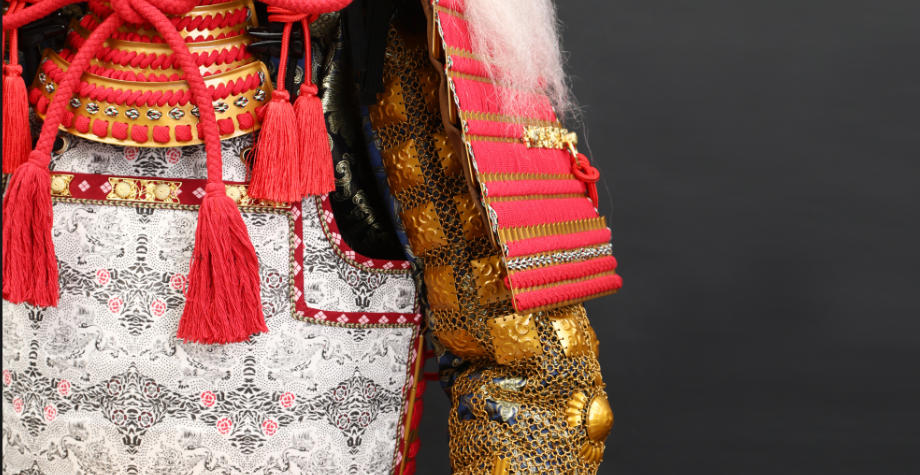
The armor is paired with the iconic Kabuto helmet, adorned with white yak hair, creating a majestic silhouette. The dynamic headpiece enhances presence during movement or horseback riding, reinforcing intimidation and visual appeal.
Details such as the contrast between golden plates and silk cords, along with the interplay of metal and fabric, create a layered, aesthetically rich appearance. Each embellishment is both decorative and functional, reinforcing structural harmony and historical authenticity.
Thus, the Golden Takeda Clan Samurai Armor is more than battle gear; it is a recreation of Sengoku-era authority and samurai prestige, letting the wearer envision Shingen’s cavalry charging across the plains.
Yoroi Armor: The Pinnacle of Japanese Samurai Equipment
Yoroi Armor represents the pinnacle of traditional Japanese samurai armor, originating in the Heian Period and refined through the Kamakura and Sengoku eras. Beyond battlefield defense, Yoroi symbolized samurai identity, family honor, and Japanese craftsmanship, becoming one of the most emblematic forms of Japanese samurai armor.
Yoroi features layered construction of hundreds—or even thousands—of small metal or leather plates (kozane), meticulously laced together with silk or leather cords (odoshi). Unlike Western plate armor, Yoroi balances protection with mobility, enabling samurai to wield swords, draw bows, or ride cavalry efficiently. This represents a unique blend of Japanese warfare strategy and aesthetics.
Key Features of Yoroi Armor:
-
Superior Defensive Structure
Layered plates disperse impact, resisting sword strikes and spear thrusts. In historical battles, this structure could determine life or death. -
Cavalry Optimization
Designed for mounted combat, with reinforced chest, shoulder, and side guards. Wide shoulder plates (sode) enhance protection and intimidation, ideal for Takeda cavalry tactics. -
Exquisite Decorative Design
Vividly laced cords and family crests (mon) signify rank, lineage, and identity. Each armor set carries unique cultural symbolism. -
Cultural & Spiritual Significance
Yoroi embodies bushido principles—loyalty, courage, honor, and discipline—reflecting samurai responsibility to defend family and territory. -
Craftsmanship & Historical Value
Every set showcases meticulous craftsmanship in metalwork, weaving, and structural design, blending artistry with historical authenticity.
For collectors, Yoroi transcends mere weaponry, offering a tangible connection to Japan’s Sengoku-era military wisdom and samurai ethos.

Handmade Craftsmanship: Recreating Sengoku Era Artistry
The Golden Takeda Clan Samurai Armor is meticulously handmade, blending traditional techniques with modern materials. Each plate is cut, polished, and laced according to historical methods, ensuring structural accuracy and aesthetic fidelity.
High-quality alloys, natural textiles, and reinforced leather provide durability while preserving authentic texture. The armor’s design is wearable, allowing display or interactive use, balancing historical accuracy with comfort and mobility.
Custom Sizing & Collectible Value
This life-size armor is designed for heights of approximately 170–180cm and supports custom fitting, ensuring proportional accuracy and comfortable wear.
Each set is a limited-edition collectible, handcrafted to create uniqueness and rarity. Its gold sheen, intricate detailing, and historical authenticity make it a striking display piece, investment-grade collectible, and culturally significant artifact.
Multi-Scenario Use: Collection, Display & Cultural Experience
The Golden Takeda Clan Samurai Armor is suitable for various scenarios:
- ⚔️ Historical Reenactments & Sengoku Experiences – Immerse in samurai battlefield simulations.
- 🏛️ Museum & Exhibition Display – Showcase Takeda Clan history and Furinkazan strategy.
- 💎 Private Collectibles & Investment – Limited edition, high craftsmanship, investment potential.
- 🏠 Home Décor & Cultural Spaces – Create historical ambiance and focal points.
- 🎭 Cosplay & Film Props – Enhance authenticity for performances or productions.
- 🌟 Educational & Interactive Use – Teach samurai history, culture, and strategy interactively.
Its high fidelity, craftsmanship, and cultural depth make it ideal for collectors, educators, and enthusiasts seeking an immersive historical experience.
Handmade Life Size Yoroi,Golden Takeda Clan Samurai Armor with White Yak Haired Helmet

Conclusion: A Tangible Sengoku Legend
The Golden Takeda Clan Samurai Armor is more than a replica—it is a living piece of history. From Takeda Shingen’s cavalry charges to the strategic brilliance of Furinkazan, every plate and cord embodies Sengoku-era glory.
Viewing or wearing it, one can feel the artisan’s dedication and historical reverence. The golden glow symbolizes power and dignity, while crests and intricate craftwork reflect samurai honor and family legacy.
Wearing it evokes the 16th-century battlefield: Shingen leads his cavalry, soldiers align in perfect formation, and the Furinkazan strategy echoes through the air. Whether for collection, display, or reenactment, this armor connects you directly to history, immersing you in an era of heroes, courage, and wisdom.
It is not merely armor—it is history, cultural experience, and legacy, a key to unlocking the legendary world of Sengoku warriors and keeping their honor alive in the modern age.

