


Samurai Clothing & Samurai Outfit Explained: Full Guide to Components
- Posted by COOLKATANA
What Is Samurai Clothing and How Is a Samurai Outfit Structured?
In Japanese historical culture, samurai clothing is far more than traditional dress. It is a structured system that reflects social hierarchy, battlefield functionality, and ceremonial discipline. As the defining identity of the samurai class in feudal Japan, the samurai outfit evolved over centuries into a highly layered and symbolically rich form of attire.
This guide explores the historical development, structural system, and cultural meaning of samurai attire, with a detailed breakdown of samurai outfit components to help you fully understand this iconic cultural heritage.
What is Samurai Clothing and How Is It Different from a Kimono?
Samurai clothing refers to a complete dressing system designed specifically for the samurai warrior class. It is not simply everyday kimono wear, but a multi-layered structure that includes kimono, hakama, inner garments, and full armor systems.
Compared to regular kimono clothing, samurai clothing emphasizes three key aspects:
- Social identity symbolism (family crests and status-based colors)
- Combat functionality (mobility for riding and sword use)
- Layered structure design (inner and outer systems)

1. Historical Evolution of Samurai Clothing
Samurai clothing originated in the Heian period and gradually developed through the Kamakura, Muromachi, and Sengoku periods. Early samurai were primarily battlefield warriors, so their clothing prioritized mobility and practicality.
During the Edo period, however, Japan became more stable, and the samurai class shifted into administrative roles. As a result, their clothing became more ceremonial and regulated.
At this stage, samurai attire developed two core functions:
- Combat function: supporting horseback riding, archery, and close combat
- Social function: representing family identity and social hierarchy
Thus, samurai clothing became not just apparel, but a visible expression of Japan’s social structure.
2. Overall Structure of the Samurai Outfit
A complete samurai outfit can generally be divided into three layers:
- Everyday samurai attire (casual clothing layer)
- Functional underlayers (battle undergarments)
- Samurai armor system (combat protection layer)
All of these belong to the broader system of samurai outfit components, each serving different purposes depending on the situation.
3. Samurai Outfit Components (Core Structure)
1. Everyday Clothing System
This layer represents the most common form of samurai clothing, used in daily life:
- Kimono: The primary outer garment, usually made of silk or cotton in dark tones
- Hakama: Wide-legged trousers designed for movement and horseback riding
- Obi: A belt used to secure clothing and carry weapons such as the katana
Together, these form the foundation of samurai attire in non-combat settings.
2. Functional Inner Layer (Samurai Outfit Components)
Before wearing armor, samurai first put on a functional inner clothing system designed for comfort and mobility:
- Fundoshi: Basic undergarment providing support and breathability
- Hitoe: Lightweight inner robe that reduces armor friction
- Tabi: Split-toe socks that improve grip and stability
- Kyahan: Leg wraps that secure the lower legs and provide support
This layer is essential for endurance, mobility, and comfort during combat, forming a critical part of samurai outfit components.
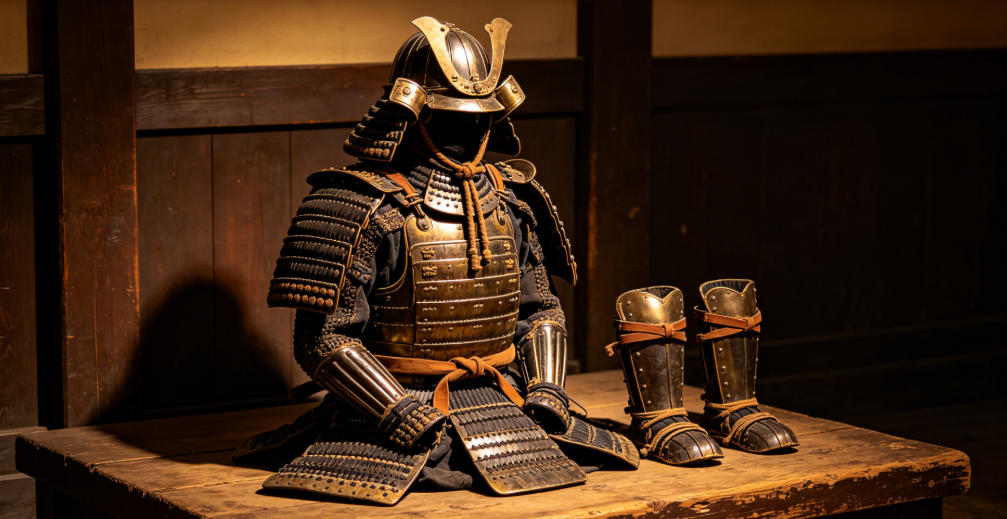
3. Samurai Armor System (Core Combat Outfit)
When entering battle, samurai wore a full armor system, representing the most iconic form of the samurai outfit:
- Kabuto: Helmet protecting the head and symbolizing warrior identity
- Mengu: Face armor used for protection and intimidation
- Dō: Chest armor forming the main protective structure
- Sode: Shoulder guards extending upper-body defense
- Kote: Arm protection covering elbows and forearms
- Haidate: Thigh armor providing lower-body protection
- Suneate: Shin guards protecting the lower legs
This complete system represents the highest level of samurai outfit components, combining protection, mobility, and symbolic design.
4. Symbolic Meaning of Samurai Attire
Samurai attire is not only a clothing system but also a highly structured cultural language. It visually communicates identity, responsibility, and spiritual values through color, pattern, material, and wearing style.
In feudal Japan, clothing itself functioned as a form of social identification, making samurai clothing far more than practical equipment—it became a structured system of hierarchy and meaning.

1. Social Status and Hierarchy
Samurai attire clearly distinguishes rank and family status through:
- Color system: Dark colors such as black and indigo represent discipline and high status
- Family crests (mon): Unique symbols identifying lineage and clan affiliation
- Material differences: Silk for higher-ranking samurai, cotton or hemp for lower ranks or daily use
This made samurai clothing a visual code system for social hierarchy.
2. Combat Philosophy in Design
The structure of samurai outfit components follows a 'combat-first' philosophy, balancing protection and mobility:
- Inner layers improve comfort and reduce friction
- Armor uses segmented construction to absorb impact without restricting movement
- The system allows quick transitions between riding, walking, and sword combat
This reflects the 'efficiency aesthetics' of samurai culture, where agility is valued as much as protection.
3. Expression of Bushido Values
Beyond function and identity, samurai clothing represents the spiritual philosophy of Bushido:
- Loyalty: Unified crests and uniform systems represent allegiance
- Honor: Clean and disciplined appearance reflects dignity
- Discipline: Complex dressing procedures serve as ritual training
- Restraint: Minimalist design reflects controlled strength
Thus, samurai attire is not just what a warrior wears, but how a warrior becomes.
5. Aesthetic Features of Samurai Clothing
From a modern design perspective, samurai outfits feature:
- Layered structural composition
- Dark and natural color palettes
- Strong vertical visual lines
- Prominent family crest identity markers
- Integration of function and decoration
These principles continue to influence modern film, gaming, cosplay, and fashion design.
6. Modern Use of Samurai Outfits
Today, samurai clothing extends beyond historical study and is widely used in:
- Film and TV character design
- Cosplay and cultural experiences
- Museum historical exhibitions
- Martial arts performances and stage art
Highly accurate reconstructed samurai outfits have also become popular in cultural tourism and collectible markets.
Conclusion
In essence, samurai clothing and the samurai outfit are not merely historical garments, but a complete system combining history, function, and cultural symbolism. From basic daily wear to complex armor systems, every layer of samurai outfit components reflects the social structure and spiritual world of the samurai class.
Understanding samurai attire means understanding how Japanese samurai culture unified identity, combat, and belief into one visible system.

