


What is Damascus Steel? Structure, Patterns & Properties Explained
What is Damascus Steel and Why Does Every Blade Have a Unique Pattern?
In the fields of modern knife engineering, metallurgical science, and high-end cold weapon collecting, Damascus steel has always been one of the most recognizable and debated materials. Whether in premium kitchen knives, tactical knives, samurai swords, or custom collectible blades, Damascus steel attracts attention for its unique layered patterns and complex forging processes.
When people search for 'what is damascus steel', they are often not just asking 'what kind of steel this is,' but are exploring the material structure, metallurgical principles and craftsmanship behind it.
This article provides a comprehensive analysis of Damascus steel, covering its metallurgical structure, historical evolution, modern manufacturing techniques, pattern formation mechanisms, mechanical properties, and application areas.
1. What is Damascus Steel?
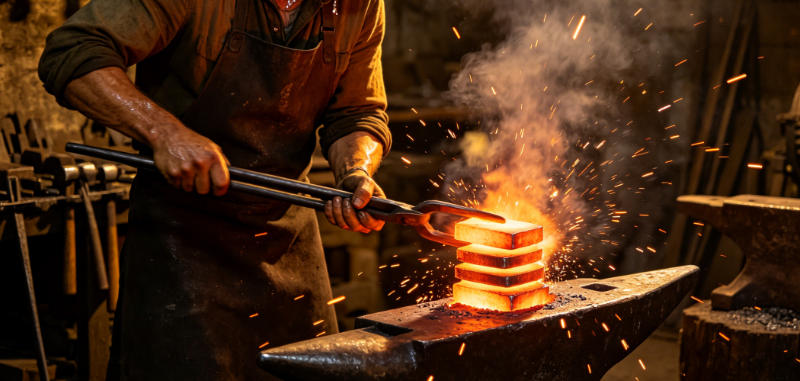
From a modern materials science perspective, Damascus steel typically refers to a composite steel formed by layering and forging multiple types of steel (pattern welding). It is not a single metal but a layered material made by combining steels with different carbon contents or alloy compositions, forged together under high heat and pressure, and repeatedly processed to create a layered metallic structure.
In the modern knife industry and collector market, searching 'what is damascus steel' usually refers to this contemporary 'pattern-welded' Damascus steel, which combines functionality and artistry, making it one of the most iconic materials for high-end blades.
Key Characteristics:
- Alternating layers of steels with different carbon contents
- Repeated folding and forging to create a layered structure
- Surface pattern revealed through acid etching, corrosion, or polishing
- Each finished blade has a unique, non-replicable pattern
- Patterns can appear as wavy, flame-like, or twisted swirls
A Deeper Structural Understanding
Damascus steel can be understood as a composite metal structure. Different steels contribute distinct properties:
- High-carbon steel provides hardness and sharpness
- Low-carbon or alloy steels provide toughness and impact resistance
By alternating these steels in layers, Damascus steel achieves a balanced combination of hardness and toughness. On a microscopic level, the layered distribution becomes clearly visible after grinding and acid etching, creating the signature patterned appearance.

2. Historical 'True Damascus Steel' vs. Modern Misconceptions
Historically, Damascus steel originated in the Middle East (associated with the Damascus trade center) but its true origin is more likely linked to Indian and Sri Lankan wootz steel.
1. Ancient Damascus Steel (Wootz Steel)
Features of the ancient version:
- High-carbon crucible steel
- Naturally formed carbide microstructures
- Water-like surface patterns
- Exceptional balance of sharpness and toughness
It was widely used in the Middle Ages for:
- Scimitars
- High-end weapons
- Nobleman’s swords
However, the original wootz-based Damascus steel manufacturing techniques have been lost and cannot be fully replicated today.
2. Modern 'Damascus Steel' (Pattern Welded Steel)
Modern Damascus steel is:
- Forged from layered steels
- Controlled artificially to create patterns
- Pattern revealed through chemical etching
It is therefore a structurally simulated Damascus steel, rather than a full replication of ancient metallurgical techniques.
3. Why Does Every Damascus Steel Blade Have a Unique Pattern?
This is the most defining feature of Damascus steel and the source of its value.
1. Irregularities in Multi-Layer Metal Structure
Each steel layer undergoes microscopic variations during forging, including:
- Carbon diffusion differences
- Grain deformation
- Uneven heat treatment
These factors together determine the final pattern on the blade.
2. Variability in Forging Process
Key variables affecting patterns include:
- Number of folding cycles
- Hammering force and direction
- Heating temperature control
- Ratio of different steels
For example: a 10-layer Damascus steel blade vs. a 300-layer blade will show completely different visual structures.
3. Acid Etching to Reveal Patterns
After shaping, acid etching brings out the pattern:
- High-carbon steel corrodes slower → lighter color
- Low-carbon steel corrodes faster → darker color
This creates strong contrast and distinct patterns, such as:
- Wavy pattern
- Flame pattern
- Twisted swirl pattern

4. Metallurgical Structure and Performance Characteristics
From a materials science and metallurgical engineering perspective, Damascus steel is not merely a decorative patterned steel; it is a structured composite material. This layered structure provides distinct advantages in mechanical performance, fracture behavior, and edge retention compared to homogeneous steels.
1. Strength–Toughness Balance
One of the core engineering values of Damascus steel is complementary performance through layered steel combinations.
- High-carbon steel layers provide hardness and a fine, sharp cutting edge
- Low-carbon or tough layers provide ductility and impact resistance
This 'hard + tough' combination prevents brittleness while maintaining sharpness, forming a dynamic balance structure similar to modern functionally graded composite materials.
2. Crack Resistance
In homogeneous steel, microcracks can quickly propagate, leading to fracture.
In Damascus steel’s layered structure:
- Material interfaces act as barriers to crack propagation
- Cracks deflect and dissipate energy across layers
- Overall fracture rate is reduced
This is essentially crack blunting and energy dissipation, enhancing structural stability and safety.
3. Edge Retention
The blade’s edge primarily benefits from the high-carbon layers:
- Supports sharper edge angles
- Reduces deformation during repeated cutting
- Extends edge retention
The layered structure also helps distribute stress across the edge, slowing dulling, though performance depends heavily on steel combination and heat treatment rather than simply layer count.
4. Structural Stability and Durability
- Layered steel forms a microscopic composite support structure
- Stress is distributed evenly under bending or impact
- Local damage does not propagate quickly
Proper heat treatment and forging allow Damascus steel to achieve a wide performance window of strength vs. toughness, suitable for multiple blade applications.
5. Integration of Aesthetics, Engineering, and Collectibility
Damascus steel uniquely satisfies engineering performance and artistic expression:
- Engineering: optimized composite structure
- Visual: etched patterns (wavy / twisted / flame)
- Cultural: symbol of lost historical metallurgy
- Collectible: each blade has a non-replicable pattern
It is therefore one of the few materials appreciated simultaneously by engineers, knife makers, and collectors.
5. Modern Applications of Damascus Steel
Today, Damascus steel is widely used in:
- Premium kitchen knives
- Tactical and outdoor knives
- Historical replica weapons
- Art knives and collectible blades
- Custom blade market
It has become a standard for 'high-end handmade knives' in the collector community.
6. Why is Damascus Steel So Popular?
Its global popularity stems from:
- Unique visual appeal: no two blades are alike
- Complex craftsmanship: relies on skilled forging techniques
- Historical mystique: legendary lost steel of antiquity
- Blend of utility and art: performance and collectibility combined
When users search 'what is damascus steel', they are looking for a material that combines:
metallurgical engineering + handcraft artistry + historical culture
Hand Forged Japanese Samurai Katana Sword Damascus Folded Steel Copper Snake Tsuba

7. Conclusion
Damascus steel is not just a steel type; it is a material system bridging ancient metallurgy and modern craftsmanship. From legendary Middle Eastern metals to contemporary layered composites, it embodies sharpness, artistry, and ultimate craftsmanship.
If you are exploring:
- 'what is damascus steel'
- 'damascus steel knife structure'
- 'pattern welded steel meaning'
- 'custom damascus blade'
then Damascus steel remains one of the most iconic answers in the modern high-end knife world.

