


Bastard Sword: History, Combat Techniques & Medieval Warfare
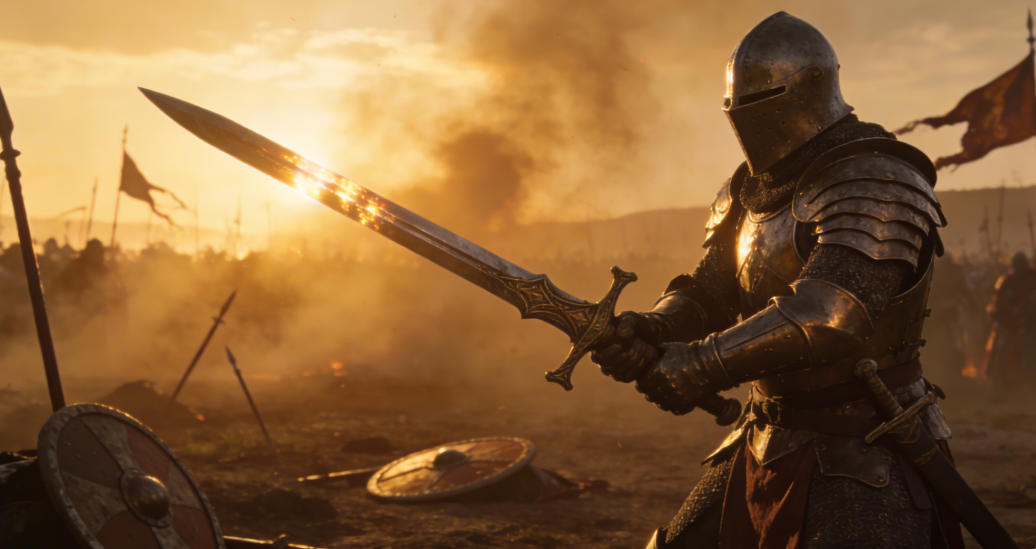
What Made the Bastard Sword So Effective in Medieval European Combat?
In the history of medieval European warfare, the bastard sword stands out as one of the most iconic bladed weapons. It is neither a traditional single-handed sword (single-handed sword) nor a purely two-handed sword (two-handed sword); instead, it occupies a unique space between the two, combining flexibility with power. Due to its outstanding combat performance, the bastard sword was widely used on historical battlefields and continues to attract significant attention among modern military history enthusiasts, sword study, combat sword fighting, martial arts demonstrations, and collectors of historical weapons.
This article provides a comprehensive overview of the bastard sword’s historical origins, use in medieval battles, structural features, swordsmanship and combat techniques, and its reinterpretation in modern culture and games, helping readers fully understand the enduring value of this centuries-old weapon.
What is a Bastard Sword?
The bastard sword (also known as a hand-and-a-half sword) is a versatile weapon that lies between a single-handed sword (single-handed sword) and a two-handed sword (two-handed sword). This design gives it exceptional flexibility, allowing the user to switch between one-handed and two-handed grips depending on the tactical situation, providing both defensive and offensive capabilities.
The bastard sword was a primary weapon for knights, infantry, and noble warriors in medieval Europe. Today, it remains a core training weapon in combat sword fighting, Historical European Martial Arts (HEMA), and historical weapon reconstruction exercises. It combines power, speed, and precision, making it one of the most versatile swords in European military history.

Key Structure and Features of the Bastard Sword
Structurally, the bastard sword has several defining characteristics:
-
Long hilt (Grip / Hilt): Allows one-handed use for quick defense or two-handed use for powerful cuts and thrusts. The flexible grip enables rapid switching between offensive and defensive maneuvers in the chaos of battle.
-
Wide, sturdy blade (Blade): Suitable for sweeping slashes, cutting through shields, and piercing light armor. Its dual capability allows both cutting and thrusting attacks.
-
Sharp, reinforced point (Tip / Point): Designed to penetrate heavy armor or exploit gaps in opponents’ defenses, maintaining lethality against armored knights or well-equipped soldiers.
-
Balanced weight distribution (Sword Balance): Optimized between the hilt and blade to improve swing efficiency, reduce fatigue, and enhance precision in combat movements.
Tactical Advantages and Historical Applications
Thanks to its flexible design and dual-use blade, the bastard sword offered several tactical advantages on medieval European battlefields:
-
Close-quarters combat: Soldiers could rapidly switch from single-handed defense to two-handed strikes in chaotic melee.
-
Adaptable to different combat scenarios: Effective in duels between knights, as well as in massed infantry engagements.
-
Supports diverse sword techniques: Capable of half-swording, thrusting, diagonal slashes, and sweeping attacks, making it ideal for combat sword fighting and historical swordsmanship training.
Modern Significance and Collectibility
Beyond historical use, the bastard sword remains highly relevant in HEMA, historical weapon demonstrations, film production, and high-end collecting. Enthusiasts and collectors focus not only on blade material but also on hilt design, balance, and historical accuracy. Its multifunctionality and craftsmanship make the bastard sword a timeless symbol linking history, tactics, and culture.
Historical Origins and Development of the Bastard Sword
The history of the bastard sword traces back to the Crusades (11th–13th centuries). As iron forging technology advanced, European warriors sought a weapon that combined the control of a single-handed sword with the armor-piercing power of a two-handed sword, leading to the evolution of the bastard sword.
Early bastard swords had narrower blades, emphasizing thrusting. By the late Middle Ages (14th–16th centuries), the blade became wider and heavier, providing devastating cutting power. Correspondingly, the hilt length was extended to allow rapid switching between single-handed defensive maneuvers and two-handed offensive strikes.
During the Hundred Years’ War and other regional conflicts, the bastard sword’s flexibility and adaptability led to widespread adoption, cementing its significance in European combat history.
Bastard Sword on the Medieval Battlefield and Combat Sword Fighting
On medieval European battlefields, the bastard sword became a core weapon for knights, infantry, and noble warriors due to its flexible one- or two-handed grip. It was not merely a bladed weapon but a tactical tool; how it was wielded often determined the outcome of combat. Modern combat sword fighting and HEMA training continue to employ these historical principles, preserving the techniques and strategic logic of the past.
1. Close-quarters Combat and Melee Fighting
In chaotic melee situations, soldiers needed to adapt quickly:
-
Instant grip changes: Transitioning from single-handed defense and blocking to two-handed powerful strikes.
-
Close-range control: Utilizing hilt length and balance to execute half-swording or control opponents’ weapons.
-
Tactical versatility: Supporting thrusts, diagonal strikes, sweeping attacks, and rapid counterattacks.
This flexibility not only reflects the design philosophy of the bastard sword but also forms the foundation of modern combat sword fighting training.
2. Countering Armored Knights and Well-equipped Opponents
Against knights or heavily armored infantry, the bastard sword had unique advantages:
-
Point penetration: Using the sharp tip to probe armor gaps.
-
Thrusting techniques: Combining bastard sword thrust techniques to exploit vulnerabilities in armor.
-
Defense and counterattack: Blocking attacks while immediately finding openings to strike back.
These tactics were critical historically and are now key components of combat sword fighting and HEMA exercises, helping practitioners understand medieval battle strategies and mechanics.
3. Formation Combat and Infantry Coordination
In formations, bridge defenses, or urban skirmishes, the bastard sword combined effectively with shields and polearms:
-
Infantry coordination: Frontline shield units provide defense while rear lines use bastard swords for thrusts and cuts.
-
Breaking enemy formations: Sweeping attacks disrupt dense ranks, creating openings for advancement.
-
Strategic training: These historical principles remain in modern HEMA and combat sword fighting, teaching students ancient battlefield logic.
Through these applications, the bastard sword emerges not just as a flexible weapon but as a strategic tool. Mastering blade length, grip techniques, balance, and thrusting skills was essential for medieval warriors to prevail in melee combat. Modern combat sword fighting and HEMA faithfully reproduce these techniques, allowing practitioners to understand both the skill and tactical reasoning behind historical battles.

Structure and Swordsmanship Features of the Bastard Sword
The bastard sword (Hand-and-a-Half Sword) is one of the most flexible and tactically versatile weapons of medieval Europe. Combining the advantages of single-handed and two-handed swords, it allowed soldiers to switch grips and attack styles depending on battlefield conditions. Today, the structure and techniques of the bastard sword remain central to combat sword fighting and Historical European Martial Arts (HEMA) training.
Balance and Grip Design
The hilt of the bastard sword is typically longer than a single-handed sword but shorter than a two-handed sword. This “hand-and-a-half grip” provides exceptional flexibility and tactical options:
-
One-handed use: In confined spaces or when paired with a shield, soldiers could wield the sword single-handedly for defense, blocking, or rapid movement.
-
Two-handed strikes: On open battlefields or against heavily armored opponents, two-handed grip increases cutting and thrusting power.
-
Offense-defense transition: In chaotic melee, soldiers could quickly shift from single-handed defense to full-force two-handed attacks, maintaining tactical initiative.
-
Optimized center of gravity: The weight distribution between hilt and blade is carefully calculated to ensure efficient swings, precision, and reduced fatigue during prolonged combat.
This balance makes the bastard sword highly adaptable in both close-quarters skirmishes and full-strength engagements. Modern combat sword fighting emphasizes training in center-of-gravity control and swing technique using the bastard sword.
Blade and Tip Design
The blade of the bastard sword is designed for both cutting and thrusting, making it one of the most versatile weapons of the medieval period:
-
Long blade: Wide and extended, ideal for sweeping cuts, diagonal strikes, and lunging attacks. Effective against lightly armored foes or dense infantry formations.
-
Sharp, reinforced tip: Precise for thrusting into armor gaps, a critical advantage against heavily armored knights.
-
Combination of cutting and piercing: Allows soldiers to slash, thrust, chop, and block with tactical flexibility.
-
Defense and counterattack integration: Blade design enables immediate retaliation while performing blocks, reflecting the offense-defense principles of combat sword fighting.
This structure makes the bastard sword effective in one-on-one duels as well as formation combat. Its design represents the medieval European ideal balance between practicality, strength, and agility. Modern combat sword fighting training simulates historical battle scenarios, allowing practitioners to master weight distribution, attack-defense transitions, and thrusting techniques to fully understand the sword’s tactical value.
Swordsmanship Techniques and Combat Styles
Compared to other swords, the bastard sword emphasizes flexibility and tactical variation:
-
One-hand grip: Suitable for quick defense or combined with a shield.
-
Two-hand grip: Increases power and control, especially for heavy strikes and thrusts.
-
Half-swording technique: Placing one hand along the blade to improve thrust precision, a common medieval tactic.
-
Combination of diagonal cuts and straight thrusts: Using blade length to vary the pace and strategy of combat.
These techniques are widely practiced in modern HEMA (Historical European Martial Arts) and combat sword fighting exercises.
The Bastard Sword in Modern Culture and Gaming
With the rise of movies, video games, historical documentaries, and sword culture programs, the term 'bastard sword' has become widely recognized in modern media. For example:
-
In role-playing games (RPGs), bastard swords are often standard equipment for knights and warriors.
-
In films and series, the bastard sword is depicted as a hero’s weapon.
-
In historical reenactments and combat sword fighting events, the bastard sword is a key tool for enthusiasts and performers.
This media exposure has increased the search volume for keywords such as medieval bastard sword history, bastard sword combat techniques, longsword training, historical sword fighting, combat sword fighting.
Hand Forged European Sword of Immortals Kurgan Sword Iron Fittings Functional

Why the Bastard Sword is Worth Studying
The bastard sword is more than just a weapon—it embodies medieval tactical thinking, metallurgical skill, and swordsmanship culture. It perfectly balances control, power, and flexibility, representing a synthesis of technical and artistic achievement. Studying the bastard sword’s structure, history, and battlefield applications helps us better understand:
-
Medieval European tactics and combat strategy
-
Advantages of multiple grip styles and swordsmanship techniques
-
The cultural, cinematic, and historical significance of the weapon
For enthusiasts of historical combat, swordsmanship training, combat sword fighting, and antique weapon collecting, studying the bastard sword provides insight not only into weapon construction but also into the broader context of medieval warfare and civilization.

