


What Is a Sword Hilt? Complete Guide to Sword Parts & Design
- Posted by COOLKATANA
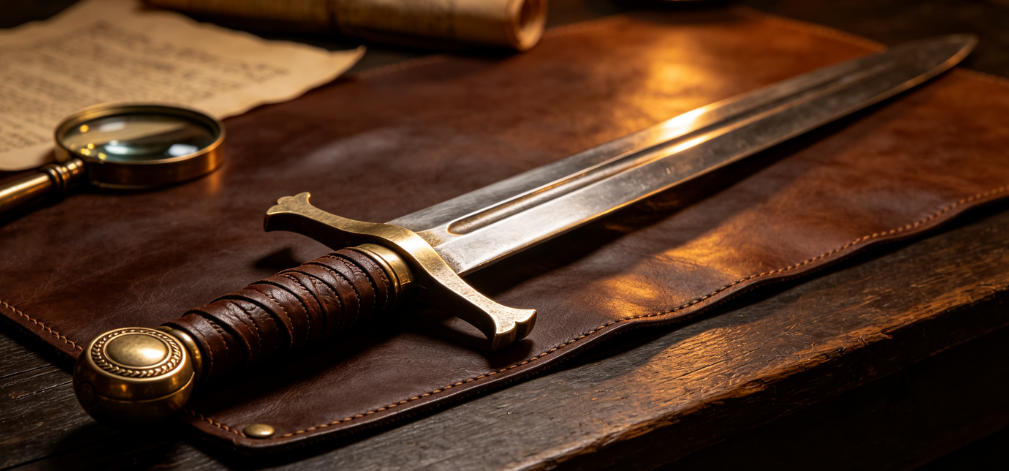
What Is a Sword Hilt and Why Is It Important in Sword Design?
When studying a sword, most people focus first on the sharp blade, unique design, materials, and legendary stories behind the weapon. However, for those who truly understand sword craftsmanship and history, the hilt is equally important because it determines a sword’s performance, balance, and artistic value.
A sword is not simply a piece of sharpened metal. It is a combination of multiple precisely designed components. From the blade and tang to the sword hilt, every part has been developed and refined over centuries to achieve the perfect balance between attack, defense, control, and comfortable handling.
The hilt of a sword is not only the area where the user holds the weapon, but also the important connection between the person and the sword. A well-designed hilt allows the user to control the sword more accurately while reducing fatigue during extended use.
From medieval European knight swords and Japanese samurai swords to modern collectible replicas, the sword hilt carries rich historical and cultural meaning. Different hilt designs reflect local fighting styles, craftsmanship, aesthetic preferences, and even social status.
Understanding the parts of a sword not only helps sword enthusiasts learn about weapon structures but also allows collectors to better appreciate the craftsmanship behind legendary blades.
What Is a Sword Hilt? Understanding the Meaning of Hilt
A hilt is the general term for the handle assembly of a sword. It refers to the area behind the blade that allows the user to grip, control, and balance the entire weapon.
Many people simply consider a sword hilt to be the “handle,” but in reality, it is a complete system made up of multiple components.
A complete hilt of sword usually includes:
- Grip
- Guard
- Pommel
- Tang
- Collar / Ferrule
Together, these structures form the parts of the sword, and each component has its own unique function.
An excellent hilt sword design needs to provide:
- Stable grip;
- Proper weight balance;
- Hand protection;
- Better attack control;
- Attractive appearance.
Throughout history, famous weapons such as European knight swords, samurai swords, and royal collector swords have valued the hilt almost as much as the blade itself. Some rare swords even gain greater collectible value because of their beautiful sword hilt design.

Why Is Hilt Important in Sword Design?
Why is the sword hilt so important?
Because a sword is not simply a tool that relies on weight and force. It is a weapon that requires precise control, fast reactions, and skilled techniques.
A well-designed hilt directly affects the interaction between the user and the sword.
1. Sword Hilt Determines Sword Balance
The distribution of a sword’s weight directly affects handling performance.
If the blade is too heavy:
- Swing speed decreases;
- Long-term use becomes tiring;
- Attack transitions become slower.
If the sword hilt is properly designed:
- The sword becomes better balanced;
- Attacks become smoother;
- Defense and counterattacks become more stable.
For example, European longswords often use a heavier pommel to adjust the center of balance, preventing the sword from becoming too blade-heavy.
Japanese swords use the combination of handle length, tsuba weight, and overall proportions to allow warriors to perform fast drawing and cutting movements.
2. Hilt Provides Hand Protection
In real combat situations, the sword hilt is not only used for gripping but also provides important protection.
Among its components:
Guard
The main functions of a guard include:
- Preventing enemy weapons from sliding toward the hand;
- Increasing defensive coverage;
- Improving grip safety;
- Helping control blade movement.
Different cultures developed unique guard designs:
- European cross guards;
- Japanese tsuba;
- Chinese sword guards;
- Traditional Eastern protective designs.
These structures were created to improve the practical performance of weapons.
Parts of a Sword: Complete Sword Structure Explained
To understand the parts of sword, you first need to know the complete structure of a sword. A sword is not simply a piece of sharp metal but a combination of multiple carefully designed components.
From the blade, tang, guard, sword handle, to pommel, every part serves a different purpose and together determines the sword’s attack style, balance, handling experience, and collectible value.
Different cultures and historical periods developed unique sword structures. European knight swords emphasized strength, distance, and defense, while Japanese samurai swords focused on speed, precision, and quick drawing techniques. Traditional Eastern swords placed more importance on flexibility and overall balance.
Therefore, understanding the parts of a sword helps us not only recognize weapon structures but also appreciate the history, craftsmanship, and design philosophy behind different sword types.
1. Blade
The blade is the core attacking component of a sword and the part most people notice first.
A high-quality blade needs to achieve a balance between sharpness, strength, flexibility, and weight. Different sword types use different blade shapes based on their combat methods and environments.
Common blade features include:
- Edge: The sharp cutting area used for attacks;
- Point: The tip designed for thrusting;
- Spine: The stronger back section that improves blade stability;
- Fuller: A groove design on some blades that reduces weight while maintaining structural strength.
Although the blade determines a sword’s main attack capability, it cannot perform at its best without a well-designed sword and hilt combination.
A properly designed sword hilt helps users control blade direction more effectively, improving accuracy and stability during movement.
European Longsword
The European longsword is one of the most iconic weapons of the medieval period. Its design focused on power, distance, and versatile battlefield performance.
Main features:
- Strong thrusting ability: The sharp point could target gaps in armor;
- Suitable for two-handed control: A longer handle provided stronger manipulation;
- Emphasis on power and distance: The longer blade allowed fighters to maintain a safer range.
European longswords were usually paired with cross guards and heavier pommels. This helped balance the weapon and allowed users to quickly switch between offensive and defensive movements.
Katana
The Japanese katana is a traditional weapon with deep cultural significance, and its design philosophy differs from European swords.
Main features:
- Single-edged structure: The curved blade was designed for fast cutting;
- Emphasis on cutting performance: Sharp edges combined with advanced forging techniques improved slicing ability;
- Designed for quick drawing and precise strikes: Matching the fighting style of samurai warriors.
The blade, tsuba, and tsuka together create the complete structure of a katana. The handle design helps samurai maintain a stable grip during high-speed movements.
Therefore, an excellent katana does not rely only on blade sharpness but also requires a well-crafted hilt of a sword to achieve ideal balance.
Whether it is a European longsword, an Asian traditional sword, or a modern collectible sword, every blade reflects the functional ideas, artistic values, and manufacturing techniques of its culture.
Only through the combination of blade and hilt can a sword truly display its complete value.
2. Tang
When learning about the parts of a sword, many people overlook one of the most important hidden structures inside the weapon — the Tang.
The tang is the extended part of the blade that continues into the handle. It connects the blade and the sword handle, serving as the key structure that keeps the entire sword strong and stable.
Although the tang is usually hidden inside the handle, it has a major impact on strength, durability, and safety. A poorly designed tang may cause the handle to loosen or damage the overall structure after repeated impacts.
The main functions of the tang include:
- Improving overall structural strength: Connecting the blade, handle, and guard securely;
- Maintaining sword stability: Reducing movement and improving control;
- Increasing safety: Preventing handle separation or structural failure;
- Affecting balance: Tang length and weight influence handling feel.
High-quality swords often use:
- Full Tang: A complete tang extending through the entire handle, providing excellent strength and stability;
- Reinforced Tang: A strengthened tang structure designed to handle greater impact.
Throughout history, different cultures developed unique tang designs. European longswords often used longer tangs for two-handed handling, while Japanese swords used the internal nakago structure combined with the tsuka to create the traditional samurai sword construction method.
For collectors, tang construction is also an important factor in judging sword quality. A great sword hilt requires not only beautiful appearance but also reliable internal structure.
3. Sword Handle
The sword handle is the part directly held and controlled by the user, making it one of the most important areas of the hilt of a sword.
The handle affects grip comfort and determines how accurately the user can control the blade. A well-designed handle of a sword should balance power, flexibility, and long-term comfort.
A quality sword handle should consider:
- Hand fit: Matching natural hand movements and reducing fatigue;
- Grip stability: Preventing slipping during fast movements;
- Anti-slip performance: Improving control during attacks and defense;
- Comfort: Suitable for long training sessions or display.
Historical sword handles were made from various materials, including:
- Wood;
- Leather wrapping;
- Silk cords;
- Metal decorations;
- Bone and other special materials.
Different cultures created unique handle designs.
For example, Japanese samurai swords use Tsuka, often wrapped with Samegawa (ray skin) and Tsuka-ito (handle wrapping). This structure provides traditional beauty while increasing friction and grip stability.
European swords placed more emphasis on grip length and combat style. For example, two-handed swords featured longer grips that allowed users to generate greater force.
Therefore, a quality sword handle is not just a simple gripping area — it is the bridge connecting the user and the sword.

4. Guard
The guard is one of the most recognizable parts of the hilt of a sword.
Located between the blade and handle, it protects the user’s hand while helping maintain sword balance.
In combat, the guard can:
- Block enemy weapons from reaching the hand;
- Provide additional defensive coverage;
- Improve grip stability;
- Enhance overall balance.
Besides functionality, the guard is also an important area for expressing sword culture and artistic style.
European Sword Guard
Common designs include:
- Cross Guard;
- Ring Guard;
- Decorative guard designs.
As sword-making evolved, European guards became increasingly detailed, representing both combat function and knightly identity.
Japanese Sword Guard
Japanese swords commonly feature:
- Round Tsuba;
- Family symbols;
- Hand-carved patterns.
The tsuba protects the hand while also representing samurai identity, aesthetics, and historical culture.
Therefore, many collectors pay special attention to sword hilt design, because the handle and guard often reveal a sword’s unique history and artistic value.
5. Pommel
The pommel is located at the end of the handle and is an important component of the sword hilt system.
Although many people think the pommel is only decorative, it actually plays an important role in sword design.
Its functions include:
- Adjusting overall sword weight distribution: Balancing heavier blades;
- Improving handling stability: Making the sword easier to control;
- Preventing hand slipping: Increasing grip safety;
- Adding decorative value: Showing craftsmanship and cultural style.
Historical royal swords and collector weapons often used:
- Gold;
- Silver decorations;
- Gemstones;
- Engraved patterns;
- Special metal ornaments.
For example, some European royal swords featured family crests or symbols of power on their pommels, making them not only weapons but also symbols of identity, status, and historical heritage.
For modern collectors, a beautifully designed pommel can greatly enhance the display value of a sword. A truly excellent sword requires the perfect combination of blade, hilt, guard, and pommel to achieve complete design harmony.
The History of Sword Hilt Development
Medieval Europe Sword Hilt
During the medieval period, European sword hilt designs evolved with changes in warfare.
Early knight swords featured:
- Simple guards;
- Short grips;
- Designs suitable for shield combat.
With the development of two-handed swords:
- Handles became longer;
- Balance became more important;
- Hilt structures became more complex.
The sword hilt gradually developed from a simple functional component into an important symbol of knightly identity and artistic style.
Japanese Sword Hilt
The hilt of a sword in Japanese swords has unique cultural significance.
Traditional Japanese sword handles include:
- Tsuka;
- Samegawa;
- Tsuka-ito;
- Tsuba.
These components influence not only grip performance but also represent samurai aesthetics and traditions.
Decorations on the tsuba often include:
- Family patterns;
- Natural elements;
- Mythological designs.
These details often carry symbolic meanings.
Sword Hilt and Collectible Value
Modern sword collectors focus not only on blades but also on the design and craftsmanship of the hilt.
Excellent custom sword hilt designs usually feature:
- Fine handmade craftsmanship;
- Unique designs;
- High-quality materials;
- Historical accuracy.
The value of a collectible sword usually comes from multiple factors:
Blade + Hilt + Craftsmanship + History
Only when these elements come together can a sword become a truly meaningful collectible piece.
How to Choose a Quality Sword Hilt?
When choosing a collectible or replica sword, consider:
1. Structural Stability
A good sword handle should:
- Connect firmly with the blade;
- Have no obvious looseness;
- Remain stable during long-term storage.
2. Grip Experience
A good hilt of a sword should:
- Feel natural in the hand;
- Prevent slipping;
- Follow ergonomic principles.
3. Design Accuracy
For historical swords, anime swords, or collectible replicas:
A quality sword hilt should reproduce:
- Original proportions;
- Decorative details;
- Cultural characteristics.
Sword Hilt: The Connection Between a Sword and Its Soul
A truly excellent sword is not just a sharp blade. It is an artwork created through the combination of multiple carefully designed components.
From blade to hilt, from sword handle to guard, every parts of a sword reflects the maker’s understanding of function, aesthetics, and history.
Whether it is a European knight sword, Japanese katana, or modern collectible replica, a well-crafted sword hilt provides better performance, greater artistic value, and deeper cultural meaning.
Understanding what is a sword hilt not only helps you learn sword anatomy but also allows you to appreciate the craftsmanship, history, and spirit behind every legendary weapon.

