


Naginata Katana: the Characteristic Samurai Sword of Ancient Japan
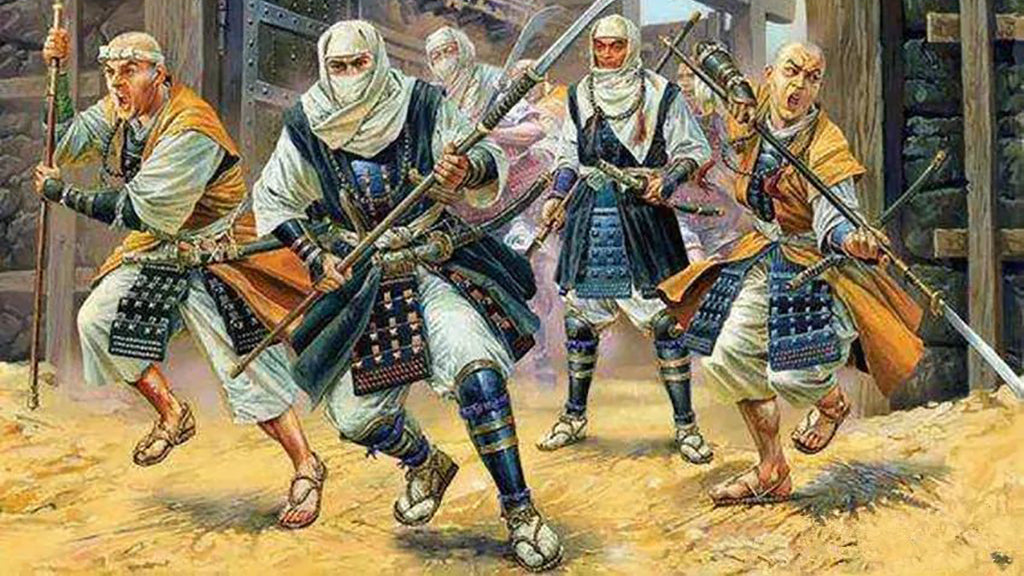
Large Katana Name: Naginata Katana - The Characteristic Samurai Sword of Ancient Japan
What Is a Large Katana Called? A Complete Guide to the Naginata and Other Long Japanese Weapons
The Naginata was a distinctive weapon in feudal Japan, combining the features of a sword with a curved blade and a long pole. Unlike traditional katana, the sword was used primarily by foot soldiers and warriors, with its blade length making it ideal for both slashing and thrusting in battle. It was similar to the ōdachi or nodachi in size but had a unique design, making it a great sword for mounted and unmounted combat. While the wakizashi and tachi were more commonly used by samurai, the katana became a symbol of the samurai sword style for its versatility and distinctive form. Often, the blade was kept sharp with a single edge facing forward, making it deadly in close combat. It was considered a national treasure in some cases, not only for its effectiveness in battle but also for its role in Japanese culture as a traditional Japanese weapon.
The samurai sword and bushido are the characteristic cultures of Japan. The image of the Japanese samurai who wears flip-flops on his feet has a wakizashi on his waist, and raises his sword with both hands is deeply rooted in the hearts of the people. However, the samurai sword, which is synonymous with samurai, is not some kind of sword. The name, to be precise, the samurai sword is the collective name of all the swords used by the samurai, just like the Chinese Tang sword, it is just a collective name, and there is no such sword. The long katana, spears and the like are the most used by Japanese samurai on the battlefield.
Samurai swords include Tachi, naginata katana, wakizashi, dagger, etc. Contrary to everyone's traditional impression, the most common katana has a relatively short history. It is the youngest samurai sword, which matured at the end of the Warring States Period and the Edo period in Japan. After the Meiji Restoration in Japan, the Japanese government urgently needed a local cultural image that could correspond to the Western knight culture, so the image of the samurai with swords and wakizashi was elected. The katana was originally positioned as a substitute weapon for samurai. When the bow, spear, long sword, Tachi and other long-handled weapons in the hand were damaged or dropped, or when they were on a narrow battlefield, the samurai would use the katana.
1. The naginata katana is a type of Japanese polearm
It can also be written as an eyebrow knife, which has a long handle, a wide blade and a large arc. The standard blade of the katana katana is one chi (about 30 ~ 60 cm) long, but there is also three chi (about 90 cm) long blades. There is a short blood groove in the middle of the blade, and it is equipped with a scabbard. The blade with a large arc is generally called naginata katana, and with a small arc, is called a long roll, but the ratio of the length of the long roll blade to the handle is about 1:1, and the stabbing function is stronger than the general long katana. Usually, the handle of Japanese katana is 3 feet and 6 feet long (about 90 to 180 cm), and the handle is mostly made of wood or bamboo, and rarely made of iron. The katana with a length of about seven feet (about 2.1 meters) is called 'big long katana', and Japan even has a super-large katana with a length of 3.6 meters. It has to be said that the Japanese have a special affection for giant weapons.
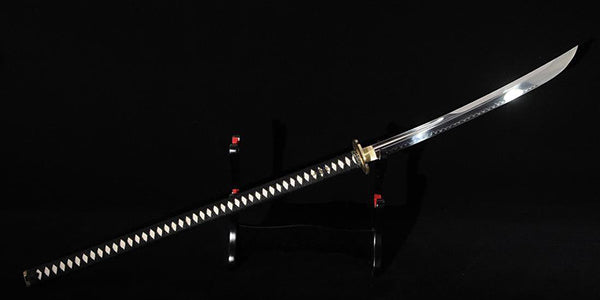
2. The history of Japanese long katana
From the Nara period to the Heian period in Japan, the long katana was mostly used by the monks and soldiers of the temple to protect the temple. Later, from the end of the Kamakura period to the Muromachi period, it gradually became the main weapon on the battlefield, and the appearance rate and usage rate were much higher than those of the sword. During the Yingren Rebellion, that is, the Warring States Period of Japan, because the blade of the long katana was too short and too thin, and the whole knife was too light, the attack method was mainly slashing at medium and long distances, and the stabbing function was weak, which was not suitable for intensive combat. It has been replaced, but it still has a high usage rate on the battlefield, and Japanese monk soldiers especially like to use it.
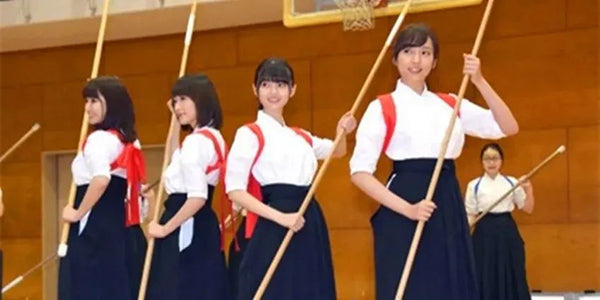
Beyond its role on the battlefield, the katana developed into a refined martial discipline, emphasizing the art of wielding the naginata through balance, reach, and precise body movement. When compared to the Chinese guan dao, the long katana strong curvature allows for smoother cutting motions and greater agility, making it a versatile weapon of choice in different combat situations. Throughout Japanese history, the katana was famously associated with female samurai, symbolizing both protection and honor, with Tomoe Gozen often cited as a legendary figure who embodied courage and skill with this weapon. It was also widely used by warrior monks, who relied on its extended reach for temple defense and organized combat. Together, these cultural and historical connections highlight the sword lasting influence beyond warfare, securing its place as an iconic weapon in Japan’s martial heritage.
After the establishment of the Edo shogunate, large-scale field warfare disappeared. For some time, the shogunate prohibited Japanese samurai from carrying naginata katana to maintain social stability, but the katana did not disappear because of this. Instead, it was widely used as a protective weapon for women. Martial arts, which is compulsory for women, are still being studied in Japan today.

