


S7 Tool Steel: The Ultimate Choice for Handmade Samurai Katana Blades
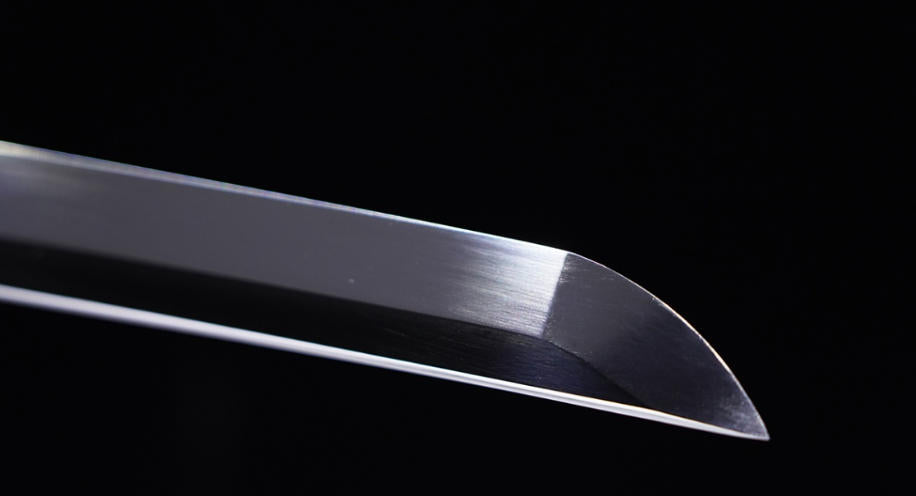
What Makes S7 Tool Steel the Best Choice for Samurai Katana Forging?
As sword collecting, handmade katana(https://en.wikipedia.org/wiki/Katana) crafting, and anime-inspired sword replicas become increasingly popular, the choice of blade material has become more critical than ever. Among the many types of steel (https://en.wikipedia.org/wiki/Steel) available, S7 tool steel stands out for its exceptional performance and balance between toughness and strength—making it one of the most sought-after materials for high-end samurai (https://en.wikipedia.org/wiki/Steel) swords.
This article explores S7 tool steel in depth — from its material properties, heat treatment process, and advantages in katana making, to practical buying advice for enthusiasts looking for 'S7 katana' or 'S7 tool steel samurai sword.'
What is S7 Tool Grade Steel?
1. Chemical Composition and Basic Properties
S7 tool steel belongs to the shock-resisting tool steel family, a group of high-performance alloys designed to endure extreme impact.
Its typical composition includes 0.45–0.55% Carbon (C), 3.00–3.50% Chromium (Cr), 1.30–1.80% Molybdenum (Mo), with small additions of silicon and manganese to strengthen its structure.
This chemical balance gives S7 outstanding impact resistance and excellent heat treatment adaptability, making it widely used in heavy-duty tools, dies, and blades that require both strength and flexibility.
With a density of about 7.8 g/cm³ and an elastic modulus of 205 GPa, S7 is classified as a high-strength alloy tool steel.
Compared with other popular steels such as 1095 high carbon steel, T10, or 9260 spring steel, S7’s standout advantage lies in its superior toughness while maintaining high hardness, making it a top choice for real functional blades and hand-forged samurai katanas.
Because of this unique structure, S7 tool steel blades resist cracking and warping, even under heavy impact—one of the main reasons why S7 tool steel katanas are highly valued by sword collectors.
2. Hardness, Impact Resistance, and Dimensional Stability
After proper heat treatment, S7 tool steel achieves a Rockwell hardness of around 54–60 HRC, striking the perfect balance between sharpness and resilience.
Unlike overly hard steels like D2 or T12, which tend to chip easily, S7 maintains its edge while withstanding intense shocks.
One of S7’s defining traits is its superior impact resistance. It can withstand repeated strikes and vibrations without structural failure, making it ideal for “real katana swords,” 'air-hardened samurai blades,' and high-end true swords.
Additionally, as an air-hardening steel, S7 cools evenly and slowly, minimizing distortion and cracking during the quenching process. This stability allows master swordsmiths to craft precise curves and elegant blade lines characteristic of authentic Japanese katana aesthetics.

3. Machinability and Heat Treatment Behavior
In its annealed state, S7 is relatively easy to machine, allowing for precision cutting, grinding, and shaping — ideal for traditional tamahagane-style hand forging.
Once hardened, however, the steel becomes significantly tougher, making post-treatment polishing more challenging but also resulting in a longer-lasting, sharper edge.
S7 also responds extremely well to modern vacuum heat treatment and cryogenic processes.
During deep cryogenic treatment (below -185°C), residual austenite transforms into martensite, refining the grain structure and enhancing hardness and wear resistance.
Blades crafted through this vacuum + cryogenic process achieve superior density, edge retention, and fatigue resistance — outperforming traditional high-carbon steel blades in both durability and cutting performance.
Advantages of Using S7 Tool Steel for Katana Forging
In the fusion of tradition and technology, the Japanese katana represents both craftsmanship and spirit.
Today, steels like S7 Tool Steel bring a new level of strength and resilience to this ancient weapon, blending time-honored techniques with cutting-edge metallurgy.
1. Exceptional Impact Resistance → Tougher and More Reliable
The most defining characteristic of S7 is its unparalleled impact toughness.
Originally developed for heavy-duty tools, dies, and air hammers, this property ensures that S7 tool steel katanas can endure strong cuts, impacts, or collisions without breaking or bending.
For collectors, this means owning not just a display piece but a real functional sword capable of withstanding real combat conditions.
As a result, S7 tool steel real katanas are often marketed as 'ultra-tough' or 'shockproof blades' in high-end sword collections.
2. Perfect Balance of Hardness and Toughness → Razor Sharp, Yet Resilient
In swordsmithing, balancing hardness and toughness is crucial. Hard blades stay sharp but chip easily, while softer ones resist damage but dull quickly.
S7 finds the ideal middle ground — with 55–60 HRC hardness, it offers razor-like sharpness without sacrificing flexibility.
Thus, S7 katana swords maintain their edge longer, resist chipping, and deliver consistent performance whether used for display, martial arts, or tameshigiri (cutting practice).
Collectors and practitioners alike appreciate S7 blades for embodying both artistic beauty and functional excellence.
3. Minimal Deformation → Flawless Blade Geometry
The Japanese katana’s elegance lies in its curvature and balance.
Thanks to S7’s air-hardening property, the blade maintains near-perfect dimensional stability during heat treatment — meaning less warping and more precise shaping.
This allows artisans to forge katanas with perfectly aligned spines and graceful curvature, enhancing both performance and aesthetics.
Hand-forged S7 samurai swords thus exhibit a level of craftsmanship rarely seen in mass-produced blades.
4. Compatible with Modern Vacuum + Cryogenic Processes → Enhanced Performance
S7’s compatibility with advanced metallurgical techniques makes it a favorite for next-generation katanas.
Through vacuum heat treatment and deep cryogenic cooling, the steel’s microstructure becomes denser, harder, and more wear-resistant.
The results include:
-
Improved edge retention and wear resistance
-
Reduced internal stress for superior structural stability
-
Longer-lasting sharpness without frequent resharpening
Blades made with this process — often labeled 'S7 vacuum-treated samurai swords' — symbolize the pinnacle of modern craftsmanship and precision.
S7 tool steel bridges the gap between traditional swordsmith artistry and modern material science.
It empowers blacksmiths to produce blades that are not only sharp and beautiful but also remarkably durable and reliable.
Whether you’re a serious sword collector, a martial arts enthusiast, or simply someone who appreciates the fusion of art and engineering, an S7 tool steel katana embodies the ultimate expression of strength, elegance, and mastery — truly a blade that unites heritage and innovation.
Hand Forged Japanese Samurai Katana Sword S7 Tool Steel Vacuum + Cryogenic Iron Tsuba
This Hand Forged Japanese Samurai Katana Sword is meticulously crafted from high-performance S7 Tool Steel, combining traditional Japanese swordsmithing with modern metallurgical technology. The result is a katana that perfectly embodies both power and beauty, making it a masterpiece suitable for both collectors and practitioners alike.
Material: S7 Tool Steel
S7 Tool Steel is a premium-grade alloy renowned for its exceptional impact resistance and toughness.
Through advanced Vacuum Heat Treatment and Cryogenic Processing, the steel’s molecular structure becomes denser and more uniform.
Originally used in aerospace molds and industrial impact tools, this steel offers outstanding hardness (about 58–60 HRC) and fracture resistance when forged into a blade—making it incredibly sharp, durable, and resilient.
When used for katana crafting, it produces a sword capable of enduring heavy strikes while maintaining elegant precision and beauty.

Blade Features
1. Fully Hand-Forged and Precision Polished
Each S7 Tool Steel Katana is individually hand-forged by an experienced swordsmith using traditional Japanese forging techniques.
The steel is repeatedly folded, hammered, quenched, and tempered to ensure a dense, uniform grain structure.
During this process, the swordsmith carefully shapes the blade’s curvature through controlled hammering and heating in a charcoal forge.
The resulting blade displays a natural and graceful hamon (temper line) —a hallmark of authentic Japanese aesthetics.
Every texture, every strike of the hammer reflects the spirit of craftsmanship, turning this hand-forged S7 katana into not just a weapon, but a true work of art.
2. Vacuum + Cryogenic Treatment Process
While traditional forging emphasizes temperature control and manual expertise, modern technology has elevated the process even further.
This katana undergoes vacuum heat treatment, which heats the blade in an oxygen-free environment to prevent oxidation and decarburization, resulting in a stronger, cleaner steel matrix.
It is then subjected to deep cryogenic treatment, gradually cooling the blade to -196°C.
This process transforms retained austenite into martensite, dramatically enhancing edge hardness, wear resistance, and structural stability while minimizing internal stress.
The fusion of ancient craftsmanship and modern metallurgy gives the S7 Tool Steel Vacuum + Cryogenic Katana an exceptional combination of sharpness, toughness, and precision balance.
3. Extreme Sharpness and Cutting Performance
Thanks to its refined alloy composition and precise heat treatment, S7 tool steel achieves an outstanding level of sharpness.
After multiple stages of grinding and mirror polishing, the blade becomes razor-sharp—capable of cutting through bamboo, tatami mats, and even fine metal wires with ease.
Whether used for martial arts, Iaido practice, or display, this hand-forged S7 steel real katana offers incredible cutting power and responsiveness, giving the wielder complete control and fluid motion.
4. High Toughness and Dimensional Stability
Unlike conventional high-carbon steels that sacrifice flexibility for hardness, S7 strikes a perfect balance between the two.
Its excellent impact resistance allows the blade to maintain its ideal curvature and structure even under heavy impact—resisting bending, chipping, or breaking.
For collectors, this means longevity and safety; for martial artists, it ensures authentic handling and stable performance during training or demonstrations.
Hence, the S7 Tool Steel Katana is celebrated as a premium sword that unites battle-ready durability with artistic refinement—a top choice for serious enthusiasts and samurai culture admirers.

Ideal Uses
-
Japanese sword & samurai katana collections
-
Real sword display and appreciation
-
Martial arts, Iaido, and Cosplay props
-
Premium gift for sword lovers, anime fans, and craftsmen
Conclusion
In conclusion, S7 Tool Steel stands out as one of the best materials for forging modern samurai swords due to its exceptional impact resistance, balanced hardness and toughness, low deformation rate, and compatibility with advanced forging techniques.
If you are searching for terms like “S7 Tool Steel Katana,” “S7 Samurai Sword,” “Hand Forged S7 Steel Sword,” or “Best Steel for Samurai Katana,” this guide provides a complete understanding of why S7 steel is highly valued among professionals and collectors.
Choosing a katana forged from S7 steel is not just selecting a high-performance blade—it represents a respect for craftsmanship, cultural heritage, and precision engineering.
An S7 Tool Steel Samurai Sword is truly a fusion of tradition and technology, strength and elegance, and an everlasting symbol of the samurai spirit.

