


Are Butterfly Knives Legal in the US? State-by-State Law Guide
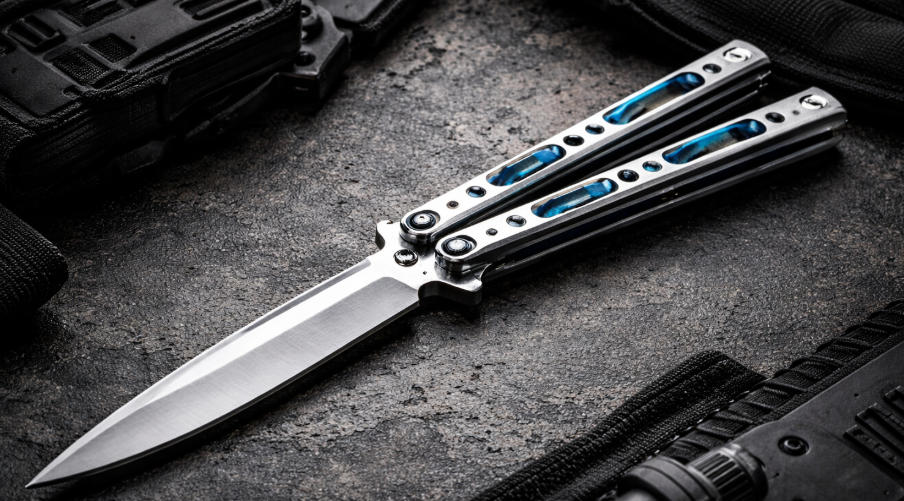
Are Butterfly Knives (Balisongs) Legal to Own or Carry in the United States?
State-by-State Legal Breakdown | A Complete Guide for Flipping, Collecting & Carrying
Thinking about buying a cool butterfly knife (balisong) to practice flipping, but worried it might be illegal in the U.S.?
This article breaks down state laws in California, New York, Hawaii, and beyond, explaining ownership, carry restrictions, and what counts as a 'gravity knife.' Learn how to legally buy trainers and safely enjoy this iconic blade.
Influenced by CS:GO, action movies, and pop culture, the butterfly knife (also called a balisong) has become a dream item for knife enthusiasts and skill flippers alike—thanks to its flashy opening mechanics and flowing hand tricks.
But when you’re ready to place an order for a high-quality handcrafted butterfly knife, a serious question arises:
'Is this legal in the United States?'
'Could I get in trouble just for owning one?'
The answer isn’t simple. Knife laws in the U.S. are notoriously complex, with federal law, state law, and even city ordinances often contradicting one another.
Today, CoolKatana breaks down the legal status of butterfly knives across the U.S., helping you collect safely and flip legally.

What Is the Point of a Butterfly Knife?
A butterfly knife (balisong) is valued for its rapid deployment, agile handling, and compact portability, while also serving as both a functional tool and a performance instrument.
Originating in the Philippines, its defining feature is two rotating handles that enclose the blade, allowing the knife to be carried safely without a sheath. With proper technique, it can be opened or closed quickly using one hand.
Practically speaking, this design allows:
-
Fast readiness when needed
-
Safe blade storage when folded
-
Easy everyday carry
In modern times, the primary appeal of butterfly knives lies in skill expression and performance. The flipping motion has evolved into a full technique culture used for practice, display, and collection.
⚠️ However, many countries and U.S. states impose strict legal restrictions, so understanding local law is essential before owning or carrying one.
In short: the butterfly knife’s core value lies in portability, safe folding, rapid deployment, and the skill culture built around it.
I. The Core Controversy: Why Are Butterfly Knives So 'Demonized'?
The butterfly knife—known locally as balisong—was originally designed as a practical utility knife, sometimes even used for shaving. Mechanically, it is simply a manual folding knife.
Yet for decades, U.S. law has treated it as something far more dangerous. This stems from two major misunderstandings: mechanical design and pop culture influence.
1. The 'Original Sin' of Its Mechanism: Gravity & Momentum
The butterfly knife’s dual-handle, lockless design allows skilled users to open it using centrifugal force and inertia, often in a fraction of a second.
-
The 'Gravity Knife' trap
In states like New York, any knife that can be opened using gravity or wrist motion was historically classified as a gravity knife, even without a spring mechanism. -
Collateral damage from switchblade laws
Although a balisong has no spring and is fully manual, the 1958 Federal Switchblade Act caused many states to broadly criminalize all 'fast-opening knives,' lumping butterfly knives in with automatic blades.
2. The 'Hollywood Effect': A Villain’s Weapon
In 1980s action films such as Big Trouble in Little China, butterfly knives were almost always wielded by gang members or assassins.
This created a lasting stereotype:
butterfly knife = criminal intent
Public fear, not mechanical reality, heavily influenced legislation.
3. The Modern 'Speed Paradox'
From today’s knife-technology perspective, butterfly knife bans appear outdated and ironic.
-
Faster legal alternatives exist
Assisted-opening knives and modern flippers often deploy faster and more discreetly than a balisong. -
High skill barrier
Butterfly knives require extensive practice—and mistakes often result in cuts. Meanwhile, modern tactical knives open instantly with a single finger.
Banning butterfly knives for 'speed' no longer makes logical sense—it’s largely a legal relic.
II. Red-Light States: Where Butterfly Knives Are Strictly Restricted
In some states, owning a live-blade butterfly knife requires extreme caution—or total avoidance.
1. States Where Possession Is Illegal
In these states, even keeping a butterfly knife at home can be illegal:
-
Hawaii
Ironically one of the balisong’s cultural homes, Hawaii enforces one of the strictest bans. Possession, manufacture, and transport are illegal. -
New Mexico
Legal language is ambiguous, but court rulings often classify butterfly knives as illegal switchblades. -
Washington State
Butterfly knives are classified as switchblades. Manufacture, sale, and possession are restricted, with limited exemptions for law enforcement and emergency personnel.
III. Restricted but Not Fully Banned States
California
One of the most searched knife-law states.
-
Under California Penal Code 21510, carrying a butterfly knife with a blade longer than 2 inches in public is illegal.
-
Home ownership is legal, making it acceptable for collection but not public carry.
🔎 SEO note: 'Is butterfly knife legal in California?' — 2 inches is the key threshold.
New York
-
Butterfly knives were long classified as illegal gravity knives.
-
In 2019, gravity-knife possession was legalized statewide.
-
However, in New York City, carrying anything resembling a weapon—especially on public transportation—can still result in arrest.
👉 Recommendation: Home collection only. Never carry in public.
IV. Green-Light States: Where Butterfly Knives Are Legal
In many states, butterfly knives are legal provided you follow carry rules:
-
Texas
-
Arizona
-
Florida
-
Utah
-
Oregon
These knife-friendly states allow ownership, collection, and often carry, subject to general blade-length and carry-style regulations.
V. Carrying Pitfalls: Open Carry vs. Concealed Carry
Even in legal states, how you carry matters.
-
Open carry
A visible pocket clip or exposed carry is often legal. -
Concealed carry
Fully hidden knives in pockets, boots, or bags may be considered concealed weapons, which can be a felony without a permit.
⚠️ Unless you hold a valid concealed weapon permit (CCW), never carry a butterfly knife fully concealed in public.
VI. The Best Legal Alternative: Butterfly Knife Trainers
If you live in a restrictive state—or simply want to practice safely—butterfly knife trainers are the perfect solution.
-
Fully legal nationwide
Trainers have dull blades, often with cutouts, and are legally classified as toys or sports equipment, not weapons. -
Legal in all 50 states, including Hawaii
-
Safe for public practice (use common sense—never at airport security)
Popular Variants
-
CS:GO-style comb trainers
-
Bottle-opener or utility trainers that preserve flipping balance
VII. Conclusion
The butterfly knife is a fusion of skill, engineering, and mechanical beauty—not a criminal tool.
Before purchasing, always spend five minutes checking state and local (city/county) laws.
If you’re new or live in a legal gray area, a high-quality CoolKatana butterfly knife trainer is the safest and smartest way to begin your flipping journey.
Disclaimer: This article is for informational purposes only and does not constitute legal advice. Laws change frequently—consult local statutes or a qualified attorney for definitive guidance.

