


Chinese Dao Sword Craftsmanship:History, Artistry & Forging Techniques
- โพสต์โดย COOLKATANA
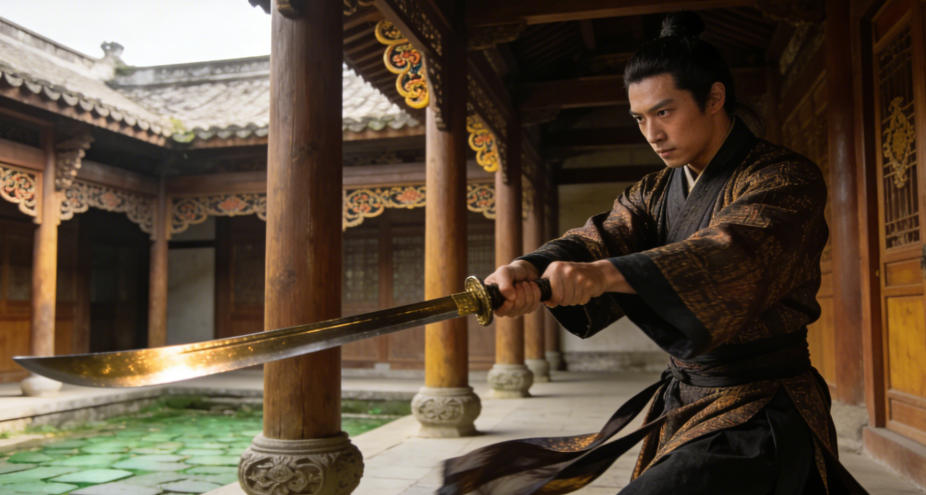
How Were Ancient Chinese Dao Swords Made? History, Craft, and Cultural Significance
Chinese sword culture has a history spanning thousands of years. As a significant symbol of Chinese martial arts and military civilization, the dao sword is not only a practical weapon but also a reflection of deep historical heritage and the extraordinary skill of ancient artisans. From early bronze knives to later high-quality steel blades, every dao blade was forged with meticulous attention to materials, forging techniques, and aesthetic design.
This article explores the origins of Chinese sword craftsmanship, the forging process, representative styles, and cultural significance, providing a comprehensive understanding of the core techniques and artistic characteristics of dao sword craftsmanship.
What is a Dao Sword?
A dao sword refers to a traditional Chinese single-edged weapon, commonly used for slashing and cutting. Unlike a double-edged jian, the dao’s design prioritizes efficiency in chopping motions and battlefield practicality while also serving ceremonial, symbolic, and status purposes.

The Origins and Evolution of Chinese Sword Culture
The history of Chinese sword culture dates back to the late Neolithic period. Early humans used stone and bone knives, laying the foundation for later metal weapons. With the development of bronze smelting during the Shang and Zhou dynasties, the first dao swords began to take shape. Bronze knives served not only as military tools but also for hunting, ceremonial purposes, and symbols of authority, marking social hierarchy and military power.
During the Spring and Autumn and Warring States periods, frequent warfare drove the demand for more effective weapons. Breakthroughs in iron smelting enabled widespread use of iron dao blades, which were tougher, more durable, and maintained a sharper edge than bronze. Specialized workshops emerged, focusing on blade structure, edge geometry, and quenching techniques, marking a golden era in dao sword production.
By the Qin and Han dynasties, centralized governance strengthened, and weapons manufacturing became standardized. Large-scale military production ensured consistency in blade dimensions, weight, and balance. The popular Han ring-hilted dao exemplifies this stage, with a simple structure and well-distributed weight, suitable for both cavalry and infantry. Meanwhile, metallurgical innovations such as layered steel and soil-tempered quenching allowed dao blades to achieve an ideal balance of hardness and flexibility.
From the Wei, Jin, and Northern and Southern dynasties to the Sui and Tang periods, cavalry tactics and international exchanges influenced the diversity of sword shapes. Tang-era horizontal dao blades had far-reaching influence, enhancing military effectiveness and inspiring neighboring cultures to adopt and refine dao sword craftsmanship. During the Song and Yuan periods, firearms began to appear, yet cold weapons remained central in close combat, emphasizing agility and practical battlefield performance.
In the Ming and Qing dynasties, swords evolved beyond purely practical weapons to become important symbols of martial prowess and social status. Iconic blade types such as the willow-leaf dao and wild goose feather dao emerged, featuring elegant curves and fluid arcs while maintaining cutting and thrusting effectiveness. By this time, dao blade forging, quenching, and polishing techniques were highly sophisticated, producing swords that excelled both as functional weapons and works of art.
Legendary swords such as 'Zhanlu' and 'Yuchang' illustrate the pinnacle of craftsmanship. These revered dao swords symbolize sharpness and power while embodying the ancient smiths’ mastery over alloy composition, heat control, and forging rhythm. They appear repeatedly in literature and folklore, elevating Chinese sword culture beyond practical use into the realm of spiritual and aesthetic significance.
Overall, the evolution of Chinese dao swords represents a continuous integration of technological innovation, battlefield necessity, and cultural aesthetics. From primitive stone knives to high-carbon steel dao blades, from standardized military weapons to martial arts and collectible masterpieces, each era demonstrates advances in metallurgy and the enduring spirit of the artisan.
The Secrets of Ancient Swordsmiths
Traditional Chinese sword-making emphasizes four core elements: “form, material, toughness, and edge” — principles that define quality and lie at the heart of dao sword craftsmanship. Every step, from raw material selection to the finished blade, reflects decades of accumulated experience and mastery of heat, hammer, and technique.
1. Careful Material Selection — Creating High-Quality Blades (Dao Blade)
In ancient times, high-quality ores were extremely valuable. Swordsmiths assessed carbon content and impurity levels to determine suitability for crafting dao blades. High-carbon steel provides sharp edges but can be brittle if excessive, necessitating careful combination with lower-carbon steel.
Traditional Chinese swords often used composite methods, including folded steel, laminated steel, or layered forging, ensuring a hard edge while maintaining a resilient spine. This structural approach allows dao swords to remain sharp for cutting while resisting chipping or breakage. Precise material selection is the foundation for high-performance dao blades and a key factor in evaluating sword quality.
Some premium blades were repeatedly folded during forging, producing fine layers visible in the metal, which enhance mechanical strength and aesthetic appeal. This layered structure is a signature characteristic of dao sword craftsmanship.
2. Forging and Hammering — Enhancing Structure and Toughness
Forging establishes the “skeleton” of the blade. Ancient smiths repeatedly heated metal in high-temperature furnaces and shaped it by hand hammering. Each strike not only formed the shape but refined the internal grain structure, making it denser and more uniform.
Through repeated hammering, impurities were expelled, the internal metal structure became more compact, and the blade gained toughness and resistance to impact. This traditional method ensured that dao blades could withstand severe blows in combat without deforming or breaking.
Artisans also adjusted the blade’s curvature and thickness based on intended use. Slashing-oriented dao swords feature thicker spines and optimized arcs, while speed-focused blades are lighter and balanced for agile handling. Forging combines technical precision with a deep understanding of physical dynamics.
3. Quenching and Tempering — Enhancing Sharpness and Durability
Heat treatment is crucial to blade performance. During quenching, the heated edge is rapidly cooled, transforming the steel structure into a high-hardness form, creating a sharp and wear-resistant edge. Incorrect temperature or cooling can lead to cracking or insufficient hardness.
Experienced smiths judged the optimal quench by observing flame color and metal sheen. Subsequent tempering involves controlled reheating to relieve internal stresses, enhancing flexibility and preventing brittleness. The balance between quenching and tempering is the technical essence of dao sword craftsmanship.
High-end dao blades sometimes feature partial quenching, with a hard edge and resilient spine, allowing impact absorption in combat and improving overall durability.
4. Polishing and Decorative Engraving — The Fusion of Function and Art
After heat treatment, the blade undergoes multiple stages of polishing, from coarse shaping to fine edge finishing, directly affecting the cutting angle and slicing performance. High-level polishing ensures smooth dao blade edges, improving balance and grip.
On the artistic side, smiths engraved or inlaid patterns on the blade, guard, handle, and scabbard. Motifs such as dragons, clouds, or inscriptions enhance visual appeal while conveying cultural significance and status. Many high-quality dao swords serve simultaneously as functional weapons and works of art.
Assembly details also impact usability. Handle materials (wood, horn, metal) and guard design influence grip stability and overall balance. These elements together form the complete dao sword craftsmanship system.
The Spirit of Craftsmanship: Skills and Experience Passed Through Generations
Ancient swordsmiths often spent decades mastering the properties of metal and the precise control of heat. Through oral tradition and apprenticeship, they transmitted knowledge of material ratios, heating durations, quenching media, and other critical techniques across generations. This dedication and precision is what allowed Chinese dao swords to hold a prominent position in the history of bladed weapons worldwide.
Every step, from material selection to the finished product, reflects a careful balance of performance, safety, and aesthetics. A truly exceptional dao blade delivers powerful functionality in combat while showcasing cultural depth as a collectible or display piece. This enduring excellence is why traditional Chinese sword craftsmanship continues to be celebrated to this day.
Representative Styles and Historical Trends of Chinese Swords
Over thousands of years, Chinese swords evolved in shape, function, and forging techniques. Each era produced distinct dao swords, which were not only battlefield weapons but also cultural artifacts reflecting military, social, and artistic values.
Spring and Autumn & Warring States Swords
The Spring and Autumn and Warring States periods were pivotal in Chinese sword development. Frequent warfare drove demand for high-performance weapons, resulting in a wide variety of blades—from short, agile knives to long swords and curved dao for cavalry charges.
-
Practical Features: Focused on durability, cutting power, and mechanical stability.
-
Design Characteristics: Thick blades with a combination of straight and curved forms, sharp tips, and sturdy spines, fully showcasing the strength of the dao blade.
-
Military Use: Infantry relied on short knives for close combat, while cavalry wielded long or curved blades for slashing and thrusting, demonstrating versatile battlefield applications.
During this period, craftsmanship emphasized blade strength and sharpness, laying the foundation for future dao sword craftsmanship.

Qin and Han Dynasty Swords
With the rise of centralized rule, sword production became standardized, and large-scale military-issued weapons emerged.
-
Technical Features: Longer and sharper blades, refined steel treatment, and mature forging techniques ensured optimal hardness and toughness.
-
Cultural Significance: Many dao swords featured inscriptions, decorative guards, or patterns, symbolizing soldier identity, military honor, or imperial authority.
-
Representative Blades: Ring-hilted dao, single-edged long swords, suitable for both infantry and cavalry, capable of fast thrusts while retaining strong chopping performance.
Qin and Han swords balanced combat effectiveness with aesthetics, making dao blades both practical and culturally meaningful.
Tang and Song Dynasty Swords
During the Tang and Song periods, sword culture became increasingly artistic. As martial arts developed, swords were used not only in battle but also for ceremonial and display purposes.
-
Design Characteristics: Dao blades emphasized harmonious proportions, graceful curves, sharp edges, and resilient spines, merging functionality with beauty.
-
Craftsmanship: Refined forging and heat treatment processes, smooth polished surfaces, and detailed decorations allowed swords to excel in both combat and visual appeal.
-
Usage: Military, court ceremonies, martial arts demonstrations, and scholarly collections highlighted the multifaceted role of swords in society.
At this stage, dao sword craftsmanship incorporated more artistic elements, creating swords that were practical, aesthetic, and culturally symbolic.
Ming and Qing Dynasty Swords and Ceremonial Blades
By the Ming and Qing dynasties, sword-making had reached the pinnacle of traditional craftsmanship, producing weapons that were functional, decorative, and status symbols.
-
Representative Blades: Willow-leaf dao, wild goose feather dao, and Guan dao, each with unique curves and blade structures optimized for chopping, thrusting, and maneuverability.
-
Craftsmanship Features: Heat treatment achieved uniform hardness, intricate engravings, carefully crafted handles, guards, and scabbards. Dao sword craftsmanship reached its zenith.
-
Cultural and Ceremonial Value: General’s swords served both combat and ceremonial purposes, often inlaid with gems or engraved with inscriptions, transforming the dao blade into both a work of art and a status symbol.
Ming and Qing swords exemplified the perfect integration of function, durability, and aesthetics, providing rich examples for collectors and researchers.
Overall, Chinese dao swords across dynasties demonstrate the intertwining of technological progress and cultural evolution. From Warring States short knives and Qin-Han ring-hilted swords to Tang-Song ceremonial blades and Ming-Qing masterpieces, every dao blade embodies the pinnacle of dao sword craftsmanship, reflecting ancient artisans’ excellence in technique, artistry, and cultural expression.
The Role of Dao Swords in Chinese Martial Arts
In traditional Chinese martial arts, the dao sword has always held a central role. Many styles incorporate blade techniques, including Southern Fist, Taiji Dao, and Baji Quan sword forms. A high-quality dao blade not only provides dramatic visual impact but also serves as an essential training tool and cultural medium for martial arts practice.
The Spirit of Ancient Swordsmiths and Modern Lessons
The legacy of dao sword craftsmanship embodies both technical mastery and artisan spirit. Ancient swordsmiths devoted decades to mastering material ratios, heat control, and forging techniques. Their dedication continues to inspire martial artists, collectors, and craft enthusiasts today.
Modern advances, such as stainless steel and powdered metals, are widely applied in sword production, yet the essence of the traditional dao blade remains a goal for many artisans. Whether for martial arts practice or high-end collectible swords, the design concepts and production methods of ancient craftsmanship continue to enrich contemporary sword culture.
Handmade Chinese Sword Yang Wu Tai Chi Jian Stainless Steel Longquan Sword Soft Sword

Conclusion: The Artistic Value and Timeless Appeal of Dao Swords
Ancient Chinese sword-making perfectly combines practicality with visual aesthetics, making the dao sword a cultural symbol that transcends time. From careful material selection and quenching to forging and detailed engraving, every step reflects the artisan’s skill, patience, and vision.
Understanding and appreciating this process allows us to better experience the depth of Chinese traditional culture. It also provides modern readers with comprehensive content on keywords such as Chinese sword craftsmanship, ancient forging techniques, dao blade heat treatment, and dao sword cultural significance.
Explore the fascinating history and cultural stories behind Chinese weaponry, and let ancient dao sword craftsmanship continue to inspire new generations.

