


Egyptian Sword History: Evolution of Ancient Egyptian Weapons
- โพสต์โดย COOLKATANA
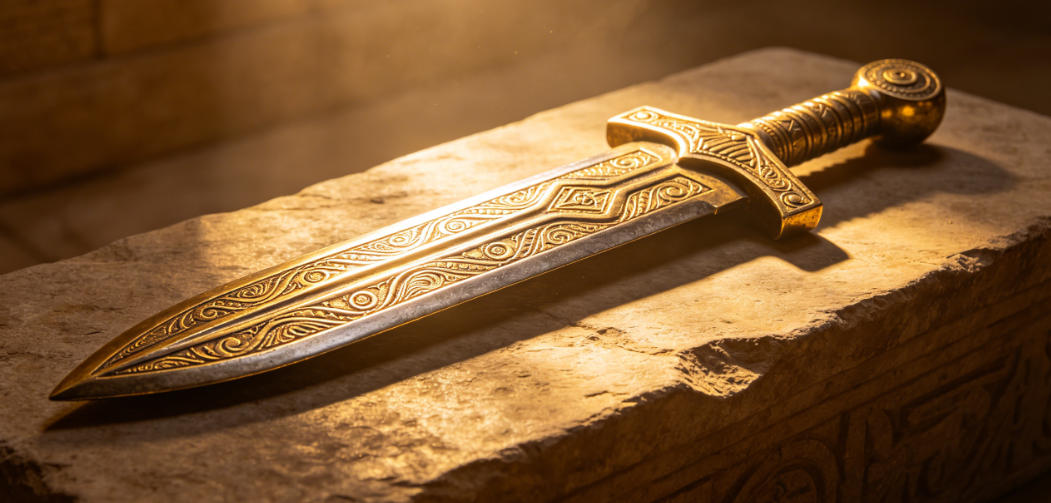
What Is the History of the Egyptian Sword and Ancient Egyptian Weapons?
In the world of ancient weapon systems, the egyptian sword and egyptian weapons hold an extremely important place. As a core part of Nile civilization, these weapons were not only used for warfare but also carried deep meanings of power, religion, and royal authority.
From early bronze short swords to the iconic sickle-shaped blade (khopesh), and later more refined iron weapons, the evolution of the Egyptian sword is essentially a reflection of the development of an entire civilization.
What Is an Egyptian Sword? The True Meaning of Ancient Egyptian Blades
The term egyptian sword does not refer to a single fixed weapon type. Instead, it is a general classification covering various sword-like weapons used throughout ancient Egyptian history.
This includes bronze short swords, curved blades, and later iron close-combat weapons. Over thousands of years, the system of egyptian weapons evolved continuously, making the concept of “sword” increasingly diverse and complex.
In the earliest stages, Egyptian swords were primarily functional, designed for stabbing and close-range combat. However, with the advancement of metallurgy, the egyptian sword gradually transformed from a simple weapon into an object with symbolic and ceremonial significance.
In ancient Egyptian civilization, egyptian weapons were not only tools of war but also symbols of authority and identity. The material, decoration, length, and inscriptions on a sword could represent the social rank of its owner.
Pharaohs often carried highly decorated ceremonial swords to symbolize their divine authority, while nobles and military officers used swords to demonstrate power and status.
More importantly, the egyptian sword also carried symbolic meaning of 'order versus chaos' in Egyptian religious belief, representing the protection of cosmic balance (Ma’at).
Thus, Egyptian swords were not just weapons—they were physical embodiments of religion, authority, and civilization.

The Bronze Age: The Origins of Egyptian Weapons
In early Egyptian history, weapons were made mainly from stone, wood, and small amounts of native copper. These early egyptian weapons were simple and limited in durability and effectiveness.
Combat during this period relied heavily on basic melee tactics such as stabbing with spears, cutting with stone blades, and defending with wooden shields.
Early egyptian swords were mostly primitive daggers or short blades, not yet forming a standardized sword system.
With the introduction of bronze metallurgy, Egyptian weaponry experienced a major transformation. Bronze was harder, more durable, and easier to shape than copper, allowing more advanced weapon designs.
This marked the beginning of the Bronze Age development of egyptian weapons.
Key improvements included:
- Sharper and more durable blades
- Improved structural stability
- Higher combat efficiency
- More standardized blade designs
As a result, bronze short swords became an important part of the Egyptian military, significantly improving battlefield effectiveness.
The New Kingdom: The Golden Age of Egyptian Swords
During the New Kingdom period (c. 1550–1070 BCE), ancient Egypt reached its military and political peak. This era is widely considered the golden age of egyptian sword and egyptian weapons development.
Egypt strengthened its domestic weapon production while also absorbing military technologies from neighboring regions, especially Western Asia and the Mediterranean.
Key characteristics of this period include:
- More complex and refined weapon designs
- Advanced metallurgy techniques
- Greater battlefield adaptability
- Highly specialized military structure
During this time, the egyptian sword evolved beyond a simple close-combat tool and became part of military identity and tactical systems.
Short swords were often used in chariot combat, while spears and curved blades were used for formation warfare and breakthroughs.
Egypt also adopted foreign blade designs and integrated them into the egyptian weapons system, making it more diverse and effective.
Additionally, swords began appearing in religious rituals, royal ceremonies, and artistic depictions, reinforcing their symbolic importance.
Thus, the New Kingdom represents a turning point where egyptian weapons transitioned from pure tools of war into symbols of state power.
Iconic Weapon: The Rise of the Khopesh
One of the most iconic weapons in ancient Egypt is the khopesh, a sickle-shaped sword.
This unique blade combines the cutting power of an axe with the stabbing ability of a sword, making it one of the most effective melee weapons of its time.
Characteristics of the khopesh include:
- Curved blade design
- Powerful slashing capability
- Durable bronze construction
- Effective against shields and armor
It remains one of the most searched ancient weapons in queries like 'ancient egypt weapons list' and 'egyptian sword types.'
Iron Age Revolution: The Upgrade of Egyptian Swords
With the arrival of the Iron Age, egyptian weapons underwent another major transformation.
Iron weapons offered clear advantages:
- Greater hardness
- Sharper edges
- Improved durability
- Better suitability for prolonged warfare
During this time, the egyptian sword gradually evolved into more standardized straight-blade forms, similar to later Mediterranean weapons.

Art and Design: The Cultural Value of Egyptian Swords
Ancient Egyptians valued not only functionality but also artistic expression in weapon design.
Many egyptian weapons featured:
- Intricate carvings and hieroglyphs
- Gold and gemstone decorations
- Religious symbols and deity imagery
These designs strengthened the connection between weapons and divine authority.
In Egyptian culture, the sword was not only a weapon of war but also an extension of sacred power.
Warfare System: Egyptian Weapons in Battle
The strength of ancient Egypt’s military came from its highly organized egyptian weapons system, which was not just a collection of weapons but a structured battlefield strategy.
Core weapons included:
- Sword (sword)
- Spear (spear)
- Bow (bow)
- Axe (axe)
- Chariot warfare system
Each weapon played a specific role in battle coordination.
The egyptian sword was mainly used for close-range combat and breaking enemy lines after ranged attacks. Spears formed defensive formations, while bows provided long-range suppression. Axes delivered heavy damage in close combat, and chariots provided mobility and tactical advantage.
Together, these weapons created a highly efficient and adaptable military system.
Religious and Ceremonial Symbolism
In ancient Egyptian society, the egyptian sword was not only a weapon but also a religious symbol.
It was used in:
- Pharaoh coronation ceremonies
- Temple rituals
- Symbolizing order over chaos
In hieroglyphs and wall paintings, swords often appeared alongside gods and pharaohs, representing divine authority.
Modern Influence of Egyptian Weapons
Today, egyptian weapons continue to influence modern culture, including:
- Fantasy novels featuring ancient weapon designs
- Video games with Egyptian-themed weapons
- Films portraying pharaoh warriors
The khopesh and other Egyptian blades are also popular among collectors and historical weapon enthusiasts.
Why Are Egyptian Swords Still So Popular?
The popularity of the egyptian sword comes from several factors:
- Deep historical and cultural heritage
- Unique and recognizable weapon design
- Strong connection to pharaoh mythology
- Frequent appearance in modern media
Therefore, egyptian sword and egyptian weapons are not only historical artifacts but also cultural symbols.
Conclusion: The Legacy of Egyptian Weapons Across Millennia
From primitive stone tools to refined bronze swords, from khopesh to iron blades, the evolution of the egyptian sword reflects the technological and cultural growth of ancient Egyptian civilization.
Whether in warfare, religion, or art, egyptian weapons left a lasting legacy that continues to inspire global interest today.

