


Gladius Sword Explained: Roman Short Sword History & Combat
What Is the Gladius Sword and Why Was It So Effective in Roman Warfare?
What Is the Gladius Sword?
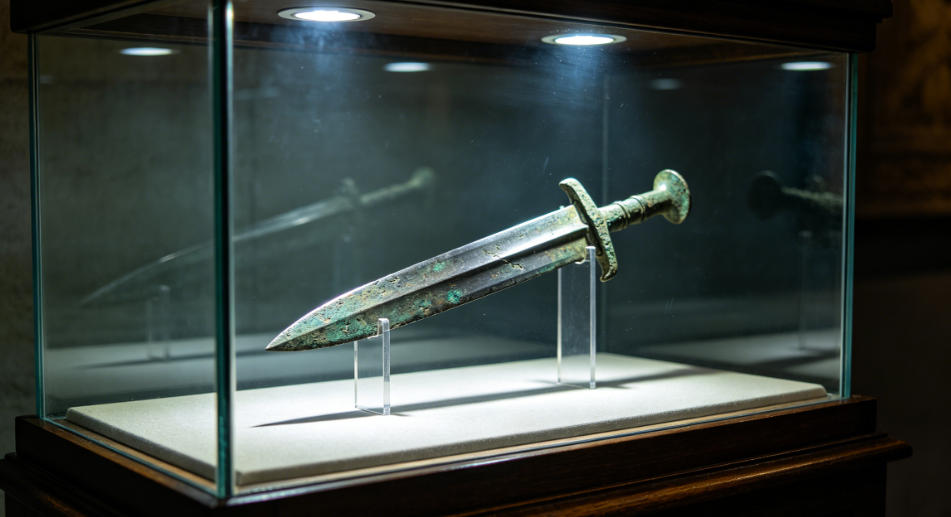
The gladius sword is one of the most iconic weapons of ancient Roman legions and the standard close-combat weapon used by infantry during the expansion of the Roman Empire. The term 'gladius' comes from Latin, meaning 'sword,' and in Roman usage it could refer broadly to a weapon of war. However, in modern historical and weapon studies, it specifically refers to the short, double-edged military sword used by Roman soldiers.
Within the Roman military system, the gladius sword was not a decorative or ceremonial weapon. Instead, it was a highly practical tool designed for efficient combat. Its design focused entirely on lethality and tactical coordination, especially within the famous Roman formation-based warfare.
Roman soldiers typically fought with a large rectangular shield (scutum) held in front, forming a defensive wall. From behind this shield, they used the gladius sword to deliver quick, precise thrusts at close range. This method minimized exposure while maximizing killing efficiency in tight combat situations.
Unlike many later swords that emphasized slashing, the gladius sword was specifically designed for thrusting. Roman military training even emphasized stabbing attacks aimed at vital areas such as the abdomen and chest, as these were more reliable and deadly in close combat.
Historically, the gladius sword was not originally a Roman invention. It evolved from short swords used by Celtic and Iberian warriors. The Romans adopted and refined these designs, improving blade length, sharpening the point for penetration, and enhancing balance. Over time, the gladius became standardized equipment for Roman soldiers.
As Rome transitioned from Republic to Empire, the gladius sword evolved into more than just a weapon—it became a symbol of military discipline, organization, and efficiency. In both historical records and archaeological findings, the gladius sword is often synonymous with the Roman legion itself.
Therefore, the gladius sword is not merely a weapon, but a product of integrated military design, tactical thinking, and imperial expansion—an essential key to understanding ancient warfare.

The Historical Origins of the Gladius Sword
The origins of the gladius sword date back to around the 3rd century BCE, during the period of Roman expansion. During conflicts with tribes in the Iberian Peninsula and Celtic regions, Roman soldiers encountered short, highly effective double-edged swords.
Recognizing their effectiveness in close combat, the Romans quickly adopted and modified these weapons to suit their own military system. They optimized blade proportions, improved balance, and enhanced the thrusting capability of the tip, aligning the weapon with their combat doctrine.
During the Punic Wars, particularly against Carthage, the gladius sword saw widespread battlefield use and proved highly effective. Later, during the campaigns of Julius Caesar, especially in Gaul and civil wars, the weapon spread across Europe alongside Roman conquests.
As Roman military organization became more standardized, the gladius sword was integrated into a unified equipment system. Combined with the scutum (shield) and pilum (javelin), it formed a complete tactical structure that maximized battlefield efficiency.
Historically, the gladius sword was mainly used during:
- The Late Roman Republic (3rd–1st century BCE)
- The Early to Mid Roman Empire (1st–3rd century CE)
In the later Empire, changes in warfare—especially increased cavalry use—led to the rise of the longer spatha sword, which gradually replaced the gladius.
Despite this, the gladius sword remained a powerful symbol of Roman military identity and continues to represent the peak of Roman infantry combat strategy.
Design and Structural Features of the Gladius Sword
The design of the gladius sword reflects a philosophy of efficiency and practicality. Every aspect of its structure was engineered to support close-range thrusting combat.
1. Short but Deadly Blade
The blade typically measured between 50 and 70 cm, providing an ideal balance between reach and maneuverability. This length allowed soldiers to strike quickly from behind a shield in tight formations.
2. Double-Edged Blade with Sharp Tip
The gladius sword featured a symmetrical double-edged blade and a sharply tapered point, enabling both cutting and thrusting, though thrusting was prioritized.
3. Emphasis on Thrusting Over Slashing
Unlike medieval swords designed for sweeping strikes, the gladius was optimized for precise stabbing attacks. This made it more effective in dense formations and more likely to cause fatal wounds.
4. Balanced Grip and Handle Design
The handle was ergonomically designed for a firm grip, often made of wood, bone, or metal. A rounded pommel provided counterbalance, allowing for better control during rapid strikes.
Unity of Structure and Tactics
The gladius sword was not just a weapon—it was part of a complete combat system. Its design aligned perfectly with Roman tactics, emphasizing efficiency, coordination, and lethal precision.
Tactical Role of the Gladius Sword
In Roman warfare, the gladius sword was used as part of a combined tactical system rather than as a standalone weapon.
Typical combat sequence included:
- Throwing the pilum to disrupt enemy formations
- Advancing behind shields
- Drawing the gladius for close combat
- Delivering rapid, lethal thrusts
This system made Roman legions highly effective and contributed significantly to their battlefield dominance.

Types and Evolution of the Gladius Sword
Over time, several variations of the gladius sword developed:
Hispaniensis
An early version influenced by Iberian designs, slightly longer and more curved.
Mainz
A wider blade with a pronounced tip, ideal for thrusting.
Pompeii
A later, more standardized version with a straighter blade, optimized for mass production.
These variations reflect the evolution of Roman military organization and battlefield needs.
Historical Significance and Cultural Impact
The gladius sword is more than a weapon—it is a symbol of Roman military culture and power.
It represents:
- Discipline and efficiency of Roman legions
- The peak of ancient close-combat design
- Expansion and dominance of the Roman Empire
- Advanced military engineering and standardization
Archaeological discoveries of gladius swords provide valuable insights into Roman warfare, craftsmanship, and daily military life.
In modern culture, the gladius sword remains a defining symbol of Roman soldiers, frequently appearing in films, games, and historical reenactments.
Modern Relevance of the Gladius Sword
Today, the gladius sword continues to influence various fields:
- Historical reenactment and Roman military simulations
- Museum exhibitions and archaeological displays
- Films, games, and historical media
- Weapon collecting and modern reproductions
It is no longer just a weapon, but a timeless symbol of military innovation and cultural legacy.
Conclusion: The Legacy of the Gladius Sword
The gladius sword played a crucial role in shaping ancient warfare and Roman military success.
It represents not only an effective weapon design, but also the discipline, strategy, and expansionist spirit of Rome.
In the history of weapons, the gladius sword stands as one of the greatest examples of short-sword combat systems and remains essential to understanding Roman military culture.

