


How Heavy Is a Katana? Weight, Balance & Performance Explained
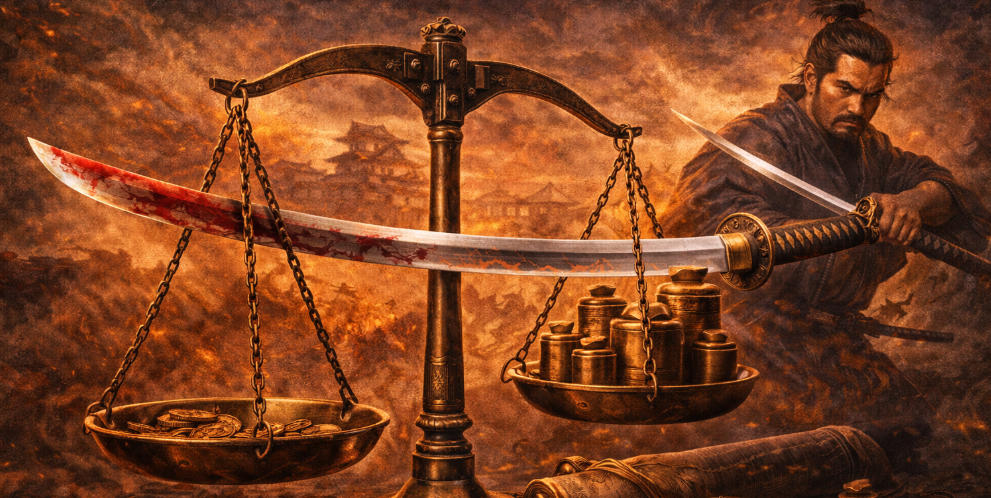
What Is the Ideal Weight of a Katana and How Does It Affect Performance?
In many Hollywood action films or fantasy games, Japanese katanas are often portrayed as massive, unstoppable blades capable of cutting through anything. Yet for true weapons enthusiasts and iaido practitioners, the actual weight of a katana is often surprising. A genuine Japanese sword does not rely on sheer heaviness; its genius lies in the perfect balance between power, speed, and maneuverability.
Today, we will explore the average weight of Japanese swords, analyze the key factors that influence it, and reveal how weight distribution fundamentally affects both combat performance and artistic elegance.
How Heavy Is a Katana? Debunking the Myth of Massive Blades
A common misconception is that ancient weapons were extremely heavy. In reality, a standard Japanese katana (ōdachi excluded) usually weighs between 900 grams and 1.4 kilograms (about 2 to 3 pounds).
This weight range is the product of centuries of warfare refinement. If a sword is too heavy, a samurai would fatigue quickly in prolonged combat, struggling to execute swift counterattacks; if too light, it would lack the inertia and cutting power needed to pierce armor or block strikes. For modern collectors and sword practitioners, a katana around 1.1 kilograms is considered the 'golden standard,' balancing feel and lethality.

Key Factors Determining Katana Weight: From Steel Physics to Geometry
Why do two katanas of nearly identical length and dimensions feel so different in hand? This is not merely a matter of numerical weight—it stems from the interplay of forging techniques, blade geometry, and fittings. Here are the four core factors:
1. Blade Geometry (Sugata): The Foundation of Weight and Strength
The external shape of the blade, or Sugata, directly affects its weight.
-
Dimensional specifications: Blade width (motohaba to sakihaba) and thickness (motokasane to sakikasane) determine the steel volume. A newly forged Edo-period katana might favor lightness, while Nanboku-chō period ōdachi often have wide, thick spines.
-
Niku-oki (Meat placement): This refers to the fullness of the blade’s cross-section. More “meat” increases weight and cutting power, enhancing resistance during tameshigiri (test cutting).
-
Funbari (Taper): A blade wider at the base and narrower at the tip shifts the center of gravity backward, making the sword feel lighter despite substantial mass.
2. Bo-hi (Fuller) Mechanics: Balancing Lightness and Rigidity
Beginners often mistake the groove along the blade as a “blood channel,” but its true purpose is precision weight reduction.
-
I-beam principle: Removing metal from the sides reduces weight by 10–20% (roughly 100–200 grams) while maintaining longitudinal rigidity, making long swords more manageable for fast iaido draws and strikes.
-
Auditory feedback: When swung, the groove produces a crisp whistling sound, called Tachikaze, which serves both as psychological intimidation and as a guide for correct blade alignment.
3. Tamahagane Steel and Forging Density
The material itself is a critical factor.
-
Folding process (Kitae): Traditional katanas use tamahagane folded thousands of times, creating the distinctive hada (grain) while eliminating impurities. The resulting steel is denser and more uniform.
-
Core and outer steel structure: Katanas typically feature a hard high-carbon steel exterior (kawagane) and a softer low-carbon core (shingane). This soft-hard combination finely tunes the sword’s overall density, giving power without excessive heaviness.
4. Fittings (Koshirae) and Weight Distribution
If the blade is the engine, the koshirae (mountings) is the chassis, heavily influencing balance.
-
Tsuba leverage: The guard is the heaviest fitting. A solid iron, intricately decorated tsuba increases handle-end weight, paradoxically making the blade tip feel lighter and shifting the point of balance (POB).
-
Tsuka and Fuchi/Kashira: Wood type, ray skin wrapping, and metal end caps subtly adjust the hand-feel.
-
Full tang construction: High-quality katanas feature a tang running through the handle. While adding weight, this ensures seamless energy transfer and produces the sense of 'sword and hand as one.'
Through meticulous craftsmanship, swordsmiths can customize weight to a user’s height, build, and school requirements. The number on the scale matters less than how the weight flows through every swing.

Weight and Combat Performance: The Trade-Off Between Speed and Power
Weight directly influences sword style and combat application:
-
Light blades excel in iaido, allowing rapid draws, cuts, and re-sheathing. Frequent changes in attack or defense are easier on the wrist and shoulders.
-
Heavier blades favor tameshigiri and powerful strikes. Increased inertia slices through targets with less effort, proving effective against armored opponents in historical battles.
Point of Balance (POB): More Important Than Absolute Weight
Experienced samurai focus less on pounds and more on the blade’s center of gravity. Proper POB determines whether a sword feels 'light as a feather' or 'heavy as a hammer.'
Ideally, a well-balanced katana has its center about 10–15 cm (4–6 inches) in front of the tsuba. Too close to the tip, the sword favors chopping power; closer to the guard, it favors speed and maneuverability. Precision in POB separates masterful swords from ordinary ones.
Aesthetics and Craftsmanship: The Art Embedded in Weight
In Japanese sword appraisal, even weight distribution is part of the aesthetic evaluation. A harmonious katana exhibits natural taper from base to tip (funbari), creating fluid visual lines.
Fine fittings complement the blade, balancing form and function. Collectors often judge quality through the vibration and feel during swings. A well-balanced katana exhibits minimal wobble, combining the serenity of art with the lethality of a weapon.
Hand Forged Japanese Wakizashi Sword Damascus Folded Steel Full Tang Sharp

Conclusion: Choosing the Right Weight for You
Understanding how heavy a katana should be helps practitioners and collectors select the weapon best suited to them. Whether prioritizing speed with a light blade or chopping power with a heavier one, weight serves as the crucial link between samurai and sword.
For beginners, a moderately weighted sword with balanced POB helps build proper muscle memory and prevents injury. For enthusiasts, studying historical and stylistic weight variations opens a window into the deeper philosophy of Japanese sword culture. A fine katana’s weight should vanish in the hand, transforming into pure force and intent.

