


Naginata vs Guandao: Differences Between Japanese & Chinese Polearms
- โพสต์โดย COOLKATANA
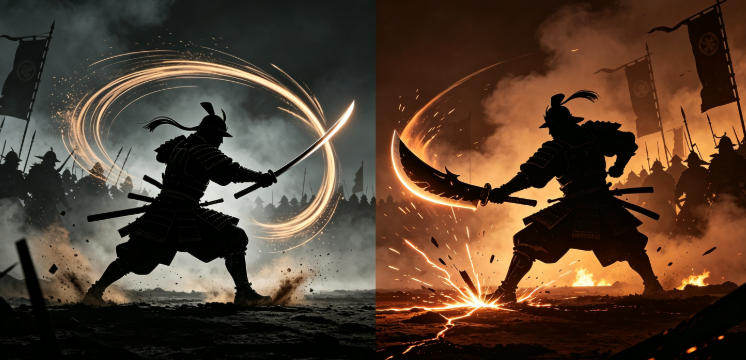
What Is the Difference Between Naginata and Guandao? A Complete Comparison of Two Legendary Polearms
Throughout the history of Eastern cold weapons, polearm blades have always been among the most representative weapon categories. They combine the sharpness of swords, the range advantage of spears, and the pursuit of skill and strength by warriors. Among various traditional Asian weapons, the Japanese Naginata(薙刀) and Chinese Guandao(关刀) are often compared. Both feature curved blades and long handles, making them look very similar at first glance. This leads many sword collectors to ask: What is the difference between Naginata and Guandao? Which weapon was more powerful on the battlefield?
In reality, although both weapons belong to the category of Eastern polearms, they were created in different historical environments and represent different approaches to warfare. The Naginata reflects the Japanese warrior’s pursuit of speed, distance, and technique, while the Guandao represents Chinese generals’ strength, authority, and heroic spirit. This article will explore the differences between Naginata vs Guandao through their historical origins, design structures, combat styles, and cultural influences.
What Is Naginata? The Japanese Polearm Used by Samurai
Naginata(薙刀) is a traditional Japanese polearm blade and one of the most iconic long-handled weapons of the samurai era. It consists of a long wooden shaft and a curved single-edged blade, creating a design that can be described as a “long-handled Japanese sword.” The Naginata inherited the cutting ability of Japanese swords while extending the user’s reach, allowing warriors to attack opponents from a safer distance with fast and precise movements.
The blade of a Naginata usually features a noticeable curve, similar to the structure of a Japanese katana. High-quality Naginata blades were often made using traditional Japanese swordsmithing techniques, featuring sharp edges, elegant blade curves, and unique temper lines (Hamon). Compared with ordinary swords, the greatest advantage of the Naginata is its combination of sword-like cutting ability and the range advantage of a polearm, making it a highly practical battlefield weapon.
The Naginata first appeared during Japan’s Heian period (794–1185). It was originally developed for warfare and close combat. During this period, the samurai class was rising, and cavalry warfare became increasingly important. When facing armored opponents, shorter weapons often struggled to maintain an advantage. The Naginata’s extended reach allowed warriors to strike before enemies came close, while its wide sweeping attacks were effective against both cavalry and infantry.
During the Kamakura period and the Genpei War, the Naginata became an important weapon used by samurai and warrior monks. In Japanese historical legends, the Naginata is closely associated with the famous female warrior Tomoe Gozen. In works such as The Tale of the Heike, Tomoe Gozen is described as a brave and skilled warrior who fought on the battlefield using a Naginata. Although some details are considered literary embellishment, her image helped make the Naginata a symbol of female courage and martial strength in Japanese culture.
Besides samurai, Japanese Buddhist warrior monks (Sōhei) were also important users of the Naginata. During medieval Japan, some powerful temples maintained their own armed forces, such as the warrior monks of Enryaku-ji Temple on Mount Hiei. They often carried Naginata during conflicts between religious and political groups. Because monks needed weapons suitable for various battlefield situations, the Naginata’s wide attack range and defensive capability made it an ideal choice.
As Japanese warfare evolved, large-scale infantry formations became more common during the Muromachi period. The spear (Yari) gradually replaced the Naginata as a primary battlefield weapon because it was cheaper to produce and more effective in organized formations. However, the Naginata never disappeared. During the peaceful Edo period, it gradually transformed from a battlefield weapon into a martial arts training tool and became an important weapon taught to women in samurai families for self-defense and discipline.
After centuries of development, the Naginata became part of modern Japanese martial arts through Naginata-do(薙刀道). Today, the Naginata is not only a historical weapon but also a symbol of Japanese culture, samurai spirit, and traditional martial arts. For collectors interested in Japanese swords, samurai history, and Eastern weapons, a Naginata sword replica remains a highly valuable and unique collectible.

What Is Guandao? The Legendary Green Dragon Crescent Blade
Guandao(关刀), also known as Yanyuedao(偃月刀), is a traditional Chinese polearm blade. The name means “crescent moon blade,” referring to its curved blade shape. It usually consists of a large curved blade, a long shaft, and a counterweight or rear structure designed for balance. It is one of the most recognizable Chinese traditional weapons.
Visually, the Guandao has a powerful and imposing appearance. Compared with the slimmer and more elegant Naginata, the Guandao usually features a wider blade, heavier construction, and stronger sense of power. Its design philosophy focuses less on speed and more on using blade weight and momentum to create devastating attacks. Therefore, mastering a Guandao requires significant physical strength, stability, and advanced weapon control skills.
In Chinese culture, the Guandao is most famously associated with the legendary Three Kingdoms general Guan Yu(关羽). In the classic novel Romance of the Three Kingdoms, Guan Yu wielded the famous “Green Dragon Crescent Blade” (Qinglong Yanyuedao), defeating countless enemies and becoming a symbol of loyalty, honor, and martial bravery. Although many stories have been enhanced through literature, the connection between Guan Yu and the Guandao has become deeply rooted in Chinese culture.
However, from a historical perspective, whether Guan Yu actually used such a large crescent blade remains debated. Many historians believe that weapons resembling the modern Guandao design may have developed later and became widely recognized through Ming and Qing dynasty military culture and literature. The popularity of Romance of the Three Kingdoms further strengthened the legendary connection between Guan Yu and the Guandao.
Despite these historical debates, the Guandao remains highly significant in Chinese martial arts and weapon culture. During the Ming and Qing dynasties, the Guandao was not only used for martial arts training but also became a symbol of warrior strength and prestige. Because of its heavy blade, practitioners needed long-term training to develop arm strength, coordination, and control. Practicing the Guandao was not only about learning techniques but also about cultivating discipline and determination.
In modern culture, the Guandao continues to maintain great popularity. Whether appearing in historical dramas, anime, video games, or traditional weapon collections, the Guandao remains a legendary Chinese weapon. From Three Kingdoms stories featuring Guan Yu’s Qinglong Yanyuedao to fantasy weapons in modern games, the Guandao has become a global symbol of Chinese weapon culture.
For collectors, a beautifully crafted Guandao weapon replica is not merely a reproduction of an ancient weapon. It represents Chinese battlefield history, Three Kingdoms legends, and the unique aesthetic of Eastern martial arts. Like the Japanese Naginata, it is one of the most iconic weapons in Asian cold weapon history.

Naginata VS Guandao: Differences in Blade Design
Although both the Naginata and Guandao feature curved blades, their design concepts are completely different.
Naginata Blade Features
The Naginata blade is closer to the design of a Japanese sword (Katana):
- Long and slender blade with an elegant curve;
- Usually features a single-edged structure;
- Focuses on cutting speed and precision;
- Emphasizes blade control and technique.
Because it inherited Japanese sword-making traditions, high-quality Naginata blades often feature visible Hamon, refined polishing, and carefully shaped cutting areas.
Guandao Blade Features
The Guandao is more focused on power-based combat:
- Wide and heavy blade;
- Strong offensive blade tip;
- Some designs include a rear spike;
- Relies on weight and momentum to create powerful strikes.
Traditional Guandao techniques usually require two-handed control. Large circular swings and rotational attacks generate a wide attack range, making it visually much more aggressive than the Naginata.
Simply put:
Naginata = Japanese sword-style speed and technique
Guandao = Chinese heavy polearm focused on strength and power
Neither weapon is absolutely superior. Their effectiveness depends on different battlefield environments and fighting styles.
Length and Weight: Agile Weapon vs Power Weapon
Both weapons provide a significant range advantage compared with shorter weapons.
The Naginata is generally lighter and more flexible. Users can quickly change attack directions and combine continuous strikes, defense, and counterattacks into a smooth fighting rhythm.
The Guandao, on the other hand, has a larger blade and heavier weight, requiring greater physical strength. Its fighting style relies more on momentum and powerful swings to overwhelm opponents.
If compared with modern weapon concepts:
- Naginata is similar to a precise long-range sword
- Guandao is similar to a heavy battle axe with high impact power
Combat Style: Which Is More Powerful, Naginata or Guandao?
Naginata Fighting Style
The greatest advantage of the Naginata is distance control and flexible attacks. Japanese Naginata martial arts (Naginatajutsu) emphasize circular movements, fast footwork, transitions between offense and defense, and precise control of fighting distance.
Users could create a wide defensive zone with the long shaft, using sweeping cuts, blocks, and counterattacks to prevent enemies from approaching.
On historical Japanese battlefields, the Naginata was especially useful against cavalry and close-range attackers. Its long reach allowed warriors to target riders and disrupt cavalry movement. Later, as warfare changed, the Naginata evolved from a battlefield weapon into an important traditional martial art.
Guandao Fighting Style
Compared with the Naginata, the Guandao focuses more on wide attacks and explosive power. Traditional Guandao techniques include large sweeping movements, spinning attacks, powerful chops, and using the blade’s weight to generate devastating impact.
Because of its heavy structure, the Guandao requires strong physical ability and excellent coordination. In Chinese culture and historical fiction, it is often portrayed as the weapon of heroic generals, especially Guan Yu’s legendary Qinglong Yanyuedao.
Although historians debate whether Guan Yu actually used this exact weapon type, the Guandao has become a symbol of courage, strength, and warrior spirit through centuries of storytelling.
Cultural Meaning Behind Naginata and Guandao
Weapons are not only tools of warfare but also important symbols of national history and cultural identity.
In Japanese culture, the Naginata(薙刀) represents samurai spirit, discipline, skill, and the combination of strength and elegance. During the Edo period, many women from samurai families trained with the Naginata for self-defense, causing it to become an important symbol of Japanese female martial arts and continue into modern Naginata-do.
In Chinese culture, the Guandao(关刀) represents loyalty, courage, heroic warriors, and legendary battles. Influenced by the stories of Guan Yu, the Guandao has become a powerful symbol in Chinese martial arts, Three Kingdoms culture, and Eastern warfare aesthetics.
Should Collectors Choose Naginata or Guandao?
For collectors interested in Japanese sword culture, samurai history, and traditional martial arts, a Naginata replica is a unique choice. It combines the beauty of Katana-style blade design with the impressive presence of a long-handled weapon.
If you enjoy Chinese history, Three Kingdoms stories, or legendary warriors, a Guandao weapon may be more suitable. A beautifully crafted Guandao represents traditional Chinese weapon design and the power aesthetics of martial arts.
Today, with the growth of anime, games, movies, and Eastern weapon collecting, keywords such as Japanese polearm, Chinese polearm, Naginata sword, Guandao, traditional weapon replica are becoming increasingly popular among collectors worldwide.
Hand Forged Japanese Naginata Sword 1095 Steel Clay Tempered Brass Tsuba

Conclusion: What Is the Difference Between Naginata VS Guandao?
Although the Naginata and Guandao share a similar curved blade and long handle design, they represent two completely different Eastern weapon cultures.
| Comparison | Naginata(薙刀) | Guandao(关刀) |
|---|---|---|
| Origin | Japan | China |
| Type | Japanese polearm blade | Chinese polearm blade |
| Design | Similar to a long-handled Japanese sword | Heavy crescent-shaped blade |
| Advantage | Flexible, precise, fast | Powerful, imposing, wide attack range |
| Users | Samurai, warrior monks, female warriors | Generals, martial artists |
| Symbol | Samurai spirit and traditional martial arts | Loyalty and heroic warrior culture |
Whether it is the elegant Naginata or the powerful Guandao, both are legendary representatives of Asian cold weapon history. Understanding their differences not only helps collectors choose the right traditional weapon but also provides deeper appreciation of Japanese samurai culture and Chinese ancient warfare traditions.

