

Oni Demon Meaning Explained: Japanese Mythology, Blue Oni & Legends
- โพสต์โดย COOLKATANA
What Is an Oni in Japanese Mythology and What Do Oni Demons Represent?
In the Japanese mythology and yokai folklore system, oni demon (鬼) is one of the most iconic supernatural beings. From ancient Shinto legends and Buddhist hell concepts to folk tales and modern anime, the image of oni has continuously evolved, making it one of the most complex and multi-layered symbols in Japanese culture. In recent years, global searches for keywords like what is an oni, oni demon meaning, and Japanese oni mythology have surged, bringing this ancient concept back into the public spotlight.
1. What is an Oni? The True Meaning of the 'Demon'
In Japanese culture and folklore, what is an oni generally refers to a supernatural monster or evil spirit, but it is not a single fixed image. It is a broad concept and a high-ranking entity within the Japanese yokai system. The oni demon can represent both the externalization of human fears and moral or psychological lessons for society.
Traditionally, oni demons are depicted with the following key features:
- Gigantic Size and Overwhelming Strength: Oni are often several meters tall, possessing immense strength, capable of destroying houses or mountains, making them formidable opponents in warrior tales and folklore.
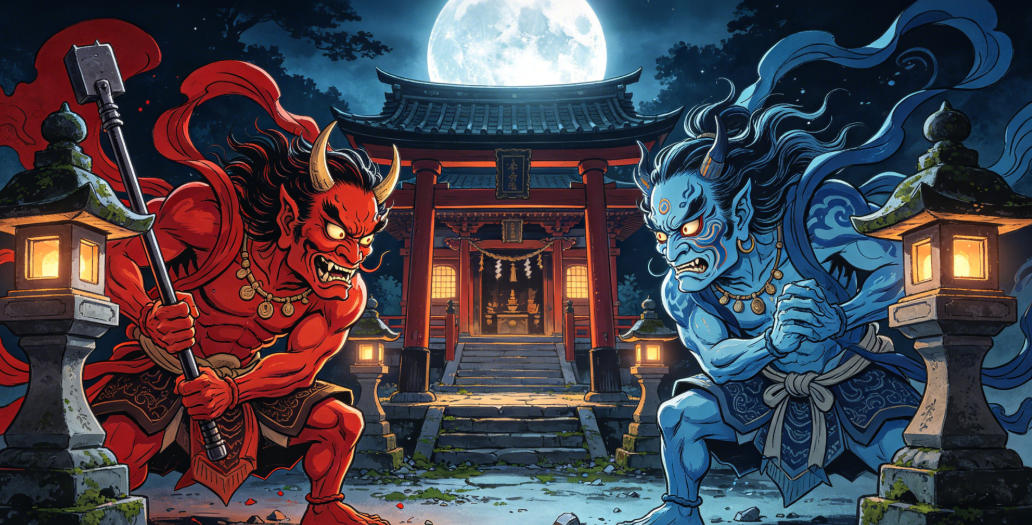
- Red or Blue Skin (Red Oni / Blue Oni): The color carries symbolic meaning. Red oni typically represents anger, impulsiveness, and destructive force, while blue oni symbolizes rationality, restraint, and compassion.
- Single or Double Horns: Horns symbolize power—the larger the horn, the stronger the oni—and highlight its non-human nature.
- Kanabō (Iron Club): This heavy weapon is iconic for oni, representing absolute power and dominance. In folklore, few can survive the strike of a kanabō-wielding oni.
- Tiger or Beast Skin Clothing: Tiger skins symbolize wildness and primal strength, enhancing the oni’s fearsome appearance.
- Half-Human, Half-Demon or Fully Monster Form: Oni are often depicted as a hybrid of human and monster, with sharp claws, fangs, fierce eyes, and sometimes the ability to disguise themselves as humans to deceive others.
With the arrival of Buddhism in Japan, oni demons often gained religious and ethical functions. Oni were no longer just embodiments of natural or human fears but also became executors of hell, punishing evil spirits and wrongdoers, earning the title jigoku no oni (hell’s enforcers). They frequently appear in Buddhist scriptures and hell illustrations, depicted as stern and merciless figures, reminding humans to uphold moral conduct and discipline.
In folk beliefs and stories, the image of oni further diversified: they may inhabit mountains, rivers, or wilderness, symbolize natural disasters, plagues, or wars, or even act as agents of justice interacting with humans. This multi-layered symbolism makes oni demon indispensable in Japanese mythology, culture, and modern anime, and makes what is an oni a trans-era, cross-cultural topic.

2. The Origins of Oni in Japanese Mythology
The origin of oni can be traced to ancient Japan’s personification of unknown fears. Over time, it integrated multiple cultural influences:
1. Shinto and Natural Disaster Symbolism
In early Japanese beliefs, oni demons often represented natural disasters, such as:
- Thunder and lightning
- Floods and tsunamis
- Plagues and diseases
These unexplainable natural phenomena were embodied in the figure of oni, forming the early oni mythology.
2. Buddhist Hell Influence
With the introduction of Buddhism, oni were further systematized:
- Guards of the underworld (enma realm)
- Executors punishing evil spirits
- Part of the soul judgment system
Thus, oni demons were not only monsters but also enforcers of divine order.
3. Folk Yokai Evolution
In folk tales, oni gradually detached from religious systems and became wild spirits of the mountains and forests:
- Mountain demons that eat humans
- Monsters that raid villages
- Powerful enemies confronting samurai
This stage made oni demons closer to the image of 'fantasy monsters.'
3. Red Oni vs Blue Oni: The Dual Oni Cultural Structure
In Japanese culture, oni are rarely singular; a common dual structure is the red oni and blue oni.
🔴 Red Oni
Represents:
- Anger
- Impulsiveness
- Desire for battle
- Destructive power
🔵 Blue Oni
Represents:
- Rationality
- Self-restraint
- Strategic thinking
- Emotional suppression
In famous folktales, blue oni often sacrifices themselves or leaves voluntarily so that the red oni can integrate into human society, symbolizing 'tragic benevolence.'
In modern interpretations:
- Red oni = externalized emotions
- Blue oni = internalized reason
This structure is widely used in modern anime character designs.

4. Oni Demon in Setsubun Festival
During the Japanese Setsubun festival, people perform the ritual of “bean throwing to expel demons”:
'Oni wa soto! Fuku wa uchi!' (Demons out! Fortune in!)
The ritual is not simply to chase away monsters but symbolizes:
- Expelling inner evil thoughts
- Clearing negative energy
- Welcoming new luck
Here, oni demons become symbols of the darker sides of the human psyche, rather than just external threats.
5. Oni Demon’s Modern Evolution in Anime and Games
With the globalization of Japanese anime and gaming, oni demon has evolved from a traditional mythological creature into a highly versatile cultural symbol. In modern narratives, oni are no longer just terrifying monsters—they are given complex identities, emotions, and world-building significance, making them some of the most expressive figures in anime and games.
Common modern interpretations include:
- Dark Warrior Race: Oni are often a powerful battle race in fantasy worlds, forming alliances or conflicts with humans, gods, or other yokai.
- Cursed Human Transformations: Some anime portray humans who gradually “demonize” due to bloodlines, contracts, or forbidden powers, highlighting struggles between humanity and monstrosity.
- RPG Boss-Level Enemies: Oni demons often serve as challenging dungeon bosses or raid monsters with high health, devastating attacks, and multiple phases, representing ultimate challenges.
- Complex Characters with Humanity: Modern storytelling blurs the line between good and evil, portraying oni with emotions, memories, or moral dilemmas, sometimes as both destroyers and protectors.
In many fantasy anime and open-world games, oni demons are redefined as tragic heroes or fallen warriors—once-human heroes who succumb to demonic power, or characters embracing oni form after loss, loneliness, or betrayal, becoming complex narrative drivers and emotional cores of the story.
Thanks to this evolution, oni demon has surpassed its mythological roots to become a multi-dimensional cultural symbol connecting fear, power, tragedy, and redemption, maintaining strong presence and popularity in anime and gaming culture.
6. Symbolism of Oni Demon: The Blurred Line Between Good and Evil
Modern cultural studies suggest that oni demons are not purely evil but serve as philosophical metaphors:
- Conflict between anger and reason
- Balance of order and chaos
- Embodiment of humanity’s darker sides
The existence of the blue oni adds complexity, representing “self-restraint and benevolence” and the spirit of self-sacrifice for others.
Thus, when discussing what is an oni, it is not merely a question of monster classification but also a reflection of cultural psychology.
7. Conclusion: Oni Demon’s Cultural Continuity and Global Impact
From ancient mythology to modern anime, oni demon has evolved into a cross-cultural symbolic system. Whether it is the explosive force of the red oni or the rational, sacrificial spirit of the blue oni, oni reflect Japan’s deep understanding of human complexity.
Oni are therefore not merely yokai—they are a continually evolving cultural concept bridging mythology, religion, psychology, and modern entertainment, making what is an oni a timeless subject of cultural study.

