


Rondel Dagger History, Evolution & Armor Piercing Weapon Guide
- โพสต์โดย COOLKATANA
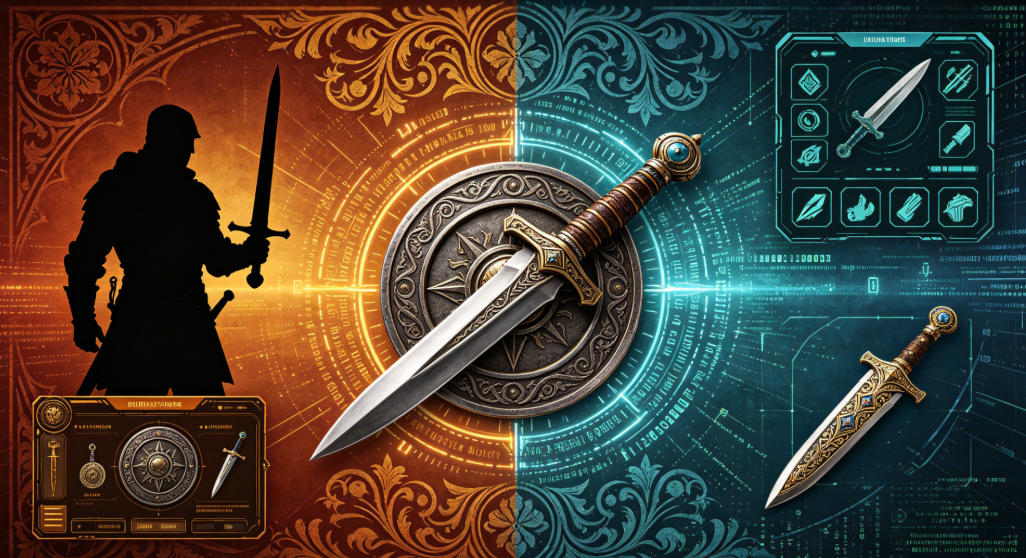
What Is a Rondel Dagger and Why Was It So Effective in Medieval Armor Combat?
In the European weapon system from the late Middle Ages to the Renaissance, the rondel dagger is one of the most iconic close-combat weapons and secondary arms used by knights. It was not only designed for battlefield effectiveness but also deeply embedded in knightly culture, judicial duels, and noble identity symbolism. In recent years, with the rise of medieval weapon collecting, European historical replica swords and daggers, and knight armor research, the rondel dagger has become a highly searched keyword and a popular collectible among enthusiasts worldwide.
What Is a Rondel Dagger? Structure and Design Principles
The rondel dagger is a typical late medieval European dagger widely used between the 14th and 16th centuries by knights and infantry. Its most distinctive feature is the pair of circular guards (rondels) located above and below the handle. These discs not only prevent the hand from slipping but also provide exceptional stability for thrusting in extreme close combat.
With the widespread adoption of plate armor in Europe, traditional cutting weapons became less effective. As a result, the rondel dagger evolved into a specialized armor-piercing dagger (armor piercing dagger) designed specifically to exploit the weak points of armor.
From a design perspective, it abandons cutting efficiency entirely and focuses on penetration performance. The blade is long, rigid, and almost straight, with the center of gravity shifted forward, allowing extremely high pressure to be applied at the tip to penetrate chainmail gaps or plate armor joints. In essence, it behaves more like a 'handheld steel spike' than a traditional dagger.
Structurally, the rondel dagger consists of three main components. The first is the stiletto-style blade, typically triangular or diamond-shaped in cross-section. This reduces surface area and increases rigidity, preventing bending during armor penetration. The second is the metal rondel guards, which form a mechanical locking system: the upper rondel prevents the hand from sliding forward, while the lower rondel prevents it from slipping backward, ensuring maximum control during grappling and thrusting. The third is the straight handle, usually made of wood, bone, or horn, designed for use with armored gloves and rapid force application in high-pressure combat.
This combination creates a key advantage: force concentration and trajectory stability. During a thrust, all force is focused on a very small tip area, generating extreme pressure capable of penetrating weak points such as armpits, neck joints, and armor seams. Meanwhile, the rondel guard stabilizes the grip, minimizing deviation and increasing the likelihood of a lethal strike. As a result, the rondel dagger is not just a secondary weapon but a true finishing weapon in close combat.

Historical Origins: From Medieval Battlefields to Renaissance Warfare
The rondel dagger can be traced back to 14th-century Europe and reached maturity during the 15th–16th centuries of the Renaissance period. It was widely used across:
- English knightly systems
- French noble armies
- Holy Roman Empire infantry forces
- Italian mercenary companies (Condottieri)
During this period, European warfare shifted from heavy cavalry charges to armored close combat, and the rondel dagger became a standard secondary weapon due to its efficiency in finishing engagements.
Battlefield Role: The Knight’s Last Weapon (Last Resort Weapon)
In historical European combat systems, knights typically carried a sword, shield, and a rondel dagger. The sword handled mid-range combat, the shield provided defense, and when both became unusable in chaos, grappling, or after being dismounted, the rondel dagger became the ultimate survival tool—often called the last resort weapon.
As plate armor became dominant, battles frequently devolved into extremely close ground combat where weapon reach was irrelevant. In such situations, success depended on precision and speed in delivering a decisive strike.
Main Battlefield Uses:
✔ Finishing Blows (Coup de grâce)
When an opponent was already knocked down, immobilized, or heavily restrained, the knight would use the rondel dagger to deliver a final thrust. This was common in knight-versus-knight combat or post-siege melee scenarios. Due to its narrow blade and strong penetration power, it could accurately target helmet gaps, neck openings, or armor joints for a quick kill.
✔ Armor Gap Exploitation
Against chainmail or plate armor, conventional weapons struggled to inflict damage. The rondel dagger’s primary tactical value was identifying weak points. Users targeted chain links, armpits, neck joints, lower abdomen edges, and elbow or knee gaps. In close proximity combat, this precision was often more lethal than brute-force strikes.
✔ Ground Combat Defense
In cavalry warfare, once a knight was unhorsed, combat immediately shifted to ground grappling. At this stage, swords were often lost or ineffective, while the rondel dagger—compact, fast to draw, and simple to use—became the most reliable survival weapon. It enabled quick counterattacks or defensive stabs even while being pinned or rolling on the ground.
✔ Judicial Combat (Judicial Duel)
In medieval Europe, nobles sometimes resolved disputes through legally sanctioned duels. The rondel dagger was often used in such formal combats, especially when engagements entered close quarters. Due to its high lethality and low defensive margin, it often represented the “final judgment weapon,” where outcomes were decided in seconds once dagger combat began.
Evolution and Technological Development in the Renaissance Era
As plate armor technology matured, traditional weapons became less effective, driving further evolution of the rondel dagger.
Key Evolution Trends:
1. Needle Blade Evolution
The blade gradually evolved into a thinner, longer, needle-like stiletto form. The goal was not cutting but maximizing pressure per unit area, enabling penetration through chainmail rings and armor seams. Blade rigidity was also enhanced with reinforced spine structures to prevent bending or jamming during impact.
2. Rondel Guard Reinforcement
The rondel guards evolved from simple wooden or basic metal discs into stronger forged iron rings and thick steel plates. Noble versions often included engraved coats of arms or decorative reliefs. This reinforcement improved structural strength and enhanced grip locking, ensuring stability even in high-speed thrusting or ground grappling.
3. Tactical Specialization
Over time, the rondel dagger became highly specialized rather than a general-purpose knife. It was divided into distinct roles: anti-armor piercing weapon, noble duel finishing tool, and final-stage combat weapon within knightly systems. In essence, it evolved from a secondary tool into a decisive battlefield instrument.
4. Craftsmanship and Status Enhancement
Among noble classes, the rondel dagger became a status symbol. High-end versions were forged from high-carbon steel for strength and resilience, often decorated with gold plating, silver inlays, or intricate heraldic engravings. Handles and guards could be made from bone, hardwood, or metal casing, combining combat utility with ceremonial prestige.

Symbolic Meaning
Beyond its combat function, the rondel dagger carried deep cultural and social symbolism in medieval Europe. It represented knightly honor and chivalry, as well as noble status and military privilege. It was also part of structured combat training systems and served as a legally recognized weapon in judicial duels, embodying the principle of 'judgment through combat.'
In a broader philosophical sense, it symbolized a harsh but realistic combat truth: when distance disappears, victory depends not on strength or equipment, but on precision and decisiveness. Therefore, it is often viewed as the ultimate survival weapon of last resort.
In numerous medieval manuscripts, knight illustrations, and weapon diagrams, the rondel dagger is typically shown carried at the waist or mounted on armor straps, emphasizing its role as a quickly accessible final weapon.
Historical Records and HEMA Context
Historical sources show that the rondel dagger played an important role in Historical European Martial Arts (HEMA) systems. Manuscripts such as those by Fiore dei Liberi describe techniques for:
- Penetrating armor gaps
- Controlling an opponent’s weapon
- Ground grappling dagger combat
This demonstrates that the rondel dagger was not merely a backup weapon but an integral part of a complete martial system.
Modern Collecting and Replica Market Value
With the rise of medieval weapon collecting, the rondel dagger has become a highly sought-after item.
Collectors include:
- Antique weapon enthusiasts
- HEMA practitioners
- Film and historical prop designers
- Museums and historical reenactment groups
- Cosplay and knight culture fans
Key advantages for collectors:
- Strong historical authenticity
- Unique and recognizable structure
- Deep connection to knight culture
- Excellent display value
- Easy to pair with swords and shields for exhibitions
Modern Replica Craftsmanship
High-quality rondel dagger replicas combine traditional forging and modern manufacturing techniques.
Common materials include:
- 1060 / 1095 high-carbon steel blades
- Stainless steel display versions
- Wood, bone, or metal handles
- Leather or antique-style wrapping
Crafting features include:
- Hand forging or CNC precision finishing
- Antique aging treatment
- Mirror polish or battle-worn finishes
- Medieval heraldic engraving
- Display-grade scabbard design
Some premium versions are considered museum-grade replicas.
Conclusion: Historical Legacy and Cultural Significance
As one of the most important weapons of the European Middle Ages and Renaissance period, the rondel dagger is not only a highly efficient close-combat weapon but also a reflection of knightly culture, noble identity, and the evolution of warfare technology.
It witnessed the transition from chainmail to plate armor and remains a key keyword in modern historical weapon collecting.
Whether as a collectible, historical study object, or film replica, the rondel dagger continues to hold strong cultural and historical value worldwide.
The rondel dagger was a distinctive medieval weapon from the 14th century, featuring strong guards and pommels that provided stability and control. Often compared to an ice pick due to its narrow, armor-piercing blade design, this dagger was highly effective for penetrating gaps in heavy armor during close combat.

