


Samurai Japanese Armor Guide: History, Types, and Meaning Explained
- โพสต์โดย COOLKATANA
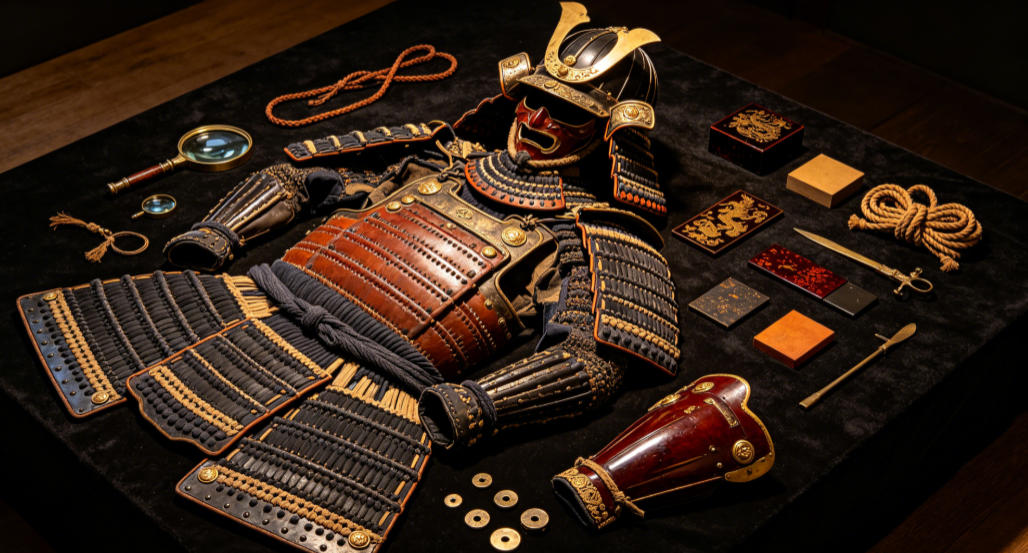
What Is Samurai Japanese Armor and Why Was It Important to Samurai Warriors?
Throughout Japanese history, Samurai Japanese Armor has been far more than a protective battle outfit. It was a cultural symbol representing identity, honor, family heritage, social status, and the spiritual beliefs of the warrior class.
From the magnificent O-Yoroi (Great Armor) worn by aristocratic warriors during the Heian period to the highly practical Tosei Gusoku (Modern Armor) developed during the Sengoku period, Japanese armor evolved through centuries of warfare and craftsmanship, eventually becoming one of the most recognizable traditional armor systems in world history.
For modern collectors, Japanese history enthusiasts, and researchers of samurai culture, armor of a samurai is not simply an ancient defensive tool. It is a historical witness that tells stories of warfare, loyalty, honor, and traditional Japanese craftsmanship.
What Is Samurai Japanese Armor?
Samurai Japanese Armor was the traditional protective equipment used by the Japanese samurai class during warfare and military activities. It was not only designed to protect warriors from swords, arrows, and battlefield attacks but also represented the samurai’s identity, family honor, social position, and dedication to the principles of Bushido (the way of the warrior).
Unlike European medieval knight armor, which often used large metal plates covering the body, Japanese samurai armor focused on achieving a balance between protection and mobility.
Traditional Japanese armor was made from many small iron plates called Kozane and leather pieces, which were connected together through a complicated lacing system known as Odoshige. This unique construction allowed the armor to move naturally with the warrior’s body, providing flexibility when riding horses, shooting arrows, wielding a Katana, or using weapons such as the Yari (Japanese spear).
Early armor of a samurai was mainly designed for mounted archery combat. Therefore, it emphasized protecting the torso and shoulders while allowing freedom of movement on horseback.
However, during the Sengoku period, warfare changed dramatically. With larger armies and the introduction of firearms such as the Tanegashima matchlock gun, samurai armor gradually developed stronger defensive structures, including reinforced chest plates and larger metal protection areas.
A complete set of traditional samurai armor usually consisted of several important components:
- Kabuto (兜, Samurai Helmet): Used to protect the head and also served as an important symbol of a warrior’s identity. Many famous samurai commanders decorated their helmets with crescent moons, deer antlers, dragons, and other unique ornaments to display their power and family heritage.
- Menpo (Samurai Mask): A facial armor piece that provided protection while creating a powerful psychological effect on the battlefield. Some masks were designed with Oni (Japanese demon) features or fierce expressions to represent courage and intimidation.
- Do (胴, Chest Armor): The central protective part of samurai armor, designed to protect the chest and abdomen. It was usually made with iron plates, leather, and traditional Japanese lacquer techniques.
- Sode (袖, Shoulder Armor): Large shoulder guards that protected the warrior while also serving as an important area for displaying family symbols and clan identity.
- Kusazuri (草摺, Waist Skirt Armor): Protective pieces attached below the waist, made of multiple small plates that protected the lower body without restricting movement.
- Kote (籠手, Arm Armor): Designed to protect the arms and forearms while allowing warriors to maintain effective attacking and defensive movements.
- Haidate (佩楯, Thigh Armor): Protective armor for the upper legs, usually made by combining metal plates with fabric materials.
- Suneate (臑当, Shin Armor): Armor designed to protect the lower legs from battlefield injuries.
Together, these components formed a complete set of Samurai Japanese Armor.
Beyond its practical battlefield function, Japanese samurai armor also had significant artistic value. Different clans used colors, patterns, metal decorations, and Mon (family crests) to display their identity.
For example, powerful Daimyo (feudal lords) and high-ranking samurai often owned highly customized and decorative armor, while ordinary warriors and Ashigaru (foot soldiers) used simpler equipment designed mainly for practicality and efficiency.
Therefore, armor of a samurai was not merely a piece of battlefield equipment. It was a combination of Japanese history, traditional craftsmanship, warrior philosophy, and family culture.
From the early O-Yoroi (Great Armor) of the Heian period to the advanced Tosei Gusoku (Modern Armor) of the Sengoku period, samurai armor witnessed centuries of warfare and became one of the most fascinating forms of historical armor in the world.

The Origin of Samurai Armor: From Mounted Aristocrats to Battlefield Warriors
The development of Japanese samurai armor was closely connected with the rise of the samurai class. During the Heian period (794–1185), as the central government gradually lost control over regional areas, local aristocrats began creating their own private armies. Over time, these warriors developed into the powerful samurai class that would eventually shape Japanese history.
During this early period, samurai warriors mainly fought as mounted archers. Therefore, the design of early Japanese armor focused on protecting vital body areas while allowing warriors to maintain mobility on horseback.
This period gave birth to one of the most famous forms of traditional Japanese armor:
O-Yoroi (Great Armor)
The O-Yoroi (大鎧) was the representative armor worn by high-ranking samurai during the Heian period.
It featured:
- Large shoulder guards
- Heavy chest protection
- Complex colorful lacing
- Elaborate family decorations
O-Yoroi was not merely a piece of battlefield equipment. It was also a symbol of samurai identity, social position, and family honor.
During this era, samurai placed great importance on reputation and personal honor. Before battles, warriors often performed a ritual called Nanori (名乗り), where they announced their name, family lineage, and achievements to their opponents.
This tradition reflected one of the earliest principles of samurai culture:
Honor was often considered more valuable than life itself.
The Genpei War: The Era When Samurai Armor Became Legendary
In the history of Japanese samurai armor, the Genpei War (1180–1185) was a major turning point.
This famous conflict was fought between two powerful warrior clans:
- The Minamoto Clan (源氏)
- The Taira Clan (平氏)
The war played a crucial role in the rise of the samurai government and eventually led to the establishment of the Kamakura shogunate.
One of the legendary warriors of this period was:
Minamoto no Yoshitsune
Known for his exceptional military skills, Yoshitsune became famous for his brilliant strategies and battlefield tactics.
One of his most famous victories was the:
Battle of Ichi-no-Tani
During this battle, Yoshitsune reportedly led a surprise cavalry attack through difficult terrain, demonstrating the mobility and tactical advantage of mounted samurai warriors.
During the Genpei War period, samurai armor still focused heavily on mounted archery combat.
Its main purposes were:
- Protecting against arrows
- Supporting horseback combat
- Displaying clan identity and warrior status
Samurai armor gradually transformed from a simple defensive tool into an important symbol of warrior culture.
The Kamakura Period: Samurai Armor Becomes More Practical
After Minamoto no Yoritomo established the Kamakura Shogunate, Japan entered an era dominated by the samurai class.
As warfare changed, traditional mounted archery became only one part of combat. Close-range fighting became increasingly important, requiring armor that was lighter and more practical.
The Mongol invasions of Japan in 1274 and 1281 also influenced Japanese armor development.
Facing the large-scale military tactics of the Mongol armies, Japanese warriors began to focus more on:
- Greater mobility
- Wider protection coverage
- Practical battlefield performance
During this period, a new armor style appeared:
Do-Maru (胴丸)
Compared with the earlier O-Yoroi, Do-Maru was lighter and more flexible.
It was better suited for:
- Infantry combat
- Long battles
- Rapid movement
Do-Maru represented an important change in Japanese armor philosophy:
From a symbol of aristocratic status toward a design focused on real battlefield needs.
The Sengoku Period: The Golden Age of Samurai Armor
If there was one period when Japanese armor reached its peak development, it was the:
Sengoku Period (1467–1615)
Known as the 'Age of Warring States,' this was one of the most turbulent periods in Japanese history.
For more than a century, powerful feudal lords fought for territory and political control. As warfare became larger and more complex, samurai armor continued to evolve.
Some of the most famous samurai leaders of this period included:
- Oda Nobunaga
- Takeda Shingen
- Uesugi Kenshin
- Date Masamune
Each of these legendary warriors had distinctive armor designs that represented their personality, clan identity, and military reputation.
Samurai armor during this era was not only designed for protection. It also served as a visual symbol that allowed warriors to be recognized on the battlefield.
Tosei Gusoku: The Representative Armor of Sengoku Samurai
The most iconic armor style of the Sengoku period was:
Tosei Gusoku (当世具足)
Compared with traditional O-Yoroi, Tosei Gusoku was designed to meet the demands of a new era of warfare.
Its advantages included:
- Stronger protection
- Lighter construction
- Easier production
- Better suitability for large armies
In 1543, Portuguese traders introduced firearms to Japan. The arrival of the Tanegashima matchlock gun dramatically changed Japanese warfare.
Traditional armor that was designed mainly against arrows and swords needed to adapt to firearms.
As a result, samurai armor began incorporating:
- Thicker metal plates
- Stronger chest protection
- Larger areas of iron coverage
This transformation marked a new stage in the evolution of Samurai Japanese Armor.
Main Components of Armor of a Samurai
A complete armor of a samurai consisted of many carefully designed components. Each part had both practical and symbolic importance.
Kabuto: The Samurai Helmet
The Kabuto (兜) is one of the most recognizable parts of Japanese samurai armor.
Besides protecting the head, it was also an important symbol of identity and status.
Many famous samurai commanders designed unique helmets featuring:
- Dragons
- Deer antlers
- Crescent moons
- Demon ornaments
- Family crests
For example, Date Masamune, one of Japan’s most famous Sengoku warriors, became legendary for his distinctive crescent moon helmet.
The large golden crescent decoration made him instantly recognizable on the battlefield and became one of the most famous samurai helmet designs in history.
Menpo: The Samurai Mask
The Menpo was a facial armor piece designed to protect the face while creating a psychological impact.
Many samurai masks featured designs inspired by:
- Oni (Japanese demons)
- Elderly faces
- Fierce expressions
These intimidating designs were not only artistic choices. They were also intended to influence enemy morale and create fear during combat.
In Japanese culture, the image of the Oni represented strength and supernatural power, making it a suitable symbol for warriors seeking to display courage and determination.
Do: The Chest Armor
The Do (胴) is the central protective component of samurai armor.
It was designed to protect the warrior’s chest and abdomen, which were among the most vulnerable areas during combat.
Traditional Do armor was usually made from:
- Iron plates
- Leather components
- Japanese lacquer coating
The use of Japanese lacquer (Urushi) was especially important because it helped protect metal parts from rust and moisture while also creating beautiful colors and decorative finishes.
For high-ranking samurai and feudal lords, chest armor was often decorated with gold, silver, and intricate patterns to demonstrate wealth, power, and family status.

Sode and Kusazuri: Shoulder and Skirt Armor
The Sode (袖) were large shoulder guards used to protect the shoulders and upper arms.
Besides their defensive function, Sode also served as an important area for displaying clan identity. Many samurai families decorated their armor with unique colors, patterns, and Mon (family crests).
The Kusazuri (草摺) was the skirt-like armor attached below the waist.
It was made of multiple small plates connected together, allowing it to protect the lower body while maintaining freedom of movement.
This design reflected one of the most important principles of Japanese armor:
A perfect balance between protection and mobility.
Unlike heavy European armor that could restrict movement, Japanese samurai armor was carefully designed to allow warriors to move quickly during mounted combat and close-range fighting.
Samurai Armor Ranks: The Relationship Between Armor and Social Status
In feudal Japan, samurai armor ranks were closely connected with social hierarchy and military status.
The appearance, materials, and complexity of armor often reflected the rank and wealth of the warrior.
High-ranking samurai, powerful feudal lords, and ordinary soldiers usually used very different types of equipment.
Daimyo: The Armor of Feudal Lords
The Daimyo (大名) were powerful feudal lords who controlled large territories and commanded armies.
Their samurai armor was often the most impressive and luxurious.
Daimyo armor usually featured:
- Complex craftsmanship
- Expensive materials
- Elaborate decorations
- Family crest symbols
These armors were not only battlefield equipment but also symbols of political power and authority.
A daimyo’s armor could communicate his identity and influence even before the battle began.
Hatamoto: Elite Samurai Warriors
The Hatamoto (旗本) were elite samurai who served directly under the shogun.
Because of their higher social position, they usually possessed:
- High-quality weapons
- Customized armor
- Better craftsmanship
Their equipment reflected their privileged status within the samurai hierarchy.
Ashigaru: The Common Foot Soldiers
The Ashigaru (足軽) were ordinary infantry soldiers who formed a major part of many samurai armies.
Unlike high-ranking samurai, their armor focused mainly on:
- Practicality
- Lightweight construction
- Mass production
- Battlefield efficiency
Although their equipment was simpler, Ashigaru played a crucial role in the wars of the Sengoku period.
The rise of organized Ashigaru armies changed Japanese warfare by making battles larger and more strategic.
The Craftsmanship Behind Samurai Japanese Armor
Creating a high-quality Samurai Japanese Armor required the cooperation of many specialized craftsmen.
Traditional armor production involved:
- Metalworkers
- Lacquer artists
- Leather craftsmen
- Lacing specialists
Each craftsman contributed unique skills to create a functional and beautiful piece of armor.
The small iron plates used in Japanese armor were carefully shaped and connected together. The complex colored lacing system was not only decorative but also played an important structural role.
Traditional Japanese lacquer, known as Urushi, provided several benefits:
- Protecting metal from corrosion
- Increasing durability
- Creating beautiful finishes
- Adding artistic value
Because of the amount of time and skill required, a complete samurai armor set could take months or even longer to produce.
This makes traditional samurai armor one of the most impressive examples of Japanese craftsmanship.
Why Is Samurai Armor Still Popular Today?
Today, samurai armor remains highly popular among collectors, historians, martial arts enthusiasts, and fans of Japanese culture around the world.
The reasons include:
- Rich Japanese historical value
- Unique artistic design
- Traditional craftsmanship
- Connection with samurai philosophy
- Influence from movies, anime, and video games
Modern collectors often search for:
- Japanese samurai armor replica
- Traditional samurai armor
- Handmade samurai armor
- Samurai armor display sets
These pieces are not only decorative collectibles but also representations of Japanese history and warrior traditions.
For many enthusiasts, owning samurai armor means owning a piece of a legendary era filled with courage, discipline, and honor.
Conclusion: Samurai Japanese Armor Represents the Spirit of the Samurai
Samurai Japanese Armor was never simply a piece of battlefield equipment.
It recorded the development of the Japanese warrior class and reflected the values that shaped samurai society, including:
- Honor
- Loyalty
- Discipline
- Courage
- Family pride
The true meaning of armor of a samurai goes beyond physical protection. It represents the identity, beliefs, and spirit of the warrior who wore it.
From the elegant O-Yoroi (Great Armor) of the Heian period to the advanced Tosei Gusoku of the Sengoku era, Japanese samurai armor evolved alongside centuries of warfare and cultural change.
Today, it remains one of the most fascinating forms of historical armor in the world, connecting modern audiences with the legendary history of the Japanese samurai.

