


Spartan Sword History, Evolution & Ancient Greek Warrior Weapon Guide
- โพสต์โดย COOLKATANA
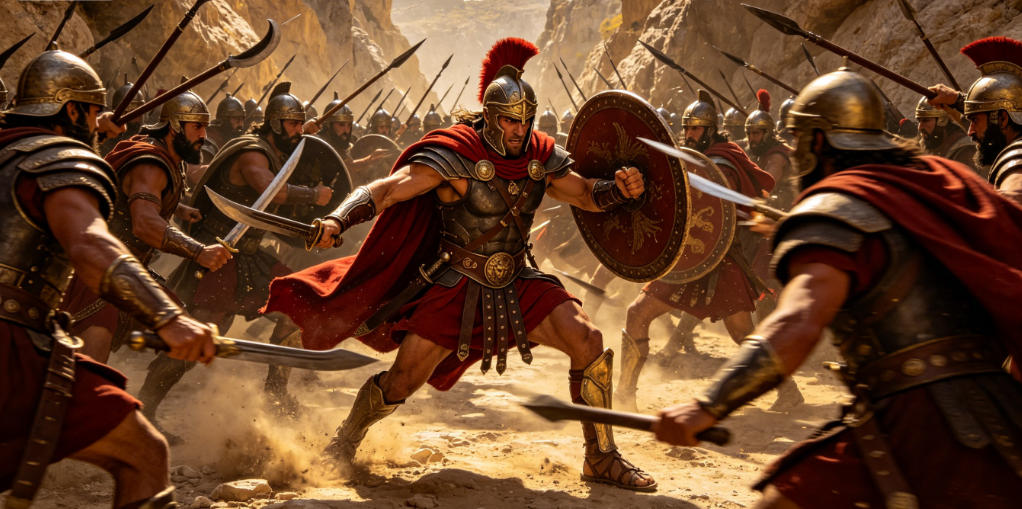
What Was the Spartan Sword and How Did Spartan Warriors Use It in Battle?
In ancient Greek military systems and classical warfare history, the spartan sword is one of the most iconic close-combat weapons used by Spartan warriors. It was not only a practical battlefield tool but also a reflection of Sparta’s highly militarized society and warrior culture. In recent years, with the growing interest in ancient Greek weapons research, Spartan history studies, historical weapon collecting, and cinematic recreations, the spartan sword has become a high-traffic keyword in global search trends.
What Is the Spartan Sword? Historical Positioning
In strict ancient Greek military systems, the spartan sword (spartan sword) generally refers to the secondary close-combat weapon used by Spartan hoplites after their spear became unusable. Its historical prototype is commonly associated with the Greek xiphos, but within Spartan culture it was elevated beyond a simple backup weapon into a “final survival tool” for extreme battlefield situations.
The Spartan army was famous for its phalanx (phalanx formation), a tightly packed shield-and-spear system designed for collective pressure warfare. In ideal conditions, combat was dominated entirely by spears, with personal weapons rarely coming into play. However, in real battles, once the formation broke, spears shattered, or fighting closed into extreme proximity, the nature of combat changed instantly—and the spartan sword became decisive.
In this transition, the sword played three key roles: first, as a replacement weapon after spear failure, maintaining offensive capability when ranged reach was lost; second, as a melee weapon after phalanx collapse, where soldiers entered chaotic close combat; and third, as a shield-supported close-range tool, used alongside the shield for rapid strikes and survival space control. In this sense, the spartan sword was not a primary weapon but a 'second-stage survival system,' representing the Spartan principle of continuing to fight under any condition.

Historical Background: Sparta and the Formation of Greek Warfare
Sparta, located in the Peloponnesian Peninsula, was one of the most militarized city-states in ancient Greece. From around the 9th century BCE, Sparta developed a state system centered on military training known as the Agoge system, where all male citizens underwent lifelong combat education.
Within this system, Spartan warriors (Spartiates) relied on three core pieces of equipment:
- Dory (spear): primary offensive weapon for phalanx warfare
- Aspis (shield): defensive anchor of the formation
- Spartan sword (xiphos-type weapon): final close-combat weapon
In Greek warfare, victory was not determined by individual skill but by the integrity of the formation. Once the phalanx broke, the spartan sword became essential for survival in close combat.
Origins: From the Bronze Age to the Iron Age
The development of the spartan sword can be traced back to the Mycenaean civilization (circa 1600–1100 BCE), where bronze short swords were used. With the transition to the Iron Age, Greek weapon design evolved significantly:
Key Evolution Path:
- Bronze short swords → Iron short swords
- Heavy cutting weapons → lightweight thrusting-focused weapons
- Elite weapons → standardized hoplite equipment
By around the 7th century BCE, with the rise of the Spartan military system, the short sword became a standardized part of hoplite gear.
Battlefield System: The Real Role of the Spartan Sword
Ancient Greek warfare was centered on phalanx warfare. Within this system, the spartan sword was not the primary offensive tool but a secondary survival weapon used when the formation collapsed.
Combat Phases:
1. Phalanx Advance Phase (Primary Combat Phase)
- Spears dominate combat
- Shields form a defensive wall
- Swords are rarely used
2. Close Engagement Phase
When opposing phalanxes collide:
- Spears break or become unusable
- Combat shifts into extremely close range
At this point, the spartan sword becomes active.
3. Collapse and Melee Phase
Once formations fully break:
- Soldiers fight individually
- Sword becomes primary weapon
- Shield-and-sword combat intensifies

Design Logic and Combat Characteristics
Although variations existed, the spartan sword (xiphos-type) generally featured:
✔ Compact Blade Design
Short blade optimized for close-range fighting behind shields in dense formations.
✔ Double or Single Edge
Flexible usage for both stabbing and slashing in chaotic combat.
✔ Balanced Center Weight
Allowed rapid directional changes and fast reaction in melee situations.
✔ Simplified Grip Design
Standardized for mass military production and shield-based fighting posture.
This design fully served Sparta’s high-intensity close-combat survival doctrine.
Spartan Military Culture: Why the Sword Matters
In Spartan society, weapons were not only tools but symbols of identity. The spartan sword represented:
- Final proof of a warrior’s identity
- Survival after formation collapse
- Extension of civic military discipline
- The philosophy of 'never retreat, never surrender'
Spartan education emphasized that warriors must remain combat-capable at all times—even if the spear breaks, they must continue fighting with the sword.
Historical Battles: Real Use of the Spartan Sword
In major Greek conflicts, the spartan sword was not the primary weapon, but it became critical in extreme close-range or collapsed formation scenarios. Its importance was most evident in the second half of battles—when spears failed and formations dissolved.
One of the most famous examples is the Battle of Thermopylae. In the narrow terrain and extremely intense close combat, Spartan hoplites initially resisted Persian forces using spears and shield walls. However, as combat shifted into grappling distance and spears broke, warriors relied on swords for close-range stabbing and slashing. In this extreme environment, the spartan sword was not a tactical choice but a survival instinct tool used to maintain the final defensive line.
Another important context is the Peloponnesian War, a prolonged conflict between Greek city-states. Large-scale phalanx battles frequently degenerated into chaotic melee combat. Once formations collapsed or combat became indistinguishable, the sword became the primary weapon for rapid killing and counterattacks. In night battles, ambushes, or post-siege engagements, the spartan sword often served as a “cleanup weapon” in the final stage of combat.
These real battlefield conditions reinforced the historical identity of the spartan sword: not a decisive strategic weapon, but the last resort weapon (last resort weapon) used in the most dangerous, chaotic, and unpredictable phases of warfare.
Cultural and Mythological Influence
Over time, the spartan sword evolved beyond a historical weapon into a cultural symbol:
- Symbol of ancient Greek heroic epics
- Representation of Greek military heritage in Roman culture
- Modern cinematic icon (e.g., 300)
It now represents an abstract concept of:
discipline, courage, and extreme combat endurance
Conclusion: Historical Significance of the Spartan Sword
As an essential component of the Spartan military system, the spartan sword was more than a secondary weapon—it was an extension of Sparta’s entire warrior culture.
It reflects the evolution of ancient Greek warfare from the Bronze Age to the Iron Age and embodies the harsh reality of phalanx combat, where order and chaos coexist.
Today, it remains a powerful symbol in historical research, cinematic storytelling, and global weapon collecting culture.

