


Spartan Sword History: Origins, Meaning & Ancient Greek Weapon Guide
- โพสต์โดย COOLKATANA
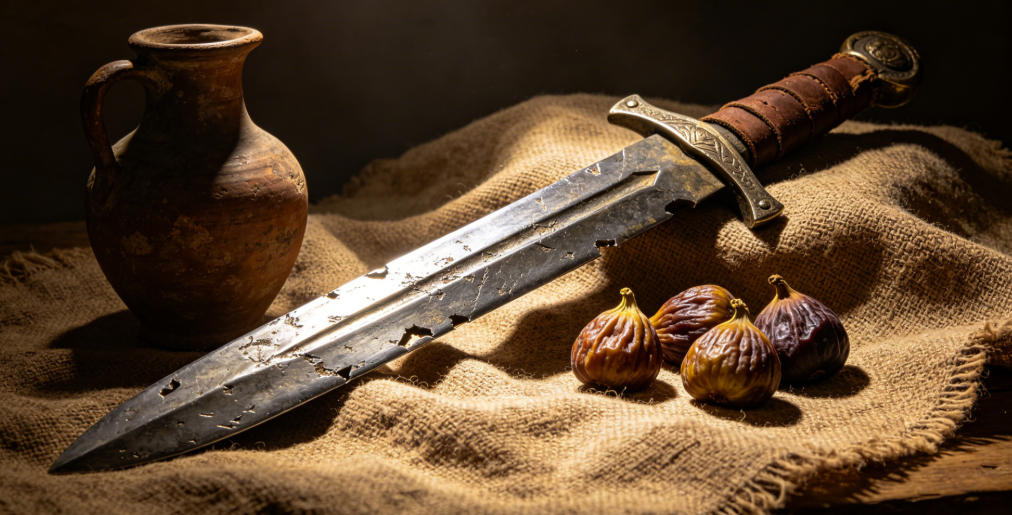
What Is the Spartan Sword and Why Was It So Important in Ancient Greek Warfare?
In the ancient world of bladed weapons, the Spartan sword stands as one of the most iconic arms of ancient Greece. More than just a close-combat short sword, it embodies the core values of Spartan civilization—discipline, courage, and extreme efficiency. Whether in ancient Greek weapon history research, Spartan sword replica collecting, or searches related to the movie 300, this legendary weapon continues to maintain strong global interest.
What Is the Spartan Sword?
The Spartan sword typically refers to the Xiphos, a short sword used by Spartan hoplites in ancient Greece. It served as a secondary weapon within the famous Greek phalanx warfare system and was designed specifically for close-quarters combat when the spear was no longer usable.
Its core role is very clear:
The spear dominates long-range formation combat, while the Spartan sword is used for close-range survival, defense, and finishing strikes.
In Spartan combat doctrine, this sword was not the primary weapon, but rather the 'final survival tool' in battle.
Key Features of the Spartan Sword:
- Short blade design (around 40–60 cm): ideal for dense formations and chaotic melee combat
- Double-edged blade: supports both thrusting and slashing attacks for greater efficiency
- Lightweight structure: allows prolonged combat and quick transitions
- Shield synergy (Aspis integration): designed to work with the iconic round shield in offensive-defensive coordination
- Forward-balanced grip: improves control and enables fast, precise strikes in close range
Within the system of ancient Greek weapons, the Spartan sword is considered one of the most practical tactical short swords ever developed.

Historical Origins and the Spartan Warrior System
The Spartan sword originated during the Greek city-state warfare period (around 8th–4th century BCE) and reached its peak usage within the highly disciplined Spartan military society.
A Spartan warrior (Spartiates) was trained from childhood and equipped with a standardized gear set:
- Spear (Dory)
- Round shield (Aspis)
- Helmet, armor, and greaves
- Spartan sword (Xiphos)
During major conflicts such as the Greco-Persian Wars and the Peloponnesian War, this weapon system proved extremely effective.
When formations broke or battles turned into chaotic melee, the Spartan sword became a decisive survival weapon.
Design and Combat Logic of the Spartan Sword
1. Short Blade Structure: Built for Phalanx Warfare
With a length of approximately 40–60 cm, the Spartan sword was optimized for tight battlefield conditions:
- Striking through gaps between shields
- Quick reaction in crowded combat environments
- Minimal swing space requirement
In Greek hoplite close combat, this compact design offered a significant tactical advantage.
2. Double-Edged Blade: Balanced Offense and Defense
The double-edged structure allowed:
- Thrusting attacks
- Slashing strikes
- Rapid counterattacks
Compared to single-edged weapons, it offered greater versatility in chaotic battlefield conditions.
3. Balanced Design: High Control and Fast Transitions
With a center of gravity close to the grip, warriors could:
- Quickly switch attack angles with one hand
- Coordinate seamlessly with a shield
- Deliver rapid consecutive strikes in short intervals
This made it ideal for the fast-paced combat rhythm of Spartan warfare.
Role in Spartan Phalanx Warfare
The Spartan phalanx (Phalanx formation) was a highly organized battle system:
- Front line shields formed a defensive wall
- Spears extended outward for long-range strikes
- Rear ranks provided reinforcement
The Spartan sword became crucial when:
- The formation broke apart
- Close combat intensified
- Enemy forces breached the line
- The battlefield became chaotic
At this stage, the sword served as the ultimate 'last resort weapon.'
Comparison: Spartan Sword vs Other Ancient Weapons
vs Roman Gladius
- Spartan sword: lighter, more flexible, emphasizes speed and thrusting
- Gladius: heavier, more penetration-focused, designed for decisive kills
vs Persian Weapons
- Spartan sword: optimized for formation warfare
- Persian weapons: more suited for cavalry and mobility combat
vs Spears
- Spear: long-range control advantage
- Spartan sword: close-range finishing power
Conclusion: The Spartan sword is not a ranged dominance weapon, but a decisive close-combat tool.

Cultural Symbolism of the Spartan Sword
In ancient Greek culture, the Spartan sword represents more than a weapon—it symbolizes:
- Discipline
- Courage
- Strategic combat thinking
- Spartan national identity
The modern concept of the 'Spartan spirit' directly originates from this military philosophy.
Influence in Modern Film and Popular Culture
In modern culture, the Spartan sword has evolved into a powerful visual and symbolic icon. Thanks to movies, video games, and collectible markets, it has become one of the most recognizable ancient weapons worldwide, driving high search volume for terms such as Spartan sword replica and Greek sword collectible.
Film Representation: A Visual Symbol of Spartan Aesthetics
The most iconic depiction of the Spartan sword comes from the film 300. The movie stylizes Spartan combat with highly dramatic choreography, showcasing the sword-and-shield system as a brutal and efficient fighting style.
In films, the weapon is often portrayed as:
- A high-intensity close-combat tool
- Part of a shield-based offense-defense system
- A fast, aggressive slashing weapon emphasizing physical confrontation
Other ancient war films also use the Spartan sword as a standard 'heroic warrior weapon,' symbolizing courage, discipline, and honor.
This cinematic portrayal has made 'Spartan sword movie weapon' a popular search term.
Gaming Experience: Interactive Ancient Combat
In video games, the Spartan sword is transformed into a playable combat system, allowing users to experience ancient Greek warfare directly.
Notable titles include:
- Assassin’s Creed Odyssey: highly accurate ancient Greek weapon system
- Total War: Rome / Troy: emphasizes formation warfare and melee cleanup phases
- God of War (Greek era): stylized Spartan-inspired combat mechanics
In these games, the Spartan sword typically features:
- High attack speed
- Combo-based melee combat
- Shield synergy mechanics
- Emphasis on close-range reaction combat
This has made 'Spartan sword gameplay' a popular topic in gaming communities.
Collectibles and Replica Market
Today, the Spartan sword has become a major category in the global replica weapon and historical collectible market.
🔹 Spartan sword replica
- Historically inspired Xiphos designs
- Made from carbon steel or stainless steel
- Used for display or historical appreciation
🔹 Greek sword decorative collectibles
- Focus on aesthetic and historical accuracy
- Popular for home and office decoration
- Strong ancient Greek visual appeal
🔹 Cosplay and stage props
- Used for Spartan warrior roleplay
- Film and theater productions
- Balanced between safety and realism
Why Is the Spartan Sword Still So Popular?
Its lasting popularity comes from several factors:
- Historically authentic weapon
- Strong influence of ancient Greek civilization
- Continuous exposure in films and games
- Simple but highly effective design
- Stable collectible and decorative market demand
- High SEO search volume for 'Spartan sword' keywords
Conclusion: The Timeless Legacy of the Spartan Sword
The Spartan sword is far more than an ancient weapon—it is a symbol of Spartan military civilization itself. From phalanx warfare in ancient Greece to modern cinematic and gaming culture, it continues to represent the ultimate ideals of discipline, efficiency, and warrior spirit.
Whether studied as an ancient Greek short sword, collected as a Spartan replica weapon, or admired as a cultural icon, the Spartan sword remains one of the most enduring and influential weapons in human history.
The spartan sword remains a legendary ancient greek sword associated with the bravery of the ancient spartans and battles such as the battle of thermopylae. Today, collectors can find modern replicas crafted with a durable high carbon steel steel blade, offering a historical alternative to a traditional medieval sword and a unique piece to add to cart for sword enthusiasts.

