


Sword Dance History & Meaning: Ritual, Combat & Performance Evolution
- โพสต์โดย COOLKATANA
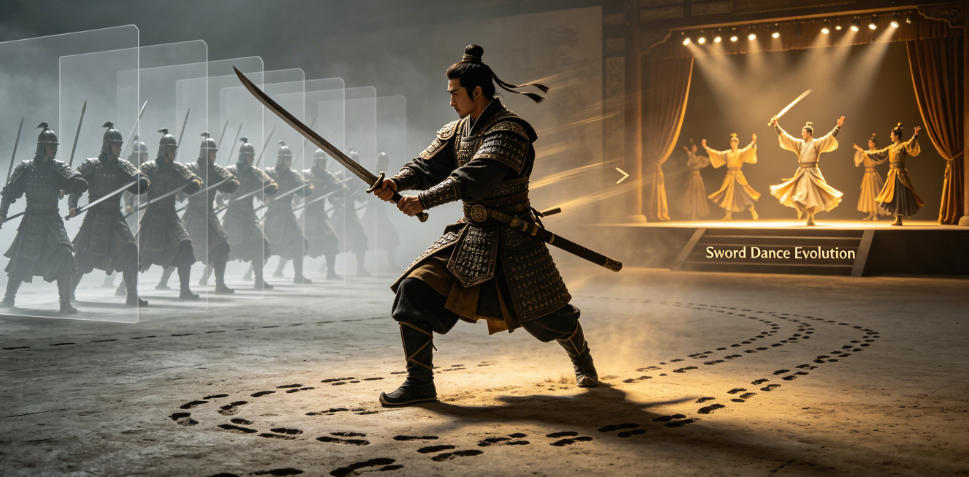
What is sword dance and how did it evolve from combat training into ritual and modern performance art?
In global cold weapon culture, sword dance (sword dance) is a highly expressive and historically rich traditional form. It is far more than simply 'dancing with a sword.' Instead, it represents a complex cultural expression that integrates combat techniques, religious rituals, physical training, and stage performance.
Unlike purely practical martial systems, sword for dance (dance-oriented sword) emphasizes rhythm control, body coordination, and visual storytelling. It is one of the clearest examples of how weapons were transformed into artistic tools throughout human history.
With rising search trends such as 'sword dance history,' 'traditional sword choreography,' 'ceremonial sword performance,' and 'Celtic sword dance meaning,' sword dance has become an important subject in martial arts research, choreography design, historical studies, and film production.
What is sword dancing called?
1. The Origin of Sword Dance: From Battlefield Training to Ritual Expression
The earliest form of sword dance originated from ancient military training systems.
In eras without modern fitness science, soldiers trained repetitive weapon movements to develop:
- Arm strength
- Footwork coordination
- Reaction speed
- Weapon control accuracy
Over time, these repetitive drills naturally became rhythmic and structured—eventually resembling dance-like patterns. This is considered the earliest prototype of sword dance.
From battlefield practice to ritual meaning
As warfare decreased or societies stabilized, these combat movements gradually gained symbolic meaning:
- Victory celebrations
- Tribal rituals
- Religious ceremonies
At this stage, sword for dance shifted from a combat tool into a cultural and symbolic expression.
The sword was no longer just a weapon—it became a representation of courage, identity, and order.

2. The Evolution Path of Sword Dance: Combat, Ritual, and Art
The evolution of sword dance was not sudden. It developed gradually through a long transformation process:
Combat training → Ritual symbolism → Performing arts
This progression reflects both changes in weapon usage and shifts in human cultural development.
1. Combat Training Stage (Combat Training Origin)
The earliest stage of sword dance originated from real combat training systems.
At this stage, every movement served practical battlefield efficiency:
- Strike, block, and thrust combinations
- Footwork and distance control
- Rapid attack-defense transitions
- Coordination between body and weapon
Through continuous repetition, soldiers built muscle memory and improved battlefield survival capability.
These movements eventually formed structured rhythm patterns such as “attack → defense → turn → counterattack.” Over time, this rhythm-based training began to resemble a primitive form of dance.
👉 In this stage, sword dance was not art—it was a high-intensity combat training system.
2. Ritual Transformation Stage (Ritual Transformation)
When warfare declined or societies became more stable, combat movements gradually gained cultural and symbolic meaning.
At this stage, sword for dance transformed from a killing tool into a symbolic instrument.
Common forms included:
- Victory ceremonies
- Tribal or national rituals
- Religious performances symbolizing order and power
During this phase, sword dance emphasized symbolism rather than effectiveness.
Key changes included:
- Reduced emphasis on killing techniques
- Stronger rhythmic expression
- Structured formations and spatial design
- Increased performative elements
👉 Sword dance became a cultural language rather than a training method.
3. Performance Evolution Stage (Modern Stage)
In modern society, sword dance fully evolved into a performing art form used in stage productions and choreography.
Its main characteristics include:
- Precise synchronization with music
- Dramatic storytelling through movement
- Emphasis on spatial aesthetics and body lines
- Integration of dance, martial arts, and theater
At this stage, sword for dance focuses entirely on visual impact and emotional expression rather than combat logic.
Examples include:
- Fast spins to express tension or conflict
- Pauses to enhance dramatic effect
- Group choreography to create ceremonial visuals
👉 Sword dance becomes a cross-disciplinary art form combining history, movement, and aesthetics.
3. Technical Structure of Sword for Dance
1. Motion Logic: From Killing to Expression
Unlike combat swordsmanship, sword for dance follows a completely different logic:
- Continuous flowing motion
- Visual trajectory over efficiency
- Larger movement amplitude
- Strong emphasis on rhythm and aesthetics
Each movement becomes a form of 'body language.'
2. Weapon Design for Performance
Swords used in sword for dance are often specially designed:
- Lighter weight for reduced fatigue
- Blunted or safety-optimized edges
- Forward-balanced control system
- Enhanced rotational stability
Some training swords eliminate sharp edges entirely to ensure safety during fast movement.
3. Body Control System
Sword dance requires advanced physical coordination:
- Core stability
- Wrist precision control
- Footwork rhythm awareness
- Synchronization between body and weapon
👉 A skilled sword dancer is essentially a 'dynamic movement control specialist.'

4. Global Forms of Sword Dance
1. Celtic Sword Dance
Traditional Scottish and Irish sword dance is one of the most well-known forms:
- Strong footwork synchronization
- Cross-step and rotational movements
- Used in festivals and rituals
- Deep cultural symbolism
👉 One of the most iconic sword dance traditions worldwide.
2. Middle Eastern and Persian Sword Dance
- Highly ritualistic movements
- Strong spiritual expression
- Connected to religious and tribal traditions
- Fluid but symbolic choreography
3. Asian Martial Sword Dance Systems
- Integrated with Chinese martial arts and opera
- Combines combat realism and performance
- Frequently used in stage and film productions
- Strong focus on body-sword unity
5. Cultural Meaning of Sword Dance
Sword dance is more than movement—it is cultural language:
- Symbol of warrior spirit
- Expression of social order and authority
- Medium of religious ritual
- Fusion of body and weapon aesthetics
👉 sword for dance represents the artistic transformation of power.
6. Modern Applications: Film, Games, and Global Pop Culture
In modern media industries, sword dance (sword dance) has evolved into a core resource for choreography and motion design.
With the development of motion capture technology, 3D animation, and immersive stage design, its structural logic is widely reused in modern creation.
1. Film Combat Choreography
Modern fight directors extract key elements from sword dance:
- Rhythmic attack sequences
- Spatial movement choreography
- Emotional motion expression
👉 Many iconic fight scenes are essentially structured sword dance sequences.
2. Game Combat Animation
In gaming, sword dance influences:
- Combo system design
- Animation blending and transitions
- Weapon swing arc optimization
Examples include:
- Continuous attack combos
- Boss fight rhythm systems
- High-speed combat animation loops
👉 It has become a foundation of modern combat design systems.
3. Stage & Musical Performance
In theater and musicals, sword for dance is used to create visually powerful performances:
- Beat-synchronized choreography
- Pattern-based group formations
- Light reflection effects from blades
- Narrative-driven movement structure
4. Martial Arts Performance & Cultural Festivals
Sword dance is widely used in cultural festivals:
- Traditional weapon demonstrations
- Physical skill exhibitions
- Cultural exchange performances
- Intangible heritage presentations
👉 It functions as a cultural transmission tool.
7. Sword Dance vs Combat Swordsmanship
| Aspect | Sword Dance | Combat Swordsmanship |
|---|---|---|
| Purpose | Expression & performance | Survival & combat |
| Weapon | Safe performance sword | Sharp combat weapon |
| Movement | Rhythmic & continuous | Efficient & direct |
| Core focus | Aesthetics & structure | Lethality & efficiency |
8. Conclusion: Why Sword Dance Still Exists Today
The endurance of sword dance comes from its unique cultural transformation:
From survival tool → ritual symbol → artistic expression
It preserves the power of combat while transforming it into aesthetic movement.
Today, sword for dance stands as a bridge between history and modern performance culture, continuing to influence global choreography, film, and visual storytelling.

