


Tokugawa Clan Samurai Armor – Black & Blue Kabuto Replica Yoroi
Why Is Tokugawa Clan Samurai Armor So Popular Among Collectors?
Among enthusiasts of Japanese samurai culture and history, Japanese Samurai Armor (Samurai Armor / Nihon Katchū) is not just battlefield equipment—it is a rare and highly valued cultural and artistic collectible. This handmade life-size black and blue Tokugawa clan samurai armor, featuring a unique Kuro Kuwagata Kabuto (black stag horn-shaped helmet), stands out for its historical significance and exquisite craftsmanship, making it a centerpiece for collectors, historians, and cultural enthusiasts alike.
Whether for display, historical education, or film and photography, this armor combines visual impact, historical authenticity, and cultural heritage value, making it a top choice for those seeking high-end Japanese samurai collectibles.
What is a Samurai Armor Called? – Overview of Japanese Samurai Armor History
Japanese Samurai Armor (Samurai Armor / Nihon Katchū) was the protective gear used by samurai on the battlefield and also served as a symbol of social status and identity. Beyond its practical purpose, it embodies deep cultural value and masterful craftsmanship.

1. Origins and Early Development (Heian to Kamakura Periods)
The earliest samurai armor in Japan dates back to the Heian Period (794–1185). These early armors were often simple cloth armor or small metal plates combined with fabric, primarily designed for mounted archery combat.
Early Armor Features:
-
Kawari Gusoku or cloth armor: lightweight and flexible for mounted combat
-
Materials: iron, leather, and cloth
-
Function: protect vital areas while allowing mobility
During the Kamakura Period (1185–1333), the samurai class rose in prominence, and armor design became more systematic. Key developments included:
-
Do-maru and Haramaki: fitted body armor providing enhanced protection
-
Menpo (Face Masks): protect the face and intimidate opponents
-
Kabuto (Helmets): head protection featuring family crests and decorative elements
By this period, samurai armor had evolved into a symbol of status, balancing practicality with aesthetic refinement.
2. Sengoku Period Armor Innovations (15th–16th Century)
The Sengoku Period was Japan’s era of frequent wars and battles among samurai. Armor design underwent significant innovation to meet the needs of foot soldiers, cavalry, and firearm-equipped troops.
Sengoku Armor Features:
-
Reinforced Do-maru and Kote (arm guards)
-
Layered lamellar plates: improved protection while maintaining flexibility
-
Urushi lacquer coating: waterproof, corrosion-resistant, and visually striking
-
Decorative Kabuto and Maedate (front crests): symbolizing authority and family identity
With the introduction of the arquebus (firearm), armor design began to prioritize bullet resistance and weight optimization. During this era, armor became not only a battlefield tool but also a symbol of samurai authority.
3. Edo Period Armor Evolution (17th–19th Century)
During the Edo Period (1603–1868), Japan entered a relatively peaceful era. Armor’s combat function gradually diminished, with ceremonial and display purposes taking precedence.
Features of Edo armor:
-
Tosho / Parade Armor: ornate designs with bright colors for ceremonial use
-
Family crests (Mon) and decorative elements became prominent symbols
-
Black and blue or red armor was used in shogunate and daimyo ceremonies
Edo armor emphasized social status, family honor, and craftsmanship, with visual impact prioritized over battlefield functionality.

4. Cultural Significance of Japanese Samurai Armor
-
Status Symbol: Armor indicated the samurai’s family lineage and social rank
-
Embodiment of Bushido: courage, loyalty, and honor represented through armor
-
Artistic and Craftsmanship Value: hand-forged metal, lacquer, and silk bindings showcase traditional Japanese artisan skills
-
Historical and Collectible Value: today, museums and collectors highly value samurai armor as an important cultural heritage artifact
Modernly, Japanese samurai armor serves as historical education, museum exhibits, cosplay attire, film and photography props, and high-end collectibles. High-quality handmade reproductions maintain historical proportions, materials, and craftsmanship, allowing people to experience the prestige and majesty of the samurai era up close.
1. Exquisite Craftsmanship · Handcrafted Traditional Japanese Armor
This life-size samurai armor is meticulously handmade by experienced artisans, strictly following traditional Japanese armor-making techniques. Every detail reflects the dignity and aesthetic of ancient samurai equipment:
-
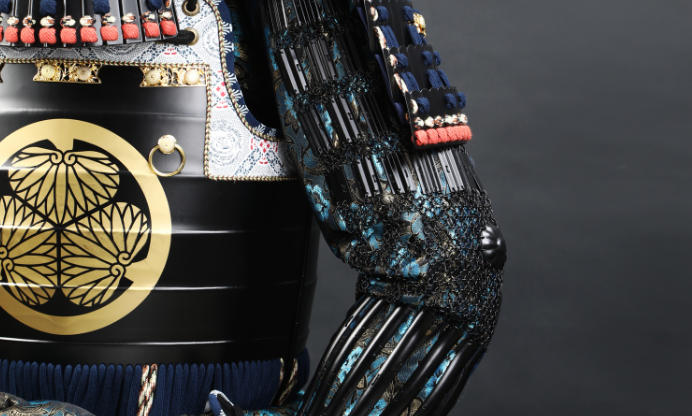
Multi-layer Urushi lacquer craft: Multiple coats of lacquer and careful polishing give the armor a deep luster and excellent corrosion resistance.
-
Metal plate and leather combination structure: Ensures both realistic texture and display value, while allowing use for photography or presentation.
-
Odoshi silk cord bindings: Intricate silk wraps indicate rank and family identity, with blue accents adding a noble touch.
-
Kuro Kuwagata Kabuto (black “insect-shaped” crest): Distinctive design symbolizing authority and samurai status, forming the visual centerpiece of the armor.
This handcrafted high-end armor offers collector-level craftsmanship and detail, while embodying the profound heritage of Japanese traditional armor culture.
2. Cultural Value · Edo Period Samurai Spirit and Collectible Significance
This black and blue Tokugawa samurai armor carries cultural significance far beyond ordinary decorative pieces. It is not just a finely crafted object—it is a collectible that conveys historical depth and samurai spirit.
1. Recreating the Samurai Spirit of the Peaceful Edo Era
Inspired by formal samurai attire of the Edo Period, this armor faithfully reproduces the ceremonial dignity of samurai in a peaceful era. Wearing it evokes the Bushido spirit of loyalty, honor, and dignity, transporting you back to 17th-century Japan.
Every detail reflects samurai protocol and social hierarchy: the lacquered surface, layered plates, and silk cord bindings silently tell the story of responsibility and honor upheld by warriors.
2. Family Symbolism and Historical Significance
The Tokugawa clan, founders of the Edo Shogunate, wielded influence over Japan for nearly three centuries. The black and blue color scheme represents stability, loyalty, and authority, while the intricately designed family crest (Mon) signifies lineage and prestige.
Historically, such armor was worn not only in battle but also during court ceremonies, castle processions, and festival events, symbolizing both protective function and social status. Donning this armor allows you to experience firsthand the order and hierarchy of samurai society in the Edo era.
3. Artistic Collectible and Investment Value
With global interest in Japanese samurai culture and Edo history on the rise, limited-edition life-size handmade samurai armor has become a sought-after cultural and artistic collectible:
-
Craftsmanship value: Hand-forged plates, lacquered finish, and silk cord bindings showcase the artisan’s exceptional skill.
-
Cultural value: Represents Bushido, family heritage, samurai etiquette, and Sengoku-Edo era traditions.
-
Collectible value: Life-size proportions, historical accuracy, and limited availability make it ideal for museums, private collectors, and cultural enthusiasts.
Owning this armor is not merely collecting a work of art—it is preserving history and carrying forward Japanese samurai culture and spirit. It serves as a permanent display piece, a centerpiece for home or corporate decoration, and a perfect prop for historical exhibitions or film production.
3. Display and Usage Scenarios · Multi-functional Application
This black and blue Tokugawa samurai armor is not only historically and culturally significant but also highly versatile for modern display and use:
-
Museum and exhibition display: Serves as a central exhibit in Japanese cultural showcases, presenting Edo-period samurai attire, Bushido spirit, and armor craftsmanship. Life-size and intricately detailed, it creates an immersive and interactive experience for viewers.
-
Home or private collection: Perfect for display in studies, living rooms, private display cabinets, or collection rooms. Its black-and-blue color scheme and detailed family crest add visual impact, showcasing the collector’s appreciation for samurai history, Sengoku culture, and traditional craftsmanship.
-
Film and photography prop: Historically accurate proportions, layered plates, cord bindings, and Kuro Kuwagata Kabuto make it ideal for movies, TV shows, advertisements, or cosplay, adding realism and visual impact to any production.
-
Historical education and reenactments: Suitable for lectures, samurai cultural education, school demonstrations, and historical reenactments. Wearing or displaying the armor allows audiences to experience Edo-period samurai spirit, family honor, and tactical culture directly.
In short, this armor is not just a high-end collectible—it is a multi-functional cultural tool, bridging history and modernity, enhancing space ambiance, enriching educational experiences, and providing authenticity and immersion for film or cultural events.
Handmade Tokugawa Clan Black,Blue Samurai Armor with Kuro Kuwagata Kabuto Helmet Life Size Japanese Yoroi

4. Conclusion · A True Masterpiece of Japanese Samurai Culture
This handmade life-size black and blue Tokugawa clan samurai armor (with Kuro Kuwagata Kabuto) is not only a historically accurate reproduction of traditional samurai equipment—it is a symbol of Japanese samurai spirit and Edo cultural heritage.
Whether you are a samurai culture collector, history enthusiast, film prop buyer, or interior display connoisseur, this armor adds unique value, historical charm, and cultural prestige to your collection.
Bring home this classic armor today—a true representation of traditional craftsmanship, family honor, and the loyalty and virtue of the samurai—and let history continue to live in the present.

