


What Is a Shogun? Japan’s First Shogun and Samurai History Explained
- โพสต์โดย COOLKATANA
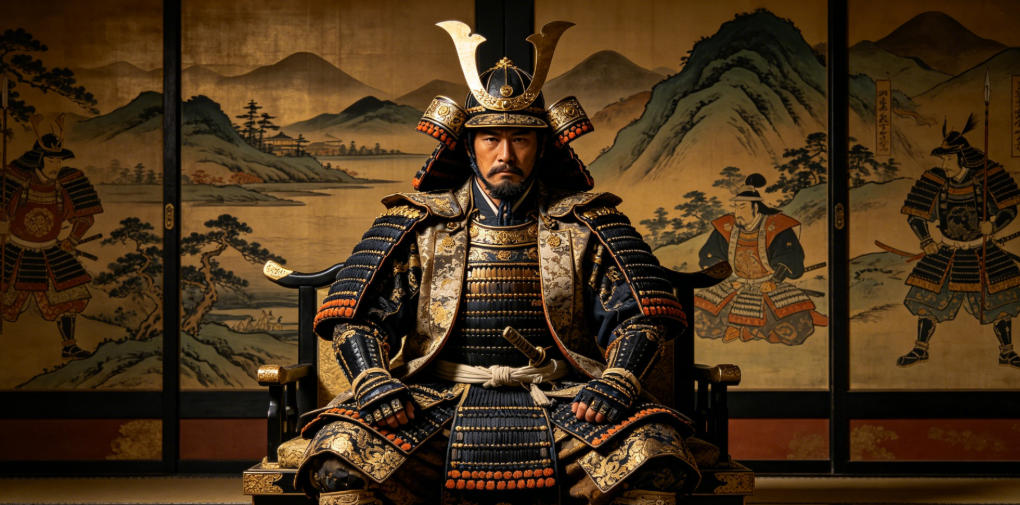
Who Was the First Shogun of Japan and How Did Shogun Japan Begin?
In Japanese history and samurai culture, the term 'Shogun' is not just a title—it represents an entire system of real political and military power. Whether in historical research, anime culture, or search queries like 'shogun japan' and 'what is a shogun', this concept remains central to understanding Japan’s feudal society.
But what exactly is a Shogun? Who was the first Shogun of Japan? And how did the shogunate system reshape the country’s history? Behind these questions lies a political evolution that lasted nearly 700 years.
I. What Is a Shogun?
In historical context, a Shogun (Sei-i Taishogun, 征夷大将军) was a supreme military commander appointed by the Japanese Emperor. However, in practical terms—especially during Japan’s feudal era such as the Tokugawa Shogunate—the Shogun was often the true ruler of the country.
This created a dual structure of authority: the Emperor retained symbolic and religious legitimacy, while the Shogun held real power over military, political decision-making, taxation, and land distribution. In essence, the Shogun functioned as the “ultimate executive authority” of the state.
In the shogunate system (Bakufu), the government itself was essentially a military administration led by the Shogun. He controlled regional lords (Daimyo) through a feudal loyalty network and maintained national order through the samurai class. Therefore, when people search 'what is a shogun' or 'shogun japan,' they are essentially asking about a system that combines military dictatorship with centralized feudal governance.
In short:
A Shogun = Japan’s feudal-era military ruler and highest executive authority.

II. Why Did the Shogun System Emerges? (Historical Background)
In the late Heian period (10th–12th century), Japan’s central aristocratic government began to lose control, leading to a structural collapse of governance.
1. Decline of Aristocratic Rule
The Kyoto-based aristocracy (especially the Fujiwara clan) gradually lost administrative effectiveness:
- Central authority weakened over provincial regions
- Tax collection became unreliable
- Military enforcement collapsed
The result: the central government existed in name but could no longer govern effectively.
2. Rise of the Samurai Class
As central power declined, local armed groups emerged for self-defense—these became the samurai class:
- Initially hired as private military forces by local elites
- Responsible for security and small-scale conflicts
- Gradually developed into an independent warrior class
Over time, samurai groups gained autonomy and even influenced political decisions.
3. Increasing Warfare and Civil Conflict
By the 11th–12th centuries, Japan entered a period of continuous warfare:
- Clashes between the Taira and Minamoto clans
- Local conflicts over land and resources
- Weak central authority unable to resolve disputes
War became a normal political tool rather than an exception.
The Core Question
When aristocratic governance failed and samurai power expanded, one critical question emerged:
Who actually controls the military of the nation?
The answer eventually became the foundation of the Shogunate system.
III. Who Was the First Shogun of Japan?
Minamoto no Yoritomo
The first officially appointed Shogun of Japan was Minamoto no Yoritomo, who was not only a military victor but also a political system designer.
Before him, Japan had warriors and military leaders, but never a fully institutionalized military government independent of aristocratic rule. Yoritomo’s rise marked the transformation of the samurai class into the core of national power.
IV. How Did Minamoto no Yoritomo Establish Shogun Japan?
His rise came after the major civil war known as the Genpei War.
Key Timeline:
- 1180: Genpei War begins; Yoritomo establishes power base in the Kanto region
- 1185: Battle of Dan-no-ura (Battle of Dan-no-ura) ends; the Taira clan is defeated and the old aristocratic military system collapses
- 1192: Yoritomo is officially appointed Shogun, establishing the Kamakura government
Why 1192 Was a Turning Point
The appointment of Yoritomo as Shogun did not simply grant him a military title—it officially confirmed a new national structure:
Real political power shifted from the aristocratic court to the warrior class.
From this moment, Japan entered a new system:
- The Emperor remained, but as a symbolic and religious authority
- The Shogun became the true military and political leader
- The samurai class was institutionalized within the state system
Yoritomo then established the Kamakura Shogunate, Japan’s first full-scale samurai government based on land control, loyalty, and feudal contracts.

V. Kamakura Shogunate: The First Military Government
The Kamakura Shogunate was Japan’s first true military government.
Key Features:
1. Militarization of Government
Power concentrated in the warrior class.
2. Regional Governance System
Shugo (military governors) were appointed to control provinces.
3. Land-Based Loyalty System
The Gokenin system tied samurai loyalty to land rewards.
VI. Power Structure of Shogun Japan
Shogunate Japan operated under a dual-power system.
1. Emperor System (Symbolic Authority)
- Source of religious and cultural legitimacy
- No direct political or military control
- Functioned as the 'source of legitimacy' for rulers
2. Shogunate System (Real Authority)
- Controlled military, governance, and taxation
- Directed national policy and law enforcement
- Dominated the samurai hierarchy
Power Hierarchy:
- Emperor: Symbol of legitimacy and religion
- Shogun: Actual ruler of the nation
- Daimyo: Regional feudal lords controlling land and armies
- Samurai: Military enforcers and administrative agents
This system functioned as a decentralized feudal network where loyalty, land, and military service formed the backbone of governance.
VII. How Shogun Japan Changed Japanese History
The establishment of the shogunate system fundamentally reshaped Japan:
1. Formation of Bushido
The samurai code emphasized:
- Loyalty
- Honor
- Discipline
2. Militarization of Society
Military ability became the primary measure of status and power.
3. Long-Term Political Stability
The shogunate system lasted through three major eras:
- Kamakura Shogunate
- Muromachi Shogunate
- Edo Shogunate
VIII. Three Major Shogunate Periods
1. Kamakura Shogunate
Founded by Minamoto no Yoritomo; the beginning of samurai rule.
2. Muromachi Shogunate
Politically fragmented but culturally rich (tea ceremony, Noh theater).
3. Edo Shogunate (Tokugawa Period)
The most stable era, lasting over 260 years of relative peace.
IX. Why Did the Shogunate Last for Centuries?
The system remained stable because it solved three major governance problems:
1. Military Control
Unified command under samurai leadership.
2. Regional Governance
Daimyo system managed local territories.
3. Loyalty Structure
The Gokenin system aligned warrior interests with the state.
It functioned almost like a feudal military corporation.
X. Cultural Impact of Shogun Japan
Even after its political collapse, the concept of “Shogun” remains deeply influential:
In Film and Media
- Samurai and shogunate stories remain globally popular
- Sengoku-era history is a major storytelling theme
In Collecting Culture
- Katana (Japanese swords)
- Samurai armor
- Historical replicas
In Global Search Trends
High-frequency keywords include:
- shogun japan history
- what is a shogun
- samurai culture Japan
- Japanese feudal system
XI. Final Summary
In one sentence:
Shogun Japan was a military feudal system in which the samurai class ruled the country.
And the man who began this era was
Minamoto no Yoritomo.
He was not just the first Shogun—he was the architect of Japan’s new political structure.

