


Flamberge Rapier : The History and Design of the Wavy Blade Sword
- Posted by COOLKATANA
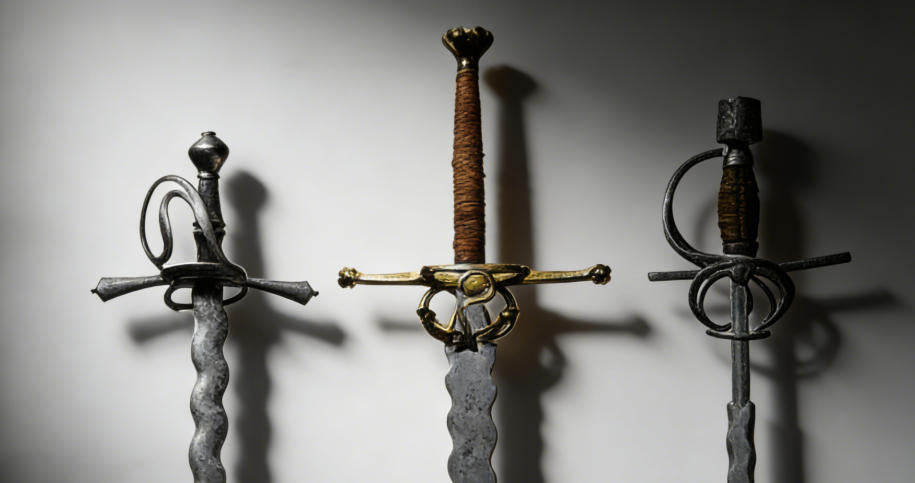
What Is a Flamberge Sword and Why Does It Have a Wavy Blade?
In the history of European cold weapons, the flamberge rapier is one of the most visually distinctive and recognizable swords ever created. Unlike a traditional rapier sword, the defining feature of a flamberge rapier is its striking wavy blade. This flame-like curved blade design is not only decorative but may also influence how the weapon behaves during sword combat and fencing exchanges.
During the 16th and 17th centuries in Renaissance Europe, the rapier gradually became one of the most commonly used weapons among nobles and professional swordsmen. Elegant, slender, and optimized for precise thrusting attacks, the rapier sword became a symbol of honor, dueling culture, and personal skill. Among the many variations of rapiers, the flamberge rapier sword gained special attention for its dramatic wave-shaped blade, which has fascinated historians, collectors, and weapon enthusiasts for centuries.
Today, with the growing popularity of historical weapon research, the revival of European swordsmanship, and the influence of films and video games, more people are searching for topics such as flamberge rapier, wavy blade rapier, flamberge sword, rapier fencing sword, and European rapier history.
What Is a Flamberge Rapier
A flamberge rapier is generally considered a weapon that combines the structure of a traditional thrusting rapier with the distinctive flame-shaped blade of a flamberge sword. It retains the typical characteristics of a rapier sword—a long, slender blade designed primarily for thrusting—while incorporating the striking wavy blade pattern associated with flamberge-style weapons.
This wave-like blade shape resembles flickering flames, which is why the design is sometimes referred to as a flame blade rapier or wavy blade rapier in historical weapon discussions.
Structurally, the flamberge rapier sword still belongs to the classic European rapier family. It features a long and narrow blade, a sophisticated guard system, and careful balance designed for precise thrusting techniques. Because of these features, the weapon was historically used in rapier fencing and formal duels among nobles.
Compared with a standard rapier sword, the most noticeable difference in a flamberge rapier is the wave-shaped blade. This unusual structure gives the sword a striking appearance and makes it highly recognizable among historical weapons. Some weapon historians believe that the blade’s curves may create different vibrations or friction when contacting an opponent’s weapon, potentially influencing blade control during combat.
During the Renaissance period of the 16th and 17th centuries, rapiers became the preferred weapon for many nobles and professional swordsmen. At the time, European society placed strong emphasis on honor, personal reputation, and dueling culture. Swordsmanship was not only a combat skill but also an important social practice tied to etiquette and status.
Young nobles often received formal rapier fencing training, learning thrusting techniques, defensive movements, and the proper etiquette of dueling. Within this cultural environment, sword owners began to seek weapons that were not only functional but also visually distinctive and artistically crafted.
Swordsmiths responded by experimenting with new designs in blade shapes, guard structures, and decorative elements. The flamberge rapier emerged from this creative period as a unique type of rapier that combined practical weapon design with artistic craftsmanship.
Historically, the flamberge blade was more commonly seen on larger weapons such as the flamberge sword or certain two-handed swords. Over time, this wave-shaped blade design was adapted to the slimmer structure of the rapier, eventually creating the distinctive flamberge rapier sword.
Today, the flamberge rapier continues to attract interest from historical weapon researchers, HEMA practitioners, and collectors of antique swords. Many enthusiasts study its design, forging techniques, and historical context. In addition, the dramatic appearance of the wavy blade has made it popular in fantasy literature, films, and video game weapon designs, where it is often used to represent rare or legendary weapons.
Common related searches include:
-
flamberge rapier sword
-
wavy blade rapier
-
rapier fencing sword
-
flamberge blade rapier
-
rapier sword history
-
European rapier
-
Renaissance rapier
-
European rapier fencing
-
rapier fencing techniques
-
flamberge sword history

The Wavy Blade Design of the Flamberge Rapier
Wavy Blade Structure
The most distinctive feature of the flamberge rapier is its wavy blade. The blade curves back and forth in a pattern resembling flames, which is why the term flamberge—often translated as “flame-blade”—is used to describe this style.
This wave-shaped structure is not purely decorative. In sword combat, it may create certain mechanical effects. For example, when the blade contacts an opponent’s weapon, the curved edges can produce slight vibrations that may disrupt the opponent’s defensive stability.
Additionally, the waves increase friction along the blade’s surface. This may make it more difficult for an opponent to slide their weapon smoothly along the blade when attempting to parry or redirect attacks.
Because of these potential effects, the flamberge rapier is often studied in discussions of rapier fencing techniques and Renaissance swordsmanship. The weapon is frequently regarded as a unique blend of technical design and artistic craftsmanship.
Structural Characteristics of the Flamberge Rapier
Blade Materials
Historically, the flamberge rapier sword was typically forged from high carbon steel. This material was widely used in European weapon manufacturing because it provides an effective balance between hardness, sharpness, and durability.
After proper quenching and tempering, high carbon steel blades can maintain a sharp edge while still retaining enough flexibility to withstand combat stresses. This balance is particularly important for a rapier sword, which generally has a long and narrow blade.
If the steel is too soft, the blade may bend or lose its shape during combat. If it is too hard, the blade may become brittle and risk breaking under heavy impact. Skilled swordsmiths therefore needed to carefully control carbon content and heat treatment to achieve the correct balance of strength and resilience.
Forging a flamberge rapier presents an additional challenge due to its wavy blade design. Unlike a straight rapier blade, the wave pattern must be carefully shaped through repeated hammering and precise forging techniques. The curves must remain evenly spaced along the blade while preserving the sword’s balance and structural integrity.
If the wave pattern is uneven, it could negatively affect the sword’s weight distribution and handling characteristics. For this reason, crafting a high-quality flamberge rapier sword required a high level of expertise from the swordsmith.
Once forged, the blade would undergo careful grinding and polishing to refine the wave pattern and produce a smooth, elegant surface. The finished weapon combined sharp cutting edges, structural strength, and an aesthetically striking appearance.
From both a historical and collector’s perspective, this complex blade design makes the flamberge rapier one of the most distinctive weapons in the world of European cold steel. Many historical weapon enthusiasts and HEMA sword practitioners are fascinated by this type of wavy-blade rapier because it represents both the artistry and technological sophistication of traditional sword forging.
Guard and Hilt Design
Like most rapier swords, the flamberge rapier typically features a complex and elegant guard structure. The guard of a rapier is not only decorative but also an essential protective component. In fast-paced rapier fencing exchanges, the hand is one of the most vulnerable targets, making guard design extremely important for any swordsman.
During the Renaissance period, rapier guards gradually became more sophisticated in order to improve hand protection and weapon control. Several common rapier guard structures developed during this time, including:
-
Metal guard framework
-
Wire-wrapped grip
-
Wooden or leather grip
-
Engraved decoration or metal inlay
-
Finger ring guard
-
Basket guard
-
Swept hilt
Among these designs, the swept hilt rapier became one of the most recognizable styles of the Renaissance. The guard consists of multiple curved metal bars that extend from the crossguard and wrap around the hand. This structure not only protects the swordsman’s fingers but also strengthens the overall hilt construction.
The grip itself is usually built around a wooden core and then wrapped in leather or metal wire. This wrapping improves friction and ensures a secure grip. Such a design allows the swordsman to maintain stable control during rapid movement and repeated attacks, which greatly enhances the precision of rapier fencing techniques.
In some high-end weapons, the hilt and guard were further decorated with engravings, gilding, or metal inlays. These details showcased the craftsmanship of the swordsmith and also reflected the social status of the sword’s owner. During the Renaissance, a beautifully crafted rapier sword was not only a weapon but also a symbol of wealth, honor, and prestige.
For the flamberge rapier, the combination of an intricate guard structure and the distinctive wavy blade rapier design creates a weapon that is visually striking. The elegant hilt paired with the dynamic wave-shaped blade makes this sword particularly eye-catching in the history of European rapiers.
Historical Uses of the Flamberge Rapier
A Weapon for Duels
During the Renaissance, the rapier sword was primarily used for dueling among nobles. Unlike battlefield weapons, the rapier focused heavily on speed, precision, and refined technique.
Because the flamberge rapier features a distinctive wavy blade, it also carried a strong visual presence. In some situations, this unusual appearance may have had a psychological effect on opponents, making them less comfortable or less familiar with the weapon’s movement.
In sword combat, rapiers relied heavily on fast thrusting attacks and precise control. As a result, rapier fencing techniques became a central part of swordsmanship training during this period.
Combat and Defense
Although rapiers were primarily associated with dueling, they could also be used in real combat situations. The advantages of a rapier sword include:
-
High speed
-
Precise thrusting attacks
-
Excellent control
When a flamberge rapier blade contacts another weapon, the wave-shaped structure may produce slight vibrations and increased friction. These characteristics could interfere with an opponent’s blade control and potentially introduce unpredictability into the exchange.
Differences Between Flamberge Rapiers and Traditional Rapiers
Although the flamberge rapier belongs to the rapier family, there are several notable differences between it and a traditional rapier sword.
Visual Differences
Traditional rapier:
-
Straight blade
-
Simple, streamlined design
-
Stable structure
Flamberge rapier:
-
Wavy blade
-
More complex visual design
-
Strong visual impact
Handling Experience
Traditional rapiers are generally more stable and well suited to standardized rapier fencing techniques. In contrast, the flamberge rapier may produce slightly different feedback during blade contact due to its wave-shaped structure.
Collector Value
Because the blade is more difficult to manufacture, the flamberge rapier sword often has higher collector and artistic value. Many historical weapon collectors and sword enthusiasts pay special attention to this unique sword type.
Forging Process of a Flamberge Rapier
Creating a flamberge rapier sword requires a complex forging process. The general steps include:
-
Selecting high carbon steel
-
Heating and forging the steel at high temperatures
-
Forming the wave-shaped blade structure
-
Performing quenching and tempering heat treatment
-
Grinding and polishing the blade
-
Crafting the guard and grip assembly
Because the wave-shaped blade requires careful shaping and precise balance, each flamberge rapier reflects the experience and technical skill of the swordsmith who forged it.
The Influence of the Flamberge Rapier in Modern Culture
Today, the flamberge rapier is not limited to historical studies. It also appears frequently in films, video games, and fantasy settings. Many RPG weapon designs incorporate wavy blades to represent rare or powerful weapons.
At the same time, the revival of Historical European Martial Arts (HEMA) has led more people to explore HEMA sword training and rapier fencing. Rapier fencing classes, historical weapon collections, and high-quality sword reproductions have all contributed to renewed interest in the flamberge rapier.
Why Collectors Are Fascinated by the Flamberge Rapier
For collectors of historical weapons, the flamberge rapier offers several unique attractions.
First is its distinctive appearance. The wave-shaped blade is highly recognizable among European sword designs.
Second is its historical significance. It represents the rapier sword culture and swordsmanship traditions of Renaissance Europe.
Third is the complexity of its forging process. Creating a balanced and symmetrical wave-shaped blade requires advanced craftsmanship, making the weapon particularly valuable.
Finally, there is its artistic value. Many flamberge rapier swords are not only functional weapons but also beautifully crafted works of art.
Conclusion
In the history of European rapiers and cold weapons, the flamberge rapier stands out as a unique weapon that combines artistic design, advanced forging techniques, and fencing functionality. Its iconic wavy blade distinguishes it from other rapier sword types.
From noble duels of the Renaissance to modern historical martial arts research and weapon collecting, the flamberge rapier continues to capture the imagination of enthusiasts. Whether studying rapier fencing techniques, exploring European sword culture, or collecting a finely crafted flamberge rapier sword, this wave-bladed rapier represents an important part of European weapon craftsmanship and fencing tradition.

