


Ultimate Guide to Swords: From Samurai Katana to Ancient Khopesh
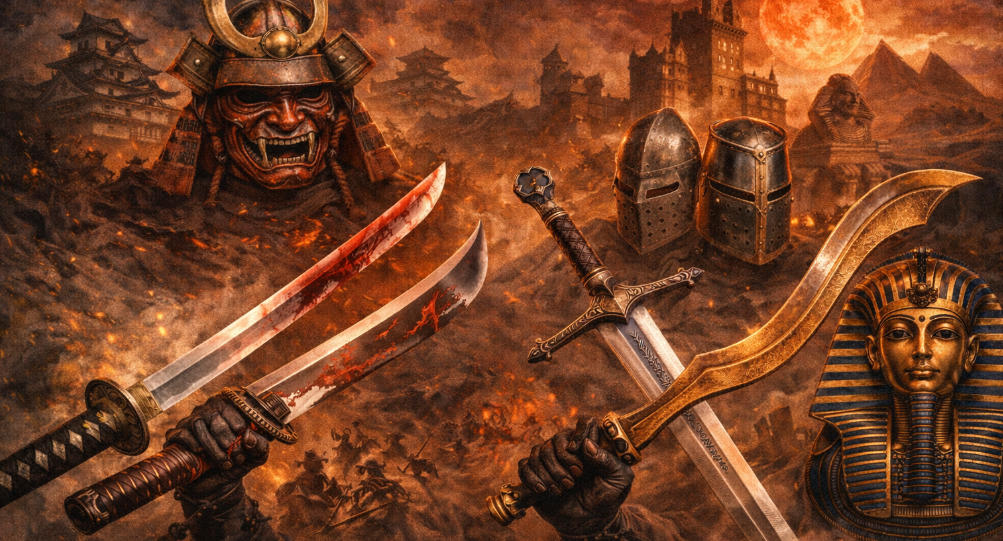
What Are the Most Iconic Swords in History and How Were They Used?
Looking for swords for sale? This article dives deep into the structure of Japanese Katanas (Tsuka, Tsuba), compares the power of Persian Shamshirs and Aztec Obsidian Swords, and reveals the real-world inspirations behind anime weapons like Asta’s Swords. Whether you’re searching for custom swords or building a blade collection, this is your ultimate sharp shop guide.
Throughout human history, swords have been more than mere tools of war—they are expressions of craftsmanship, culture, and belief.
For blade collection enthusiasts, the world is like a vast legendary sword dealer. From the old samurai sword of the East to the Arab sword of the Middle East, every type of different kind of sword has its unique charm.
Today, we’ll step into this hall of cold weapons, beginning with the most famous Japanese swords, and explore the mysteries of ancient swords.
What is a Samurai Sword Called?
In Chinese, a samurai sword is usually called '日本刀' (Japanese sword) or '武士刀' (samurai sword).
More specifically, depending on the type, it can be classified as:
-
Tachi / katana : A long sword wielded with one or two hands; the most iconic type of samurai sword.
-
Wakizashi : A shorter companion sword, typically worn alongside a katana.
-
Tanto : A small blade used for assassination or self-defense.
Overall, when people mention a 'samurai sword,' they usually imagine a Katana—a curved, single-edged, two-handed Japanese long sword.

1. The Soul of the East: Japanese Samurai Swords (Katana)
When discussing a sharp blade, the Katana is always central. It is not only a weapon of war but also a pinnacle of forged sword craftsmanship.
1. Anatomy and Aesthetics of a Sword
To truly understand a real sword, knowing just the blade is not enough. Experts focus on the precise sword parts:
-
The Soul - Hamon: The most captivating feature of a Japanese sword. The unique clay-tempering process creates wavy or pointed patterns along the edge, signaling a high carbon steel masterpiece, not a cheap fake sword.
-
Tsuka: The handle. More than a grip, it connects the sword to its wielder. Traditionally, it is wrapped with samegawa (ray skin) and bound with ito (cotton or silk cord) for a non-slip feel.
-
Tsuba : The guard. Unlike Western crossguards, a Tsuba is often intricately designed, protecting the hand while showcasing the samurai’s aesthetic taste.
-
Tang / Nakago : The part inside the handle. A proper battle-ready sword must have a full tang; otherwise, a weak tang can break during swings.
-
Saya : The scabbard, usually made from wood and lacquered for protection, unlike leather sword sheaths in the West.
-
Boshi : The tip’s hamon pattern, a key detail when assessing the condition of an antique katana or old samurai sword.
2. Sword Family Members
The Japanese sword world is richer than imagined; different sword types serve different tactical needs:
-
The Guardian – Wakizashi : The shadow of the Katana. As a short sword, it is worn with the Katana as part of the Daisho set. In confined spaces, it is more lethal than a long sword.
-
The Battlefield Giant – Great Katana (Odachi / Nodachi): A large sword type, often exceeding 90cm in blade length. Used by infantry against cavalry, it delivers immense visual and combat impact.
-
The Assassin – Tanto : The samurai’s side weapon. Beyond armor-piercing, it is also a sacred implement in seppuku rituals.
-
The Shadow – Ninjato : Unlike curved Katanas, the legendary ninja sword is often straight, easy to carry, and used for stabbing in tight spaces. Some even conceal blinding powder in the scabbard tip.
-
The Breaker – Kabutowari : A rare blunt weapon shaped like a curved iron bar, designed to smash helmets (Kabuto) or block other weapons rather than cut.

2. East vs. West: The Art of Curved and Straight Swords
Outside Japan, swords evolved with dramatically different combat styles. Middle Eastern deserts produced extreme cutting curves, while European knights emphasized heavy steel strikes.
1. Middle Eastern Curves: Persian Swords and Legendary Blades
Middle Eastern Arabic swords showcase the pinnacle of cavalry tactics.
-
The Lion’s Tail – Persian Shamshir: Its extreme curvature allows lethal draw cuts during horseback charges. Often made from Wootz steel, the surface patterns are metallurgical marvels.
-
The Legend – Sword of Ali (Zulfiqar): A double-tipped sword gifted to Ali, symbolizing courage and faith.
-
The Status Symbol – Jambiya Knife: A wide-blade dagger, worn for identity and coming-of-age ceremonies rather than combat, often with ornate horn or metal handles.
2. European Steel: Knights and Duelists
The history of European cold weapons is a history of knightly arts evolution.
-
The Classic – Arming Sword: Single or double-edged, used with one hand, paired with a shield. Standard weapon during the Crusades.
-
The Versatile – Bastard Sword (Hand-and-a-Half Sword): Grip length allows switching between one and two hands, balancing power and speed in battle.
-
The Armor Piercer – Estoc: Bladeless, designed solely for thrusting through armor gaps.
-
The Duelist – Rapier: Lightweight, extremely sharp tip for fast thrusts; symbol of Renaissance dueling culture and ancestor of modern fencing.
-
The Cutter – Polish Saber: Combines Eastern curved cutting ability with Western thumb ring protection; pinnacle of cavalry sabers.
3. Ancient Civilizations’ 'Black Tech'
Before steel was widespread, ancient weapons were already remarkable.
1. Egyptian Death Sickle – Khopesh
-
Khopesh / Kopesh: Crescent-shaped, capable of slicing and hooking shields or limbs. A symbol of Ancient Egyptian martial culture.
2. Aztec Obsidian Sword – Macuahuitl
-
Wooden core embedded with sharp obsidian blades. Despite lacking metal, its cutting power can even surpass surgical steel.
3. Legendary Chinese Sword – Goujian Sword
-
Survived over 2,000 years without rust, showcasing the pinnacle of bronze casting.
4. Fantasy and Modern Inspirations
Modern pop culture has made cool sword names and fantasy swords widely recognized.
-
Asta’s Swords: Heavy anti-magic blades from Black Clover, redefining the concept of the great sword.
-
Whip Sword (Flexible Sword): Weapons that switch between rigid longswords and flexible whips, often seen in anime and games.
-
Walking Cane with Sword: Elegant disguise for a concealed weapon.
5. Collector’s & Buyer’s Guide
When searching 'buy a sword' or 'medieval weapons for sale', the market is full of opportunities—and pitfalls.
1. Avoid 'Wall-Hanger' Traps: Real vs. Fake
-
Beware of Fake Katana: Cheap replicas are often stainless steel fake swords with weak “rat-tail” tangs. Unsafe for combat or cutting practice.
-
Battle-Ready Swords: Look for forged swords made of 1095 high-carbon steel.
2. Customize Your Blade
-
Engraving: Add names or inscriptions.
-
Fittings: Upgrade Tsuba or other accessories.
-
Polishing: Choose dull practice or razor-sharp cutting edges.
3. Mystery Boxes
-
Knife mystery boxes allow collectors to get swords from various cultures—Dirk, Dao, or even a Sting sword from Lord of the Rings.
4. Display Your Collection
-
Wall Mounts or table stands: Properly display great swords or antique katanas, following etiquette (handle left, blade up).
Handmade Japanese Tachi Katana, High Manganese Steel Full Tang with Grinding Hamon Black Saya

Conclusion
Whether captivated by Ancient Greek swords or the craftsmanship of an antique Samurai Katana, every sword tells a story. CoolKatana curates the finest blades, from bastard swords to hook swords, ensuring your blade collection is complete. Start your collecting journey today!

