


Katana Parts Explained: Complete Guide to Japanese Sword Anatomy
- Posted by COOLKATANA
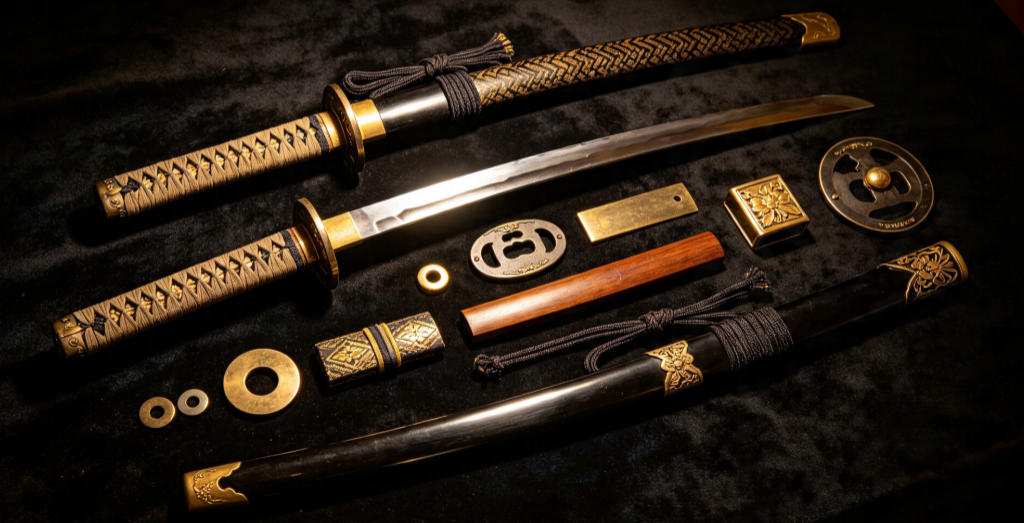
What Are the Different Parts of a Katana and What Do They Mean?
The Japanese sword (Katana) is not only a traditional weapon but also a masterpiece that combines advanced forging techniques, historical culture, and the spirit of the samurai.
For many people, their first impression of a Katana comes from movies, anime, or video games where samurai warriors wield elegant long swords. However, the real world of Japanese sword craftsmanship is far more complex than what appears on screen.
A complete Katana is not simply a single piece of steel. Instead, it is made up of multiple carefully designed components, and each katana parts plays an important role in the sword’s performance, appearance, and cultural value.
From the blade (Blade) that determines cutting ability, to the handle (Tsuka) that provides control and balance, to the artistic handguard (Tsuba) and protective scabbard (Saya), every component works together to create the unique beauty and functionality of a Japanese sword.
Understanding katana parts allows sword collectors to gain deeper knowledge of Japanese sword construction while helping anime fans, samurai culture enthusiasts, and history lovers appreciate the craftsmanship behind this legendary weapon.
What Are the Main Katana Parts?
A traditional Katana is not made from only one blade. Instead, it consists of multiple carefully crafted parts, each with its own purpose and historical meaning.
Every katana parts contributes to different aspects of the sword, from improving combat performance to enhancing artistic expression.
When creating a Katana, a Japanese swordsmith (Japanese Swordsmith) must carefully consider blade strength, weight balance, grip comfort, and overall appearance. Each component is closely connected, and together they determine the quality, usability, and collectible value of the sword.
The main katana parts include:
- Blade: The most important part of a Katana, determining sharpness, durability, and overall performance. Traditional blades are created through complex forging and heat-treatment processes, representing the skill of the swordsmith.
- Nagasa: The measurement of the blade length from the Habaki area to the Kissaki tip. It is an important standard for determining the size, shape, and balance of a Katana.
- Kissaki: The pointed tip section of the blade. It affects both the cutting style and visual appearance of the sword. Different historical periods featured different Kissaki designs.
- Hamon: The unique tempering pattern created through traditional differential hardening techniques. It is one of the most recognizable artistic features of Japanese swords and reflects the craftsmanship of the swordsmith.
- Nakago: The hidden tang inside the handle that connects the blade and the grip. It often contains important historical information such as the swordsmith’s signature (Mei) and production details.
- Tsuka: The handle section where the samurai grips and controls the Katana. It is usually made with a wooden core, Samegawa (ray skin), and Tsuka-Ito wrapping to provide stability and control.
- Tsuba: The handguard between the blade and handle. It protects the user’s hand, improves sword balance, and often features detailed artistic designs.
- Saya: The protective scabbard that covers the Katana Blade. Traditionally made from wood, a high-quality Saya fits the blade precisely while preventing damage.
- Habaki: A metal collar located near the base of the blade. It secures the blade inside the scabbard and improves the overall stability of the sword structure.
- Menuki: Traditional decorative ornaments placed on the handle. Common designs include dragons, animals, mythical creatures, and natural patterns.
These Katana components come together to create a complete Japanese sword, with every detail reflecting the essence of traditional Japanese sword craftsmanship.
Understanding katana parts not only helps collectors evaluate the quality of a Katana but also provides deeper insight into samurai culture, swordsmith traditions, and the historical stories behind these legendary weapons.

Katana Blade: The Core Spirit of a Japanese Sword
Among all katana parts, the blade (Katana Blade) is undoubtedly the most important component.
The worldwide reputation of Japanese swords comes largely from their unique forging techniques. Traditional Japanese swordsmiths often use Tamahagane (traditional Japanese steel) and repeatedly fold, heat, and forge the material to create a blade with both hardness and flexibility.
A high-quality Katana Blade should have:
- Excellent cutting ability
- Strong and durable structure
- Balanced weight distribution
- Unique artistic patterns
Japanese swords are not only designed for practical use but also valued for their visual beauty. For collectors, the smallest details of the blade often determine the artistic and historical value of a Katana.
Kissaki: The Blade Tip That Defines Katana Style
The Kissaki is the pointed tip section at the front of a Katana blade.
Although it is a small area, the Kissaki has a significant influence on both the sword’s appearance and performance.
Common Kissaki styles include:
- Ko-Kissaki: A smaller blade tip commonly found in early Japanese swords
- Chu-Kissaki: A medium-sized blade tip and the most common design found in modern Katana
- O-Kissaki: A larger blade tip often used to create a more powerful visual appearance
In Japanese sword collecting, the shape, proportion, and craftsmanship of the Kissaki are important factors when evaluating sword quality.
Hamon: The Unique Artistic Pattern of a Japanese Sword
If the blade represents the strength of a Katana, then the Hamon represents its artistic beauty.
The Hamon is the distinctive pattern created on the blade through the traditional differential hardening process. Japanese swordsmiths apply different levels of clay coating to various parts of the blade before heating and cooling it, creating different hardness levels and producing unique tempering patterns.
Common Hamon styles include:
- Suguha: A straight and elegant temper line with a simple appearance
- Gunome: A continuous wave-like pattern with smooth curves
- Choji: A complex pattern resembling flower-shaped designs
- Midare: An irregular pattern with natural variations
Each Katana has its own Hamon pattern, making every blade unique. For collectors, studying the Hamon is one of the most important ways to appreciate the craftsmanship, skill, and artistic style of a Japanese swordsmith.
Beyond its visual appeal, the Hamon also reflects the technical knowledge behind traditional Japanese sword forging, showing how craftsmen balanced sharpness, durability, and beauty.
Nakago: The Hidden Identity of a Japanese Sword
Many people focus on the beauty of the Katana Blade, but often overlook the importance of the Nakago.
The Nakago is the hidden section of the blade that extends into the handle. It plays a critical role in connecting the blade and the Tsuka while maintaining the structural strength of the sword.
Unlike the polished blade surface, the Nakago is usually left untreated and preserved in its original condition. This allows it to retain valuable historical information.
Traditional Nakago often contains:
- Mei (Swordsmith Signature)
- Manufacturing period
- Swordsmith school information
- Historical records related to the blade
Because of these details, the Nakago is often considered the “identity card” of a Japanese sword. Experts and collectors use it to study the origin, authenticity, and historical background of a Katana.
Tsuka: The Essential Handle for Controlling a Katana
The Tsuka (handle) is the part where a samurai grips and controls the Katana.
A well-designed Tsuka must provide:
- Comfortable grip
- Strong anti-slip performance
- Efficient power transmission
- Stable control during movement
Unlike a simple sword handle, a traditional Tsuka is made from several carefully assembled components, each contributing to strength, balance, and appearance.
The main parts of a Tsuka include Samegawa and Tsuka-Ito, which are essential elements in traditional Japanese sword construction.
Samegawa: Traditional Grip Material for Better Control
Samegawa is the traditional material used to cover the surface of the Tsuka.
Although often translated as shark skin, traditional Japanese sword handles commonly use ray skin because of its unique texture and durability.
The natural rough surface of Samegawa provides additional friction, helping samurai maintain a secure grip during combat.
Besides its practical function, Samegawa also adds visual beauty to the Katana handle and remains an important element in traditional sword craftsmanship.
Tsuka-Ito: The Traditional Handle Wrapping
Tsuka-Ito refers to the cord wrapping around the outside of the Katana handle.
It serves two important purposes:
- Improving grip stability
- Enhancing the overall appearance of the sword
Common Tsuka-Ito materials include:
- Silk cord
- Cotton cord
- Leather wrapping
Different colors, patterns, and wrapping styles create different visual identities for Katana designs.
The craftsmanship of Tsuka-Ito requires patience and precision, as the wrapping must be tight enough to remain secure while maintaining comfort for the user.
Tsuba: The Katana Guard Combining Function and Art
The Tsuba is the handguard located between the Katana handle and blade.
Originally, its main purpose was practical:
- Protecting the user’s hand
- Preventing the hand from sliding onto the blade
- Improving sword balance
However, as Japanese sword culture developed, the Tsuba became an important area for artistic expression.
Many traditional Tsuba feature detailed designs such as:
- Dragons
- Samurai figures
- Flower patterns
- Family crests
- Natural elements
Some Tsuba are considered independent works of art and are collected separately by Japanese art enthusiasts.
A beautifully crafted Tsuba reflects not only the sword’s function but also the owner’s personality, status, and aesthetic taste.

Saya: The Protective Scabbard of a Japanese Sword
The Saya is the scabbard designed to protect the Katana Blade.
Traditional Saya are usually made from carefully selected wood and shaped through precise craftsmanship to perfectly fit the blade.
The main functions of Saya include:
- Protecting the blade from damage
- Allowing safe carrying
- Maintaining the sword’s condition
A high-quality Saya must fit the Katana perfectly. Too loose, and the blade may move inside the scabbard; too tight, and it may damage the sword surface.
In Japanese culture, the harmony between the sword and its Saya represents balance, discipline, and respect for the weapon.
Other Important Katana Parts You Should Know
Besides the major structures, many smaller components also contribute to the complete design and functionality of a Katana.
Habaki: The Important Blade Collar
The Habaki is a small metal fitting located at the base of the blade.
Although it may appear simple, it plays an important role by:
- Securing the blade inside the Saya
- Connecting the blade and scabbard
- Improving overall structural stability
A well-made Habaki ensures that the Katana remains properly fitted and balanced.
Seppa: Small Metal Spacers for Structural Stability
The Seppa are thin metal spacers placed around the Tsuba.
Their purpose is to fill small gaps between components and keep the sword assembly tight and stable.
Although small in size, Seppa are essential for maintaining the overall integrity of the Katana.
Fuchi: The Decorative Handle Fitting
The Fuchi is a metal fitting located at the front of the Tsuka near the Tsuba.
It strengthens the handle structure while also adding decorative details to the sword.
Traditional Fuchi designs often match the style of the Tsuba and other Katana fittings, creating a harmonious overall appearance.
Menuki: Traditional Handle Ornament
The Menuki are decorative pieces attached to the Katana handle.
Common Menuki designs include:
- Dragons
- Tigers
- Animals
- Mythological creatures
- Nature-inspired patterns
Besides decoration, Menuki can also improve grip comfort by providing additional texture for the hand.
These small details demonstrate how Japanese sword craftsmanship combines practical function with artistic expression.
Why Understanding Katana Parts Matters?
Understanding katana parts is not only important for Japanese sword collectors but also valuable for anyone interested in samurai history, traditional craftsmanship, and anime sword culture.
Every component of a Katana has a specific purpose. Learning about these parts allows enthusiasts to better appreciate the design, technology, and cultural meaning behind Japanese swords.
Better Understand Katana Quality
For collectors, knowing the structure of a Katana can help them better evaluate a sword’s quality and craftsmanship.
Understanding different Katana components makes it easier to identify important details, including:
- Forging techniques
- Material quality
- Construction methods
- Design details
- Collectible value
A high-quality Katana is not judged only by its appearance. The relationship between the blade, handle, fittings, and overall balance is what creates a truly exceptional Japanese sword.
For example, a beautiful Katana Blade with poor balance or weak fittings may not provide the same value as a well-crafted sword where every component works together perfectly.
Appreciate Japanese Sword Craftsmanship
Every Katana part represents the dedication and skill of Japanese swordsmiths and craftsmen.
Creating a traditional Japanese sword requires expertise in multiple areas:
- Selecting and preparing steel
- Forging and shaping the blade
- Creating the Hamon pattern
- Polishing the sword surface
- Crafting the Tsuka and Saya
- Designing decorative fittings
From the creation of the blade to the detailed artwork on the Tsuba, Japanese sword making is a combination of engineering, craftsmanship, and artistic expression.
A Katana is not simply manufactured — it is carefully created through a process that reflects patience, precision, and tradition.
Explore Anime and Samurai Culture
The popularity of Japanese swords has expanded far beyond history and martial arts. Today, Katana culture has become deeply connected with anime, manga, movies, and video games.
Many popular anime series have drawn inspiration from traditional Japanese swords, including:
- Demon Slayer (Kimetsu no Yaiba)
- Rurouni Kenshin
- Gintama
In these works, swords are not just weapons. They often represent a character’s personality, beliefs, emotions, and personal journey.
For anime fans, understanding Katana parts can provide a deeper appreciation of how fictional swords are designed and how they connect with real Japanese sword traditions.
For example:
- A character’s blade design may reflect their personality
- The sword fittings may symbolize their background
- The blade style may represent their fighting philosophy
Learning about real Katana components allows fans to better understand the inspiration behind many iconic anime swords.
Final Thoughts: Every Katana Part Tells a Story
A true Katana is more than a weapon. It is a masterpiece that carries history, craftsmanship, and cultural meaning.
From the sharp and powerful Katana Blade, to the artistic Tsuba, to the carefully designed Tsuka that gives the warrior control, every component has its own purpose and story.
Learning about katana parts means discovering the hidden details behind one of Japan’s most iconic cultural symbols.
Whether you are a Japanese sword collector, an anime enthusiast, a history lover, or simply someone interested in traditional craftsmanship, understanding these Katana components can help you appreciate the beauty and significance of this legendary weapon.
The value of a Katana does not come only from the sharpness of its blade. Its true beauty lies in the craftsmanship, traditions, and stories represented by every single part.
A Katana is a reflection of the swordsmith’s dedication, the samurai’s spirit, and centuries of Japanese cultural heritage.

